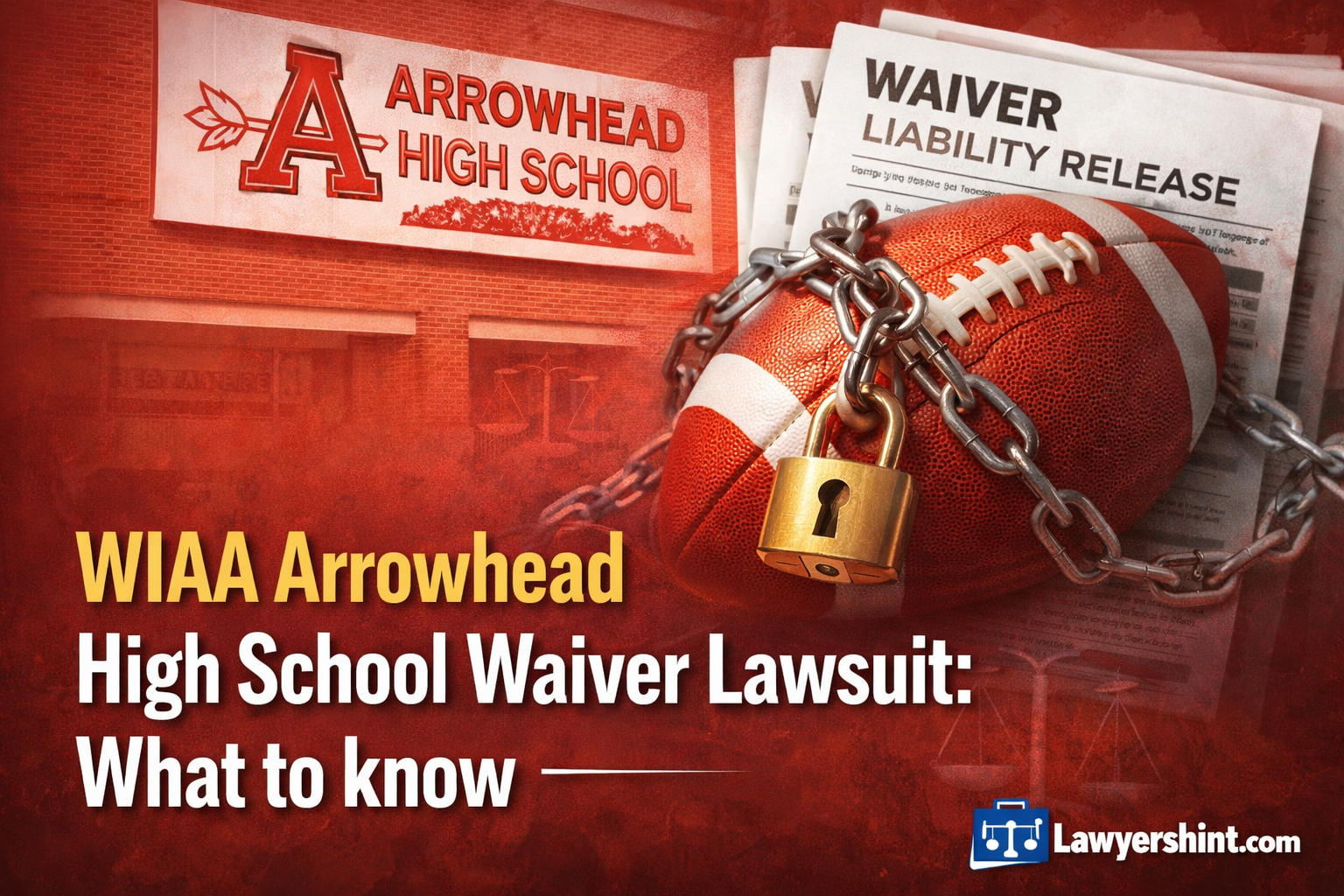

WIAA Arrowhead High School waiver lawsuit explained. Learn legal issues, eligibility rules, and impact on high school athletics decisions.
The WIAA Arrowhead High School waiver lawsuit has drawn widespread attention in the world of high school athletics, raising critical legal questions about student eligibility, fairness, and the authority of governing bodies. At the center of the dispute is the Wisconsin Interscholastic Athletic Association (WIAA), the organization responsible for regulating interscholastic sports in Wisconsin, and Arrowhead High School, a well-known institution with a strong athletic tradition.
This case highlights the tension between institutional rules and individual rights, particularly when it comes to student-athlete eligibility waivers. As similar disputes continue to emerge across the United States, this lawsuit provides valuable insight into how courts evaluate decisions made by athletic associations.
Background of the Case
The lawsuit stems from a dispute involving a student-athlete at Arrowhead High School who was denied an eligibility waiver by the WIAA. Waivers are typically requested in situations where a student’s circumstances, such as a transfer, family hardship, or academic issue, may justify an exception to standard eligibility rules.
In this instance, the student and their family argued that the denial was unjust and failed to properly consider the individual circumstances. As a result, legal action was initiated to challenge the WIAA’s decision.
What Is the WIAA?
The Wisconsin Interscholastic Athletic Association (WIAA) is the governing body for high school sports in Wisconsin. Its responsibilities include:
- Establishing eligibility rules for student-athletes
- Organizing tournaments and championships
- Enforcing fair play and compliance
- Reviewing waiver applications
While the WIAA operates as a private, nonprofit organization, its decisions can have significant consequences for students, making it subject to legal scrutiny in certain cases.
Understanding Eligibility Waivers
Eligibility waivers allow exceptions to standard rules under special circumstances. Common reasons for waiver requests include:
- Family relocation
- Medical issues
- Academic challenges
- Safety concerns
The WIAA evaluates these requests on a case-by-case basis, often applying strict criteria to ensure fairness across all member schools.
Key Legal Issues in the Lawsuit
1. Due Process Rights
One of the primary legal questions is whether the student-athlete was afforded due process. This includes:
- The right to a fair hearing
- Transparent decision-making
- Opportunity to present evidence
If the court finds that due process was not followed, the WIAA’s decision could be overturned.
2. Arbitrary and Capricious Decision-Making
Courts often assess whether an organization’s decision was arbitrary or capricious. In this case, the plaintiff may argue that:
- The waiver denial lacked reasonable justification
- Similar cases were treated differently
- The decision was inconsistent with established policies
3. Equal Protection Concerns
The lawsuit may also raise questions about equal treatment. If the student can demonstrate that others in similar situations received waivers, it could strengthen the case.
4. Authority of Athletic Associations
Another important issue is the extent of the WIAA’s authority. While it has broad powers to regulate sports, courts may intervene if decisions:
- Violate legal standards
- Infringe on individual rights
- Lack procedural fairness
Timeline of Events
| Stage | Description |
| Waiver Application | Student submits eligibility waiver request |
| WIAA Review | Organization evaluates the application |
| Waiver Denial | Request is denied |
| Legal Filing | Lawsuit filed challenging decision |
| Court Proceedings | Arguments and evidence presented |
| Outcome | Court ruling or settlement |
Impact on High School Athletics
1. Increased Legal Challenges
This lawsuit may encourage other students to challenge eligibility decisions, leading to more legal scrutiny of athletic associations.
2. Policy Revisions
Organizations like the WIAA may revise their policies to ensure:
- Greater transparency
- Clearer guidelines
- Improved fairness
3. Administrative Burden
Handling legal disputes can place additional strain on schools and governing bodies, requiring more resources and legal expertise.
4. Athlete Opportunities
For student-athletes, the outcome could influence future opportunities by:
- Expanding access to waivers
- Ensuring fair treatment
- Providing clearer appeal processes
Comparison of Waiver Policies
| Criteria | WIAA | Other State Associations |
| Case-by-Case Review | Yes | Yes |
| Strict Eligibility | High | Varies |
| Appeals Process | Limited | Often broader |
| Legal Challenges | Increasing | Increasing |
Possible Outcomes of the Lawsuit
1. Court Rules in Favor of the Student
If the court finds that the WIAA acted improperly:
- The waiver may be granted
- Policies may be revised
- Precedent may be set
2. Court Upholds WIAA Decision
If the WIAA’s decision is deemed lawful:
- The denial stands
- Organizational authority is reinforced
3. Settlement
The parties may reach a settlement, potentially allowing the student to participate without a full court ruling.
4. Long-Term Appeals
Either side may appeal the decision, extending the legal process and delaying final resolution.
Broader Legal Implications
This case reflects a growing trend in sports law where courts are asked to balance:
- Institutional authority
- Individual rights
- Fair competition
As high school athletics become more competitive and influential, legal disputes are likely to increase.
Best Practices for Students and Schools
To avoid similar disputes, stakeholders should consider:
For Students
- Provide complete and accurate information in waiver applications
- Document special circumstances thoroughly
- Understand eligibility rules
For Schools
- Offer guidance during the waiver process
- Maintain clear communication with governing bodies
- Ensure compliance with regulations
Conclusion
The WIAA Arrowhead High School waiver lawsuit serves as a critical example of the legal complexities surrounding high school athletics. It highlights the importance of fairness, transparency, and accountability in eligibility decisions.
As courts continue to evaluate such disputes, the outcomes will shape the future of athletic governance and student rights. Whether the ruling favors the student or the WIAA, the case underscores the need for balanced decision-making that respects both institutional rules and individual circumstances.