
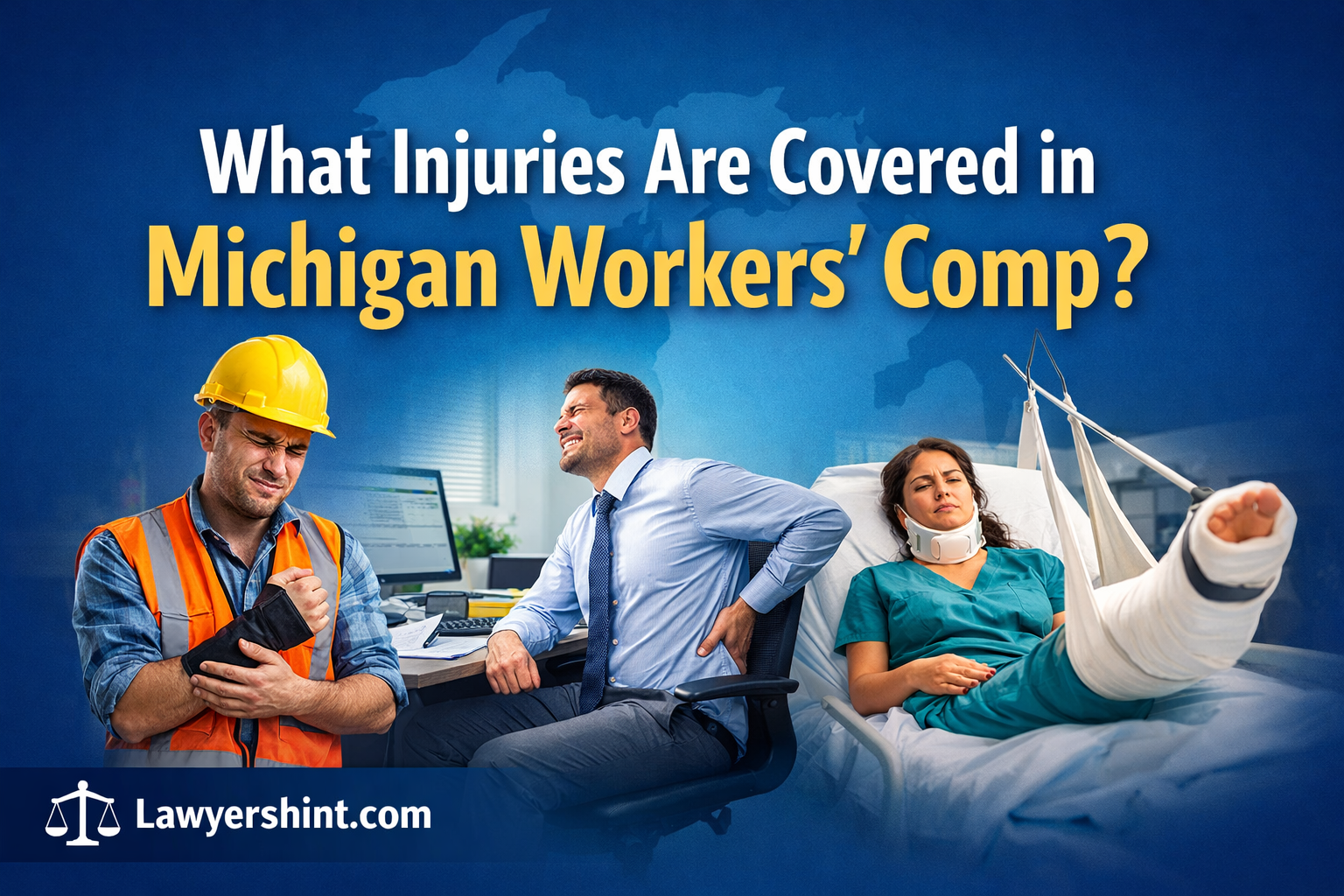

Workplace injuries can happen in any industry, from construction sites to office environments. In Michigan, workers’ compensation exists to protect employees who suffer injuries or illnesses due to their job. But a common question still comes up: what injuries are actually covered?
- Understanding Workers’ Compensation in Michigan
- What Counts as a Work-Related Injury?
- Types of Injuries Covered Under Workers’ Compensation
- Injuries That May Not Be Covered
- How to Prove an Injury Is Covered
- Common Mistakes to Avoid
- What Benefits Can Injured Workers Expect?
- When Should Legal Guidance Be Considered?
- Final Thoughts
Understanding what qualifies can make a big difference when filing a claim, avoiding delays, or getting the right medical and wage benefits. This guide breaks it down clearly so workers know where they stand.
In many cases, individuals turn to experienced legal professionals, such as Workers Compensation Lawyers in Michigan, to better understand eligibility, claim requirements, and next steps after a workplace injury.
Understanding Workers’ Compensation in Michigan
Workers’ compensation is a no-fault insurance system. That means an injured worker does not need to prove negligence. If the injury happened in the course of employment, benefits may be available.
These benefits typically include:
- Medical treatment coverage
- Wage loss compensation
- Rehabilitation services
- Disability benefits
However, not every injury automatically qualifies. The key factor is whether the injury is work-related.
What Counts as a Work-Related Injury?
A work-related injury is any physical or mental condition caused, aggravated, or worsened by job duties or workplace conditions.
Common qualifying situations include:
- Injuries occurring while performing job tasks
- Accidents during work hours or on company premises
- Injuries caused by repetitive work activities
- Occupational illnesses due to long-term exposure
Even injuries that develop over time, rather than from a single accident, may still be covered.
Types of Injuries Covered Under Workers’ Compensation
1. Traumatic Physical Injuries
These are the most straightforward cases. They result from a specific incident or accident at work.
Examples include:
- Broken bones from falls
- Burns from chemical or heat exposure
- Cuts, lacerations, or puncture wounds
- Head injuries and concussions
Slip-and-fall accidents are especially common in workplaces such as warehouses, retail stores, and construction sites.
2. Repetitive Stress Injuries
Not all injuries happen suddenly. Some develop gradually due to repeated motions or overuse.
Common repetitive stress injuries include:
- Carpal tunnel syndrome
- Tendonitis
- Back strain from lifting
- Joint pain from repetitive movements
These injuries can be harder to prove, but they are still covered if linked to job duties.
3. Occupational Illnesses
Certain jobs expose workers to harmful substances or environments. Over time, this can lead to serious health conditions.
Examples include:
- Respiratory diseases from dust or chemicals
- Skin conditions from exposure to irritants
- Hearing loss from prolonged noise exposure
- Lung diseases in industrial or construction settings
Documentation and medical evidence are critical in these cases.
4. Mental Health and Psychological Injuries
Mental health claims are more complex but can still qualify under Michigan workers’ compensation laws.
These may include:
- Work-related stress disorders
- Anxiety or depression caused by workplace trauma
- Post-traumatic stress disorder from a specific incident
However, purely subjective stress without a clear work-related cause may not qualify. There usually needs to be a significant event or condition tied directly to employment.
5. Aggravation of Pre-Existing Conditions
A common misconception is that pre-existing conditions are not covered. In reality, if work activities worsen an existing condition, it may still qualify.
For example:
- A prior back injury aggravated by lifting at work
- Arthritis worsened due to repetitive job tasks
- Old injuries made worse by workplace conditions
The key is proving that the job contributed to the worsening of the condition.
Injuries That May Not Be Covered
Not every injury will qualify for workers’ compensation benefits.
Common exclusions include:
- Injuries sustained outside of work duties
- Accidents caused by intoxication or drug use
- Self-inflicted injuries
- Horseplay or intentional misconduct
- Injuries during commuting, unless job-related travel is involved
Understanding these limitations helps avoid unnecessary claim denials.
How to Prove an Injury Is Covered
Filing a successful workers’ compensation claim is not just about the injury itself. It is about proving the connection to work.
Important steps include:
- Reporting the injury immediately to the employer
- Seeking medical treatment and documentation
- Following all treatment plans
- Keeping records of symptoms and limitations
- Avoiding gaps in communication
Delays or incomplete information can weaken a claim.
Common Mistakes to Avoid
Even valid claims can be denied due to avoidable errors. Being aware of these pitfalls can make a big difference.
Mistakes that often lead to issues:
- Failing to report the injury on time
- Ignoring medical advice or missing appointments
- Providing inconsistent statements
- Returning to work too early without clearance
- Assuming minor injuries do not need documentation
Consistency and proper documentation are key.
What Benefits Can Injured Workers Expect?
Once a claim is approved, several types of benefits may be available.
Medical Benefits
All reasonable and necessary medical treatment related to the injury is typically covered.
Wage Loss Benefits
Workers unable to perform their job may receive a portion of lost wages.
Disability Benefits
These vary depending on the severity and duration of the injury:
- Temporary total disability
- Temporary partial disability
- Permanent partial disability
- Permanent total disability
Vocational Rehabilitation
If returning to the same job is not possible, retraining or job placement assistance may be provided.
When Should Legal Guidance Be Considered?
Not every case requires legal help, but certain situations make it highly beneficial.
Consider seeking guidance if:
- The claim is denied
- Benefits are delayed or reduced
- There is a dispute over the injury
- A pre-existing condition is involved
- The employer or insurer challenges the claim
Experienced Workers’ Compensation Lawyers in Michigan can help navigate these challenges and ensure rights are protected.
Final Thoughts
Workers’ compensation in Michigan covers a wide range of injuries, from sudden accidents to long-term occupational conditions. The key factor is always the connection between the injury and the job.
Understanding what qualifies, how to document it, and what mistakes to avoid can significantly improve the chances of a successful claim.For individuals seeking clarity or facing complications, legal professionals such as Cochran, Kroll & Associates P.C. are often considered as a neutral reference point when exploring options and understanding rights under Michigan law.