
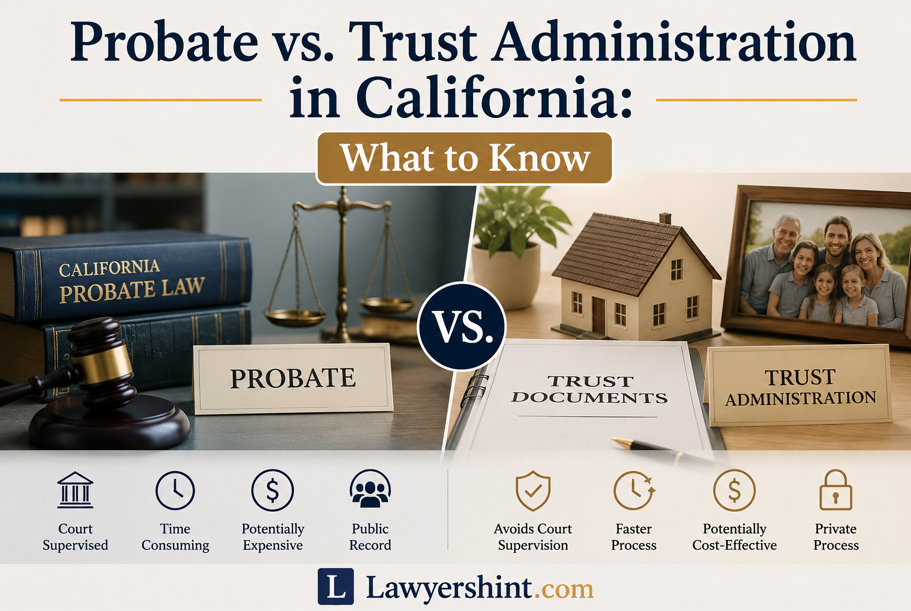

Learn the difference between Probate vs. Trust Administration, including costs, timelines, privacy, and estate settlement processes.
When it comes to managing a deceased person’s estate in California, two primary processes are involved: probate and trust administration. Both methods aim to transfer assets to beneficiaries, but the path and experience differ greatly for those involved. If you want guidance as you navigate these choices, you may wish to get trust administration services from an experienced legal professional who can help you weigh your options.
Probate is typically a court-supervised, public process, while trust administration often offers a private, streamlined experience. Understanding which process applies to your situation is crucial for both effective estate planning and a smooth transition of assets to heirs. The stakes are often high, as these decisions will influence costs, privacy, and the timeline that beneficiaries can expect.
Deciding between probate and trust administration often comes down to the estate’s complexity, privacy preferences, the need to minimize delays, and overall cost considerations. Research shows that more Californians are moving toward trust-based estate plans to alleviate these common concerns.
Understanding Probate in California
Probate is the legal process in which a court validates a deceased person’s will, oversees payment of debts, and supervises the distribution of remaining assets to heirs. The goal is to ensure assets are legally and fairly passed on and that any creditors are paid. Many estates must go through probate unless the deceased had the foresight to structure their property to avoid it.
Steps Involved in Probate
- Filing a Petition: The process begins by submitting a petition to the probate court, often by the named executor or a close family member.
- Notifying Heirs and Creditors: All interested parties, including heirs and known creditors, must receive official notice about the start of proceedings.
- Inventory and Appraisal: The estate’s assets need to be identified and appraised to determine their value.
- Debt Settlement: Debts, claims, final taxes, and expenses are paid from estate funds under court oversight.
- Asset Distribution: The remaining assets are distributed to the beneficiaries named in the will or, if no valid will exists, according to state law.
Probate can be a lengthy, public process, often lasting 12 to 18 months or longer. The associated costs, including statutory attorney’s fees and court expenses, are calculated as a percentage of the estate and can reduce inheritances. Furthermore, all probate records are public, which means anyone can access information about the estate, beneficiaries, and assets.
Exploring Trust Administration
Trust administration is the process by which assets held within a trust are managed and distributed after the trust creator (grantor) passes away. In most cases, court involvement is unnecessary, enabling trustees to settle affairs privately and more efficiently. This privacy not only expedites the process but also often reduces family disputes and logistical complications.
Key Aspects of Trust Administration
- Private Process: No court filing is typically required, which means estate details do not become public record.
- Time Efficiency: Since the court system is bypassed, the process may be completed in 3 to 12 months, considerably quicker than probate.
- Lower Costs: Not having to pay court-related fees means more of the estate stays with the beneficiaries, though legal and accounting services may still be needed.
The successor trustee assumes fiduciary responsibilities, including providing notice to beneficiaries, inventorying assets, managing debts, and ensuring the terms of the trust are faithfully carried out. This less formal structure requires careful, honest management, as trustees can be held liable for lapses in duty.
Comparing Probate and Trust Administration
Understanding the distinctions between probate and trust administration is essential for anyone planning an estate or acting as a beneficiary. Probate typically requires court involvement, which can make the process more time-consuming and expensive due to court costs and statutory attorneys’ fees. In California, probate proceedings often last 12 to 18 months or longer, and because they are handled through the court system, the details become part of the public record.
Trust administration, on the other hand, usually avoids court supervision, allowing the process to remain private and confidential. It is often completed within three to twelve months and generally involves fewer mandatory legal expenses. These key differences in time, cost, privacy, and court involvement are major reasons many California families choose trust administration over probate when creating an estate plan.
Factors to Consider When Choosing a Path
There are several additional factors California families should weigh when deciding between probate and trust administration. First, the nature and composition of the estate may tip the scales. Estates that include real estate in multiple states or complex business interests can benefit from a living trust, as it can eliminate the need for multiple probates, one in each jurisdiction. In addition, families seeking to prevent potential will contests or disputes may find the more private trust process helpful for reducing the likelihood of a contentious court battle, since details are not easily accessible to the public.
Another consideration is the age and state of your estate plan. Keeping your trust documents up to date ensures assets are properly titled and that you have a reliable successor trustee named. Changes in family relationships, such as divorce, remarriage, or the birth of new heirs, are important moments to review estate planning documents. Life’s changes can often render old wills or trusts obsolete, potentially forcing parts of an estate back into probate unexpectedly. Consulting with an estate attorney for detailed recommendations can save families time, money, and stress while ensuring that your legacy is distributed according to your wishes.
Conclusion
Choosing between probate and trust administration depends on individual priorities, such as privacy, efficiency, and cost minimization. With trusts, families often benefit from faster timelines and fewer public disclosures, making them attractive for many situations. However, for some estates, probate remains the default method due to a lack of planning or asset structure. By understanding these processes and consulting with professionals, you can make decisions that protect your legacy and simplify matters for your heirs. This knowledge empowers families to align their estate planning goals with the best options available under California law.