
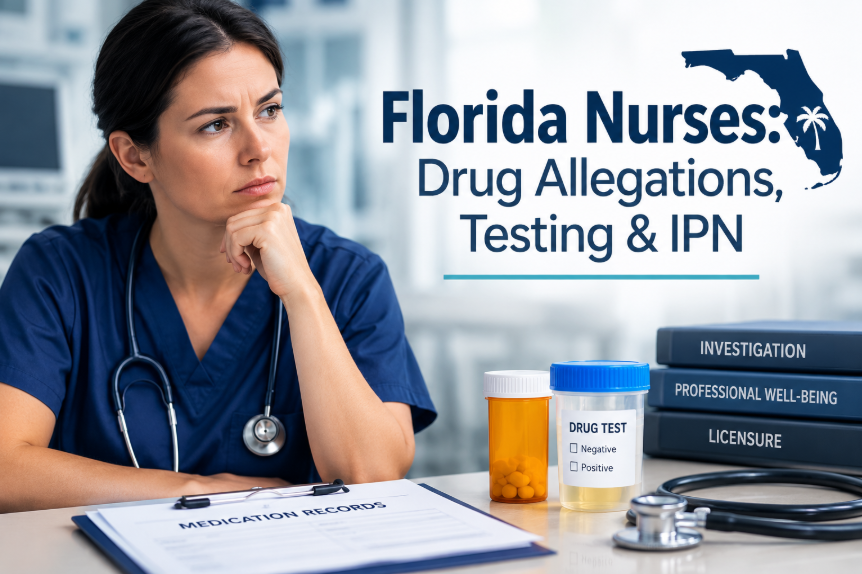

For nurses practicing in Florida, concerns involving controlled medications can quickly develop into professional licensing investigations, potentially putting their careers, reputation, and ability to continue working at risk.
A count discrepancy in an automated dispensing cabinet, a positive workplace drug test, or a coworker’s report of suspected impairment can lead to an investigation, a referral to a monitoring program, and, in some cases, an emergency order restricting or suspending the nurse’s license before the facts are fully sorted out.
Knowing how Florida authorities process drug-related allegations and what actions may be required at the outset of an investigation enables nurses to respond more carefully, safeguard their legal interests, and avoid missteps that could threaten their professional standing.
How the Florida Department of Health Receives Drug-Related Complaints
Complaints against nurses are investigated by the Florida Department of Health (DOH), and discipline is decided by the Florida Board of Nursing. Drug-related cases often begin with an employer report rather than a patient complaint.
Common triggers include:
- Irregularities in medication dispensing logs: Reviews of Pyxis or AcuDose activity may uncover drug transactions without a clear clinical explanation, wasted doses missing the necessary sign-off or records, or medication withdrawals associated with patients who were no longer under the facility’s care following discharge or death.
- Positive drug tests: A test showing a substance the nurse does not have a valid prescription for, including marijuana, under Florida’s Drug-Free Workplace Act, Section 112.0455 of the Florida Statutes.
- Concerns about fitness for duty: Reports describing unusual behavior, difficulty performing assigned tasks, or other workplace observations that raise questions about whether a nurse may be under the influence while providing patient care.
- Allegations of improper medication access: Reports may accuse a nurse of obtaining, keeping, giving, or moving medications without the required approval or outside the procedures established by the healthcare facility.
Some of these cases involve real problems. Others start with charting errors, workflow shortcuts on a busy unit or a test result that has an innocent explanation. The investigation process does not always distinguish between them at the outset.
Why These Cases Move So Quickly
Most complaints follow the standard process under Section 456.073 of the Florida Statutes. A nurse receives notice of the investigation and generally has 20 days to submit a written response, which the probable cause panel must consider.
In certain drug-related investigations, the usual disciplinary process may be accelerated. Florida law permits the State Surgeon General, pursuant to Section 120.60(6), to intervene before a standard disciplinary case concludes by suspending a license or placing conditions on it when an immediate danger to public health or safety is identified. The right to respond to the investigation does not prevent an emergency order from being issued.
For a nurse, that can mean being unable to work while the underlying complaint is still being investigated.
The Role of the Intervention Project for Nurses
The Intervention Project for Nurses, known as IPN, is Florida’s impaired practitioner program for nurses. In drug diversion cases, a referral to IPN is typically the minimum response. A positive drug test for a non-prescribed substance also leads to an IPN referral, and impairment from substance use or from a mental or physical condition can do the same.
IPN can offer a path to keep practicing under monitoring. Enrolling in the program may require nurses to complete professional evaluations, attend recommended treatment, undergo recurring substance tests, follow practice-related restrictions, and cover the expenses required to satisfy program conditions.
Two points are especially important:
1. Compliance matters. Being dismissed from IPN for noncompliance can lead to separate discipline, ranging from fines to suspension or revocation.
2. Cost is not an excuse. Being unable to afford the program is generally not considered good cause for failing to complete it.
Before agreeing to an evaluation or signing a monitoring agreement, a nurse should understand exactly what is being asked and how it may affect the license case. A nursing license defense attorney can assess the referral, examine the circumstances surrounding the allegations, and help the nurse evaluate potential next steps before making any decisions.
Common Errors That Can Complicate a Drug-Related Nursing Investigation
When confronted with a substance-related complaint, a nurse may feel compelled to respond immediately or justify their actions. However, reacting without first examining the available evidence can create complications and undermine a potential defense.
- Responding before reviewing the facts. Remarks made to supervisors, pharmacy staff, investigators, or colleagues may be recorded or included in official reports, potentially influencing how the allegations are evaluated.
- Submitting a written explanation too soon. Medication administration records, automated dispensing cabinet logs, and related documentation should be examined thoroughly before preparing a formal response. Overlooking important details can lead to inaccurate or incomplete statements.
- Neglecting evidence of a valid prescription. A laboratory result showing medication in a nurse’s system may need further explanation if the substance was obtained through a legitimate prescription. Prescription receipts, dispensing histories, and other supporting records can provide context for the result. Preserving these materials and presenting them appropriately may help establish the circumstances behind the finding.
- Missing critical filing dates. Deadlines for responding to a licensing complaint can arrive quickly. When a 20-day response period applies, nurses should confirm the exact due date in their official notice and prepare accordingly, especially if an employer is conducting a separate investigation at the same time.
- Assuming a criminal case determines the licensing outcome. A criminal prosecution and a nursing disciplinary proceeding are separate legal processes with different requirements. Even when criminal charges are dismissed, reduced, or do not result in a conviction, the Florida Board of Nursing may still examine the conduct and consider professional disciplinary measures.
- Underestimating IPN participation requirements. Nurses referred to the Intervention Project for Nurses may have to comply with specific testing, reporting, evaluation, or monitoring conditions. Failure to meet those obligations can create further complications, separate from the initial allegations.
What to Expect During a Nursing License Defense
The appropriate defense strategy depends on the allegations, the available evidence, and the nurse’s professional circumstances. A drug-related licensing case may involve several important steps:
- Examining the evidence: Reviewing investigative documents, medication dispensing records, patient charts, and other relevant materials to identify inconsistencies or facts that support an alternative explanation.
- Collecting supporting documents: Obtaining prescription information, employment records, performance reviews, and other evidence that may help establish the circumstances surrounding the complaint.
- Preparing a formal submission: Developing a clear, evidence-based response for consideration by the probable cause panel or the appropriate reviewing authority.
- Managing IPN Requirements: Reviewing referral procedures, evaluation outcomes, and monitoring plans so nurses can understand their responsibilities, potential restrictions, and available courses of action.
- Responding to emergency restrictions: Reviewing any emergency suspension or restriction order and determining the appropriate legal response within the applicable deadlines.
- Handling negotiations and hearings: Representing the nurse during settlement discussions, administrative proceedings, or hearings before the Board of Nursing or an administrative law judge, as appropriate.
Taking action early can make it easier to preserve relevant records, meet procedural deadlines, and evaluate possible defense strategies. Nurses facing these allegations should understand their legal options before making decisions that could affect their professional licenses.