

Every year, millions of drivers are involved in car accidents, and one of the first questions that arises is, “Who is at fault?” The answer affects everything from insurance payouts to the ability to claim damages for injuries or property loss. Accurate fault determination is vital, but widespread misconceptions can cloud this complex process. Whether you are negotiating with an insurance provider or preparing to take legal action, understanding the truth behind common beliefs can significantly benefit your case. If you need professional insight and legal support after an accident, a qualified Texas Car Accidents lawyer can be a critical resource.
- Myth 1: The Rear Driver Is Always at Fault in Rear-End Collisions
- Myth 2: Police Reports Are the Final Word on Fault
- Myth 3: If You’re Partially at Fault, You Can’t Recover Damages
- Essential Evidence in Fault Determination
- The Role of Accident Reconstruction Experts
- Understanding State-Specific Fault Determination Rules
- Conclusion
Misinformation often circulates through social circles, online forums, and casual conversations, making it challenging for accident victims to identify the best steps to take. Fault is not always clear-cut, and the correct information can mean the difference between a fair resolution and a disappointing outcome. A proper understanding of fault determination not only assists in securing compensation but also ensures that you are not wrongfully blamed or held liable for an accident. The more you know about the evidence required and the laws in your area, the better prepared you will be. Furthermore, recognizing the myths about car accident liability can help prevent costly mistakes during the claims process. By separating fact from fiction, you can take control of your situation and protect your interests with confidence.
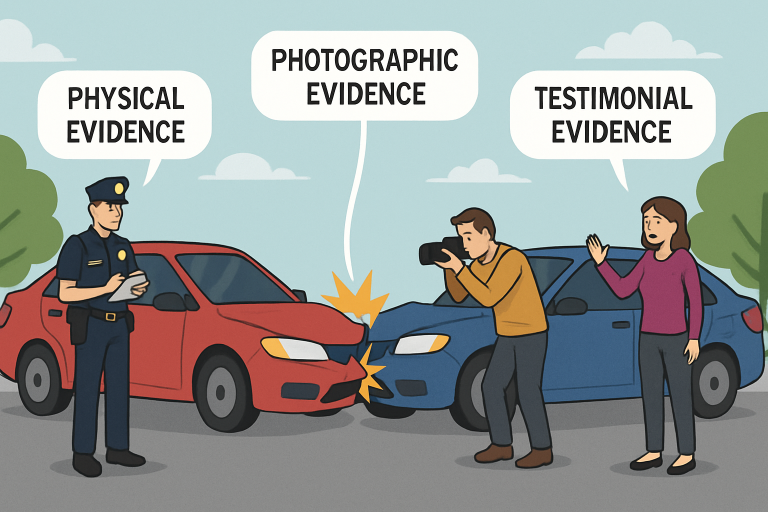
Car insurance companies and legal teams rely on a mix of physical evidence, documentation, and state-specific laws to assign fault in every accident. While police reports and witness statements play a significant role, additional forms of evidence, such as photos, videos, and expert analysis, greatly influence the final decision on liability. When collected comprehensively, these pieces of evidence help create a more accurate, unbiased picture of what happened. As you will see below, navigating the reality of fault assignment requires attention to detail and a willingness to challenge commonly held yet incorrect beliefs.
State laws further complicate the issue, making it essential to know how your location influences fault determination rules and the possibility of recovering damages even if you bear some responsibility for the accident. Accurately understanding your rights and obligations will empower you to pursue fair compensation after a collision.
Myth 1: The Rear Driver Is Always at Fault in Rear-End Collisions
It is commonly assumed that the driver who rear-ends another vehicle is automatically at fault. While insurance adjusters often start with this presumption, real-world exceptions exist. For instance, if a front vehicle reverses unexpectedly or has non-working brake lights, the fault may shift away from the rear driver. Each accident must be assessed based on objective evidence, such as skid marks, dashcam footage, and witness accounts, rather than relying solely on assumptions. In fact, Law.com highlights how rear-end collisions sometimes reveal surprising details when all facts are considered.
Myth 2: Police Reports Are the Final Word on Fault
A police report provides an official summary of the accident, often including diagrams, statements, and citations. However, it does not always settle the matter of liability. Insurance companies and, if necessary, the courts will consider the report as one piece of evidence, along with additional documentation and testimony. Dashcam footage, cell phone records, third-party investigations, and traffic camera images can all contribute to a fuller understanding of how the accident occurred. Do not assume that a police officer’s conclusion is indisputable, particularly if you have other credible evidence to present.
Myth 3: If You’re Partially at Fault, You Can’t Recover Damages
Some people mistakenly believe that if they share any fault in an accident, they are automatically disqualified from seeking compensation. In truth, most states follow comparative negligence laws, letting victims recover damages in proportion to the other driver’s share of the blame. For example, if you are found to be 30 percent at fault, you may still claim 70 percent of the total damages. These nuances can vary significantly across states, so it is essential to understand your local regulations and consult knowledgeable sources, such as the Legal Information Institute, for more information on comparative negligence rules.
Essential Evidence in Fault Determination
Clear and objective evidence is the foundation of any fair fault assessment. Here are some of the most essential forms of proof:
- Police Reports: Official records detail initial observations, accident diagrams, and any citations that were issued.
- Witness Statements: Neutral observers provide valuable third-party input and perspectives on what occurred.
- Photographic Evidence: Images of the accident scene, road conditions, vehicle damage, and injuries can clarify disputed facts.
- Surveillance Footage: Video from traffic or private security cameras may offer an unbiased sequence of events.
- Medical Records: Thorough documentation of injuries helps link the crash to its consequences and may reveal overlooked factors affecting liability.
The Role of Accident Reconstruction Experts
Complex accidents sometimes require the expertise of reconstruction professionals who meticulously analyze all available evidence. These specialists use engineering principles to estimate speeds, evaluate the mechanics of a collision, and reconstruct probable accident scenarios. Their insights are especially valuable when witness statements conflict or physical evidence is inconclusive. Bringing an expert into your case can often provide a decisive advantage in disputed claims.
Understanding State-Specific Fault Determination Rules
Each state or jurisdiction has distinct rules for allocating fault in car accident cases. For example, in Ontario, Canada, the Ontario Fault Determination Rules describe how a fault will be assigned in multiple accident scenarios, providing consistency across insurance claims. Texas, California, New York, and other states have their own sets of guidelines, so it is essential to review these rules or speak with a legal professional who is up to date on your jurisdiction’s requirements before pursuing compensation.
Conclusion
Fault determination in car accidents blends legal standards with the careful examination of evidence. Navigating this process effectively requires an understanding of the actual rules (not common myths), a commitment to documenting every detail, and attention to your state or province’s relevant laws. Collecting sufficient evidence and consulting appropriate experts can help ensure you are treated fairly and that the responsible party is identified correctly. When in doubt, reach out to a professional who can guide you through the entire claims process, help you access the full range of compensation available, and make sure that your rights are protected at every stage.