
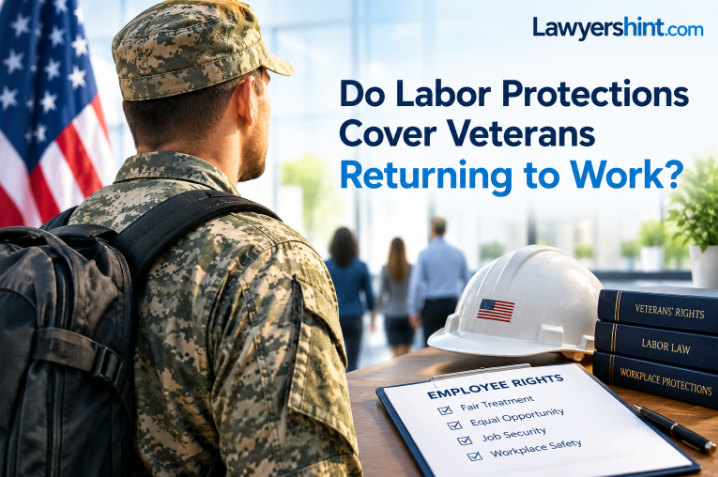

As the Indiana veterans disability lawyers at Unruh Law explains it, coming home from military service sounds like it should be simple. You served, now you return to your old job or find a new one. But the reality often looks messier than the law suggests.
Veterans face a maze of paperwork, employer confusion, and gaps in enforcement that make reentry harder than most assume. The protections exist on paper, but whether they hold up in practice is a different question entirely.
What Federal Law Actually Says
The main law protecting veterans returning to civilian jobs is called USERRA, short for the Uniformed Services Employment and Reemployment Rights Act. It guarantees reemployment after military duty, protects against discrimination, and preserves certain benefits like seniority.
Under USERRA, a returning service member generally must be reinstated to the same job or one with similar pay and status. Employers cannot fire someone without cause for a set period after they return, which sounds reassuring on the surface.
The law also protects health insurance continuation during deployment and bars employers from discriminating based on military obligations. In theory, this creates a safety net for anyone stepping away from civilian work to serve their country.
Where the Protections Fall Short
Here is the catch: laws only work if people know about them and enforce them consistently. Many small business owners have never heard of USERRA or misunderstand what it actually requires from them.
Enforcement also depends heavily on the veteran filing a complaint, often through the Department of Labor. That process can take months, and many former service members simply do not have the energy or resources to fight a drawn out legal battle.
There is also the problem of subtle discrimination. An employer might not directly say military service caused a demotion or exclusion, but patterns can still emerge in scheduling, promotions, or workplace treatment that are hard to prove in court.
Add to this the fact that many veterans work in industries like construction or retail, where job structures shift constantly. Proving a role should have stayed the same becomes complicated when the business itself has changed shape since they left.
The Hidden Struggle Behind Reentry
Legal protections address the surface level issue of getting a job back, but they say nothing about the emotional weight of transition. Many veterans struggle with anxiety, sleep problems, or a sense of disconnection from civilian routines and coworkers.
This mental adjustment does not show up in employment statistics, yet it shapes whether someone actually thrives once reinstated. A person can legally have their job back and still feel like they do not belong there anymore.
Coworkers and supervisors sometimes lack training on how to support someone readjusting to civilian pace and communication styles. Military environments often run on strict hierarchy and urgency, while office culture can feel slower, vaguer, and harder to read.
This mismatch creates friction that no labor law can fix. Without workplace cultures built around patience and understanding, protections meant to secure a job title can still leave someone feeling isolated inside it.
Gaps in Awareness and Access
Beyond the emotional side, plenty of practical gaps make these protections harder to access than they should be. Awareness, paperwork, and timing all create friction that can quietly undercut the promise of reemployment rights.
- Many veterans do not know their reemployment rights extend beyond a single job title
- Small businesses often lack HR staff trained in military related employment law
- Filing a USERRA complaint can take months without any guaranteed resolution
- Contract and gig workers frequently fall outside traditional protections entirely
- State level protections vary widely and confuse people moving across state lines
- Deployment length sometimes affects how strictly reemployment timelines get enforced
- Discrimination based on future deployment risk is difficult to prove in court
These gaps show that having a law is not the same as having a system that reliably delivers on it. Awareness campaigns and stronger employer education could close much of this distance over time.
What Employers Can Do Better
Businesses that want to genuinely support returning service members need more than a compliance checklist. Real support starts with intentional onboarding programs that account for both practical job training and the emotional adjustment period.
Pairing a returning veteran with a mentor who understands military culture can ease communication gaps significantly. This kind of pairing builds trust faster than a generic onboarding packet ever could, especially in fast paced or high stress workplaces.
Flexible scheduling during the first few months back also helps. Medical appointments, adjustment therapy, or family reintegration often require time that a rigid nine to five schedule simply does not accommodate well.
Training supervisors on USERRA basics reduces accidental violations rooted in ignorance rather than malice. Most discrimination cases do not come from cruelty, they come from managers who never learned what the law actually requires of them.
Why This Conversation Still Matters
Veterans deserve more than a technically legal return to work. They deserve workplaces that understand the transition is not instant and that a job title being restored does not automatically restore comfort or confidence.
Labor protections give veterans a foundation, but foundations need buildings on top of them to matter. Without genuine effort from employers and better awareness among workers themselves, these rights risk becoming a formality rather than a lived reality.
Final Thoughts
As more service members return to civilian life each year, the gap between legal protection and everyday experience becomes harder to ignore. Closing that gap requires more than policy, it requires a shift in how workplaces think about reentry altogether.
The question is not really whether the law covers veterans on paper. It is whether workplaces are willing to treat that coverage as a starting point rather than the finish line of their responsibility.