

Greenville, South Carolina, is a growing Upstate community where busy roads like I-85, I-385, Wade Hampton Boulevard, and Woodruff Road carry commuters, families, and visitors every day. When a collision disrupts that routine, the aftermath can quickly extend beyond vehicle damage to medical appointments, time away from work, insurance questions, and unexpected costs. For someone considering legal assistance, what happens in the hours and days after the crash can shape how clearly the circumstances and resulting losses can later be established. Minor details that seem easy to remember may become harder to reconstruct as treatment continues and conversations with insurers multiply.
Creating a reliable account from the outset can help a lawyer understand the sequence of events and identify areas that may require further investigation. This aspect is especially beneficial when preparing Greenville car crash injury claims, where clear supporting information can shape how lawyers address disputed issues. Knowing what deserves attention early helps keep the legal review focused. Careful documentation provides that starting point.
Record the Crash Scene
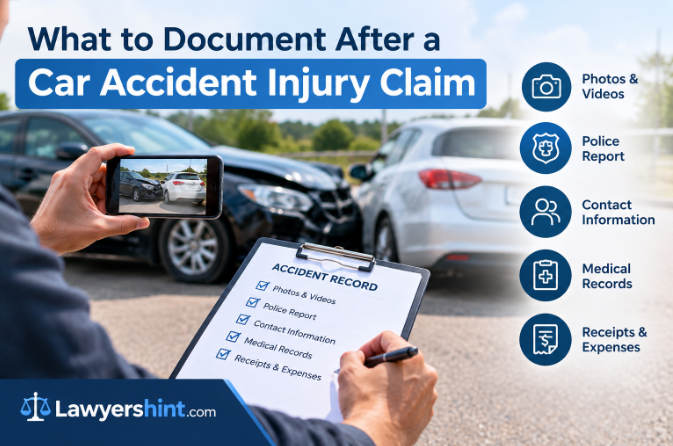
South Carolina drivers should preserve the crash report and every medical record tied to the collision. A complete file connects each expense to the accident and shows how injuries affected work and daily activities. People reviewing car crash injury claims need dated evidence, consistent statements, and records that support each loss. Keeping these materials together reduces confusion during insurance discussions.
Photograph the vehicles, impact points, broken parts, road conditions, traffic signals, lane markings, and visible injuries. Take wide images showing the surrounding area, then capture close views of individual damage. Preserve the original files, including the date and time the device recorded.
Write down the accident’s date, time, location, weather, traffic conditions, and sequence of events. Record what each driver said afterward, but avoid arguments about fault or guesses about what happened. Obtain the responding officer’s name, the report number, and contact details for each witness.
Preserve Medical Evidence
Seek medical care promptly, even when pain seems minor. A concussion, whiplash, soft tissue injury, or internal injury can become clearer after the initial shock fades. Keep emergency-room records, diagnostic reports, prescriptions, referral notes, treatment plans, and medical bills.
Create a symptom journal with dated entries. Record pain levels, sleep problems, mobility limits, anxiety, missed activities, and changes in household responsibilities. Mental health conditions, including depression and post-traumatic stress disorder, belong in the medical record when a provider diagnoses or treats them.
Attend scheduled appointments and follow the prescribed treatment plan. If a provider changes that plan, record the reason and keep the updated instructions. Gaps in treatment can raise questions about recovery, so document transportation problems or other concrete reasons for missed visits.
Track Financial Losses
Save invoices and receipts for medical care, medication, physical therapy, medical equipment, transportation, and necessary household services. Each record should identify the date, provider, service, amount paid, and amount still owed. A spreadsheet or written ledger can organize these figures without replacing the original documents.
Request wage records from an employer when an injury causes missed work. Keep copies of leave requests, reduced-hour schedules, pay statements, and written information about lost commissions or other income. Self-employed workers should preserve appointment records, canceled jobs, invoices, and business statements showing a measurable loss.
Vehicle repairs and replacement transportation also require documentation. Keep the repair estimate, final invoice, rental agreement, towing bill, storage charge, and insurer valuation. These records separate accident-related costs from everyday expenses.
Keep Insurance Communications
Save every letter, email, text message, voicemail, claim number, and settlement document from an insurer. Record the date, time, speaker, and substance of each phone call in a communication log. Do not delete messages or rely on memory when describing what an adjuster said.
Before giving a recorded statement or signing a release, review the request carefully. A release can end claims for injuries or expenses that have not fully developed. Direct questions about liability, medical treatment, or settlement terms to a qualified attorney.
Organize the Claim File
Use separate folders for crash evidence, medical care, financial losses, insurance communications, and personal notes. Name digital files with the date and document type, then back them up securely. Keep paper originals in a protected location and provide copies when insurers request records.
A complete file does not need dramatic language. It needs accurate dates, consistent descriptions, readable documents, and proof connecting each loss to the collision. Those details help an attorney assess liability, damages, and the next steps for the injury claim.
Conclusion
Keep documenting until your medical treatment ends and you know all accident-related losses. Next, review the file for missing records, inconsistent dates, unpaid bills, and unreported symptoms. Then preserve a complete copy before sending documents to an insurer or attorney. Prompt medical care, honest updates, and organized evidence give the claim a clear factual foundation. A dated checklist also helps identify new expenses before they disappear from memory.