


Navigating the legal system can feel like venturing into a complex maze. Whether you are an individual facing personal challenges or a business confronting intricate disputes, the stakes are invariably high. In such critical moments, effective legal representation is not merely a formality; it is a strategic imperative that profoundly influences outcomes.
- Understanding Legal Representation: Rights, Types, and the Access Crisis
- Strategic Forum Selection and Pre-Trial Litigation Planning
- Innovative Delivery Models and Technology in Modern Litigation
- Systemic Impacts of High-Quality Representation in Specialized Courts
- Frequently Asked Questions about Legal Representation Strategies
- Conclusion
We understand that legal battles are often won long before a courtroom decision. They are shaped by meticulous planning, astute decision-making, and a deep understanding of procedural nuances. This comprehensive guide, informed by insights from top litigators, delves into the multifaceted world of legal representation strategies.
We will explore everything from defining the core rights of legal representation to the critical issue of access to justice for everyday Americans and small businesses. We will then examine the intricacies of strategic forum selection and pre-trial planning, which are crucial for any successful litigation. Furthermore, we will highlight the innovative delivery models and technologies that are reshaping modern legal practice, alongside the systemic impacts of high-quality representation in specialized fields like child welfare.
Our goal is to equip you with a clearer understanding of how strategic legal approaches can safeguard your interests and secure favorable results, even in the most challenging legal landscapes. This includes considering specialized areas such as High-stakes family law strategies where expert guidance is paramount.
Understanding Legal Representation: Rights, Types, and the Access Crisis
Legal representation serves as a crucial shield against injustice and a vital voice in complex proceedings where the stakes are often extraordinarily high. It encompasses the act of an attorney advocating on behalf of a client in legal matters, ranging from negotiations and transactional work to court appearances and appeals. The types of legal representation vary widely, often categorized by the area of law (e.g., criminal, civil, family, corporate) or by the client’s ability to pay (e.g., private counsel, public defenders, legal aid).
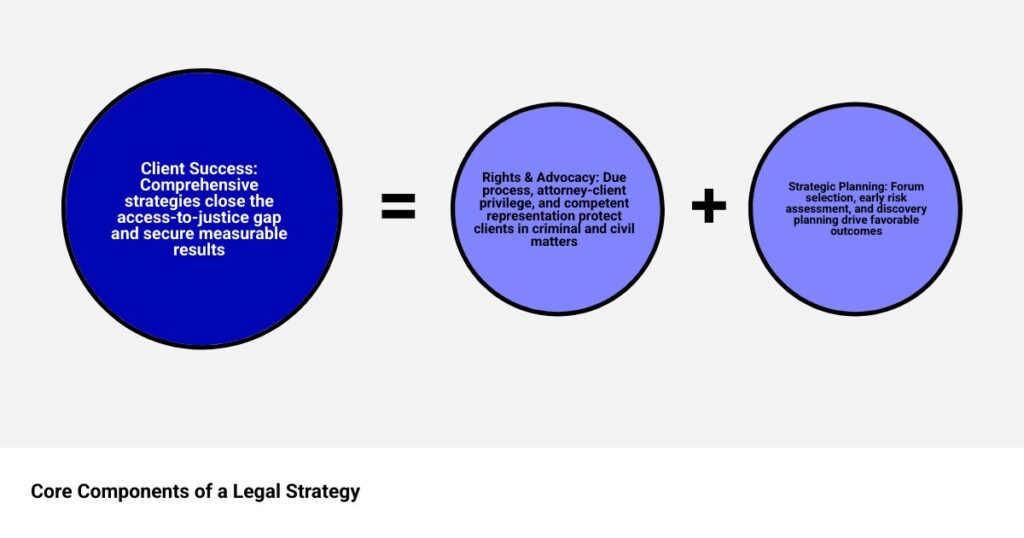
At its core, legal representation provides fundamental rights that underpin a fair justice system. For individuals facing criminal charges, the Sixth Amendment to the U.S. Constitution guarantees the right to legal counsel, ensuring a competent defense. This right extends to indigent defendants through public defenders or court-appointed attorneys. In civil matters, while there isn’t a universal constitutional right to an attorney, the right to competent representation forms a cornerstone of fair justice, protecting individuals from wrongful outcomes or excessive penalties. This ensures due process, attorney-client privilege, and diligent advocacy throughout the legal process.
Defining the Core Rights of Legal Representation Strategies
The right to legal representation is a foundational pillar of justice in many societies. It ensures that every individual, regardless of their background or financial standing, has the opportunity to navigate the complexities of the legal system with professional guidance. This right fundamentally provides:
- Due Process: Legal representation ensures that individuals receive fair treatment and that proper legal procedures are followed. An attorney acts as a guardian of these procedures, challenging any breaches that could prejudice their client.
- Attorney-Client Privilege: This crucial right protects confidential communications between a client and their attorney. It fosters an environment of trust, allowing clients to disclose all relevant information without fear of it being used against them, which is essential for building a robust defense or case strategy.
- Competent Representation: Clients have the right to an attorney who possesses the necessary knowledge, skill, thoroughness, and preparation reasonably necessary for the representation. This means the attorney must be proficient in the relevant area of law and dedicated to pursuing the client’s best interests.
- Fair Trial: In criminal cases, legal representation is indispensable for a fair trial, ensuring that the prosecution’s case is rigorously tested, evidence is properly presented, and all legal avenues for defense are explored. Even in civil contexts, competent representation helps level the playing field, ensuring that all parties’ arguments are heard and considered equitably.
- Advocacy: An attorney’s primary role is to act as an unfailing advocate for their client. This involves not only presenting arguments in court but also negotiating, advising, and strategizing to achieve the most favorable outcome possible. Effective advocacy can make the difference between success and failure, whether in securing a settlement, winning a trial, or preventing adverse actions.
These rights collectively ensure that legal representation is not just a service, but a fundamental safeguard against injustice and a mechanism for upholding the integrity of the legal system.
The Growing Access to Justice Gap for Americans and Small Businesses
Despite the critical importance of legal representation, a significant “access to justice” gap persists, particularly for average Americans and small businesses. Startling statistics reveal the scale of this problem: approximately 90% of Americans and a majority of small businesses cannot afford a lawyer, even when facing acute legal needs. This affordability gap creates “legal deserts” where individuals and small enterprises are left to navigate complex legal landscapes on their own, often with devastating consequences.
The issue is especially pronounced in areas like criminal defense, where the stakes involve personal liberty, and child welfare cases, where family structures and children’s futures hang in the balance. While public defenders exist for indigent criminal defendants, resources are often stretched thin, leading to overwhelming caseloads that can compromise the quality of representation. In civil matters, the absence of a universal right to counsel means many individuals facing eviction, domestic violence, or consumer disputes are forced into self-representation (pro se), putting them at a severe disadvantage against represented adversaries.
Small businesses, which are the backbone of the economy, also suffer significantly. Facing regulatory compliance issues, contract disputes, or employment challenges without legal counsel can lead to costly mistakes, business failures, or unjust outcomes. The high cost of legal services becomes a barrier to growth and stability, preventing small businesses from protecting their intellectual property, navigating complex contracts, or resolving disputes efficiently. This pervasive issue highlights a systemic challenge that undermines the principle of equal justice under the law.

Strategic Forum Selection and Pre-Trial Litigation Planning
The success of any legal endeavor often hinges on strategic decisions made long before a case ever reaches a courtroom. Among the most critical of these is forum selection – the choice of where a legal dispute will be heard. This decision, encompassing jurisdiction and venue, can profoundly impact procedural rules, available remedies, and even the likely disposition of a case. A proactive approach to litigation strategy begins with a thorough early risk assessment, identifying potential conflicts and developing a roadmap for avoidance or effective management. This foundational planning lays the groundwork for all subsequent actions, including discovery planning, motion practice, and overall litigation risk management.
Evaluating Jurisdictional Advantages in Legal Representation Strategies
Choosing the right forum is a sophisticated strategic maneuver that requires a deep understanding of legal and practical considerations. Different jurisdictions have distinct procedural rules, evidentiary standards, and judicial tendencies that can significantly influence a case’s trajectory. For instance, some courts may be known for their efficiency, while others might have a backlog that could delay proceedings.
Analyzing judicial analytics, often available through platforms like Lex Machina, can provide invaluable insights into a particular judge’s or court’s history with similar cases, including motion grant rates, damages awarded, and typical timelines. This data-driven approach allows litigators to make informed decisions about where to file a case, or how to respond to an opponent’s choice of forum. Understanding the choice of law rules is equally vital, as different jurisdictions may apply different substantive laws to a dispute, which can dramatically alter the legal landscape. A well-executed filing strategy, therefore, is not merely about convenience but about leveraging every possible advantage to maximize potential outcomes. When considering how to best position a case for success, understanding these nuances can be as critical as the legal arguments themselves, helping to maximize compensation strategies or achieve other client objectives.
Balancing Trial Readiness with Structured Settlement Opportunities
While the prospect of trial often looms large in litigation, the reality is that most disputes ultimately resolve through negotiation or alternative dispute resolution (ADR) mechanisms like mediation or arbitration. A highly effective legal representation strategy embraces this reality by maintaining a dual focus: being fully prepared for trial while simultaneously creating and seizing structured settlement opportunities.
This approach, sometimes exemplified by models like Cornerstone Advocacy in specific legal contexts, involves meticulous preparation from the outset. This means conducting thorough factual investigation, comprehensive legal research, and strategic discovery to build the strongest possible case. By demonstrating a clear commitment to go to trial, attorneys can often gain significant leverage in settlement discussions. An adversary who perceives a genuine readiness to litigate fully may be more inclined to offer a settlement that is substantially more favorable to our client, rather than face the uncertainties and costs of a full trial.
However, trial readiness doesn’t preclude proactive engagement in settlement talks. Instead, it informs them. Understanding the strengths and weaknesses of both sides, and having a realistic assessment of likely trial outcomes, allows for more effective negotiation. The goal is to create a “trial posture” that signals strength and resolve, while remaining open to ADR pathways that can achieve client objectives more efficiently and cost-effectively. This delicate balance ensures that clients are well-positioned for success, whether through a negotiated resolution or a favorable court judgment.
Innovative Delivery Models and Technology in Modern Litigation
The legal landscape is experiencing a profound transformation, driven by innovative delivery models and rapid advancements in technology. These changes are not just about efficiency; they are fundamentally reshaping how legal services are accessed, delivered, and priced. From online platforms offering unbundled legal services to sophisticated AI tools revolutionizing discovery and analytics, the modern litigator has an expanding arsenal at their disposal. These innovations are crucial for reducing costs, improving processes, and ultimately enhancing the quality and accessibility of legal representation.
How Technology Lowers Costs in Legal Representation Strategies
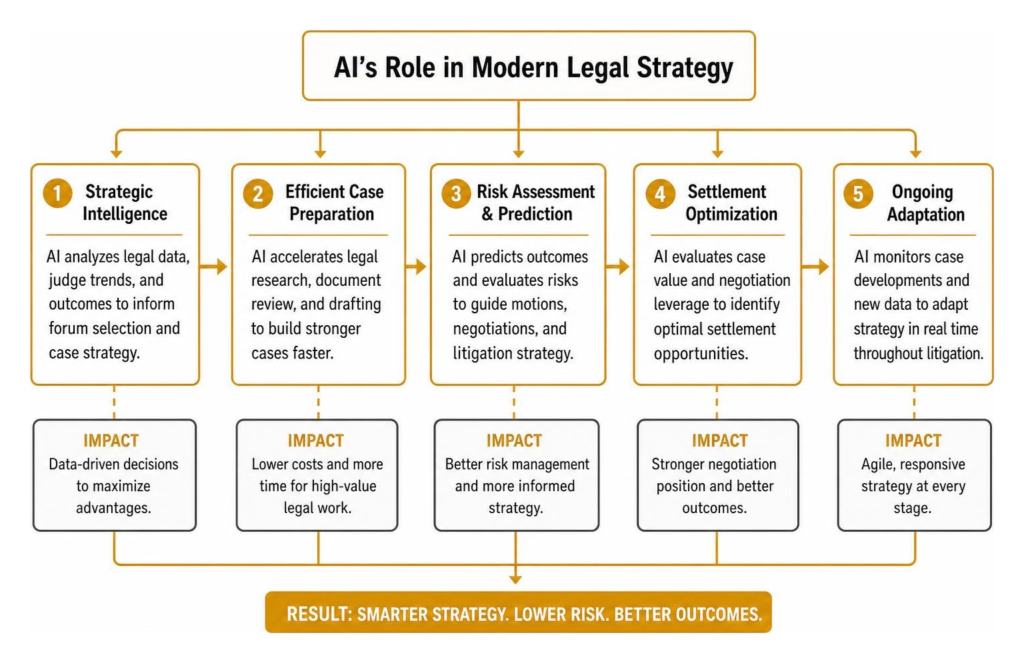
Technology has emerged as a powerful force for cost reduction in legal representation. One of the most significant impacts is seen in e-discovery, where AI-powered tools can process and review vast quantities of electronic documents with unprecedented speed and accuracy. Predictive coding, for example, allows legal teams to train algorithms to identify relevant documents, drastically reducing the time and expense associated with manual review. Studies indicate that AI document review can cut costs by 60-80%, transforming a task that once required dozens of reviewers for months into a process manageable by a small team in weeks.
Beyond discovery, AI tools like Harvey AI are assisting with legal research and brief drafting, generating memos that are 80-90% ready for attorney review, freeing up valuable associate time for higher-level analysis and client interaction. Predictive analytics platforms, such as Lex Machina, provide judge-specific outcome data, allowing attorneys to make more informed decisions about forum selection and motion strategy, potentially changing forum choices in a significant percentage of cases. This data-driven approach not only enhances strategy but also allows for more accurate settlement valuation. Automated drafting tools, billing transparency software, and cloud-based practice management systems all contribute to greater efficiency, allowing legal professionals to deliver high-quality services at a lower cost, making legal representation more accessible. For those looking to refine their approach to litigation, exploring advanced tools and techniques is essential, and insights into Shane Scanlon’s litigation strategies often highlight the integration of such technological advantages.
The Rise of Multidisciplinary and Interdisciplinary Legal Teams
Beyond technological advancements, the legal field is also seeing a growing recognition of the value of multidisciplinary and interdisciplinary legal teams. These teams move beyond the traditional attorney-only model by integrating professionals from other fields to provide more holistic and effective representation. For example, interdisciplinary law offices (ILOs) in child welfare cases often include attorneys, social workers, and parent mentors.
This collaborative approach offers numerous benefits. Social workers can provide crucial context on family dynamics, access to community resources, and support for clients navigating challenging personal circumstances. Parent mentors, who have successfully navigated the child welfare system themselves, offer invaluable peer support and practical guidance. Financial experts can assist in complex divorce or business litigation, while medical professionals might be integrated into personal injury or healthcare fraud cases.
The synergy created by these teams leads to more comprehensive case strategies, better client support, and often, improved outcomes. For instance, in child welfare cases, ILO representation has been shown to result in children being safely returned to their families about 43% more often in the first year. This integrated approach ensures that all facets of a client’s situation—legal, social, psychological, and financial—are addressed, leading to more tailored and effective legal representation.
Systemic Impacts of High-Quality Representation in Specialized Courts
The quality of legal representation has profound systemic impacts, particularly evident in specialized courts such as those handling child welfare and dependency proceedings. In these high-stakes environments, where the state intervenes in family life, effective legal counsel for parents and children is not just a matter of individual justice but a critical factor in achieving better societal outcomes. The introduction of high-quality representation models, often supported by federal funding initiatives like Title IV-E, has demonstrated tangible benefits, from increased family reunification rates to significant cost savings in foster care systems.
Safe Family Reunification and Foster Care Cost Savings
High-quality legal representation for parents in child welfare cases has been shown to dramatically improve outcomes for families and reduce the burden on public systems. When parents are represented by interdisciplinary law offices (ILOs), children placed in foster care were safely returned to their families about 43% more often in the first year compared to those without such representation. This is not merely a statistical improvement; it represents countless families being reunified and children avoiding prolonged stays in foster care.
Moreover, the impact extends to significant financial savings. Studies have revealed that children’s time in foster care was reduced by nearly four months when parents were represented by ILOs. This reduction translates into substantial cost savings for child welfare agencies, potentially up to $40 million annually in foster care board rates, based on data from the study period. These figures underscore that investing in robust legal representation for parents is not just a humanitarian imperative but also a fiscally responsible strategy, leading to safer families and more efficient use of public resources.

Caseload Management and Standards of Practice
Effective caseload management and adherence to rigorous standards of practice are critical for ensuring high-quality legal representation, especially in demanding fields like child welfare. Overburdened attorneys cannot provide the thorough and individualized attention necessary for complex cases. Recognizing this, jurisdictions like Washington state’s Parents Representation Program cap attorneys at 80 active dependency and termination cases per full-time caseload. Such caps are essential to prevent attorney burnout and ensure that each client receives competent and dedicated advocacy.
Furthermore, standards set by bodies like the American Bar Association (ABA) provide crucial guidelines for lawyers representing children, parents, and child welfare agencies in abuse and neglect cases. These standards cover aspects like early representation, specialized training, and the importance of legal advocacy beyond the courtroom, including participation in agency meetings. Prepetition advocacy, which involves legal intervention before a child is formally removed, can also prevent unnecessary placements and promote family stability. By establishing reasonable caseloads and upholding high standards of practice, legal providers and regulatory bodies can collaborate to foster an environment where attorneys are equipped to deliver the best possible outcomes for vulnerable families.
Frequently Asked Questions about Legal Representation Strategies
What are the most effective legal representation strategies for complex business disputes?
For complex business disputes, effective legal representation strategies typically involve a multi-pronged approach. First, early risk assessment is paramount. This includes a thorough evaluation of all documentation, contract enforceability, and the potential financial impact of the dispute. Second, evidence preservation must be prioritized from the moment a dispute arises to ensure all relevant information is secured. Third, strategic decisions regarding forum selection and jurisdiction are crucial, as they can significantly influence procedural rules and potential outcomes. Finally, while preparing for trial, exploring alternative dispute resolution (ADR) options like mediation or arbitration can often lead to more cost-effective and business-aligned solutions, preserving ongoing relationships where possible. The goal is always to align legal actions with overarching business objectives.
How does interdisciplinary legal representation improve case outcomes?
Interdisciplinary legal representation significantly improves case outcomes by offering a holistic approach to client needs. By integrating professionals such as social workers, parent mentors, financial experts, or medical consultants into the legal team, attorneys gain a broader understanding of the client’s situation beyond just the legal facts. This holistic advocacy allows for more comprehensive case planning, addressing not only legal challenges but also underlying social, economic, or psychological factors that may impact the case. The expert collaboration within these teams leads to more tailored strategies, better access to essential resources, and enhanced support for clients, ultimately fostering greater client trust and leading to more favorable and sustainable outcomes, particularly in complex areas like child welfare.
How is artificial intelligence changing modern litigation strategy?
Artificial intelligence is profoundly transforming modern litigation strategy by providing unprecedented data-driven insights and efficiencies. AI tools are revolutionizing document review through predictive coding, drastically reducing costs and time in e-discovery. Predictive analytics platforms offer judge-specific data and outcome probabilities, enabling more informed decisions on forum selection, motion strategy, and settlement valuation. AI also assists with legal research and drafting, streamlining tasks that traditionally consumed significant attorney time. While AI enhances efficiency and provides valuable data for data-driven decisions, it serves as an augmentation to, rather than a replacement for, human legal judgment, allowing attorneys to focus on complex analysis and client interaction.
Conclusion
The journey through complex legal battles demands more than just legal knowledge; it requires a sophisticated understanding of legal representation strategies. As we’ve explored, from the fundamental rights of representation to the pressing need for greater access to justice, and from the strategic nuances of forum selection to the transformative power of technology and multidisciplinary teams, the landscape of legal practice is dynamic and evolving.
Strategic planning, informed by data and a holistic view of client needs, is no longer a luxury but a necessity. Innovations in legal technology are not just reducing costs but are also enabling more precise and effective advocacy. Moreover, the rise of interdisciplinary teams demonstrates a growing recognition that the best outcomes often emerge from a collaborative approach that addresses all facets of a client’s challenges.
The future of law is one where access to justice is expanded, where legal services are delivered with greater efficiency and empathy, and where strategic foresight guides every decision. By embracing these insights and continuously adapting to new models and technologies, we can collectively work towards a legal system that is more equitable, effective, and responsive to the needs of all.