
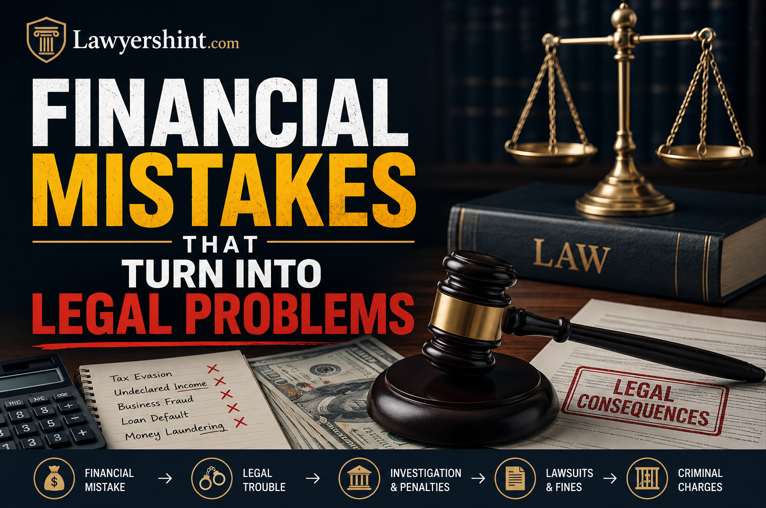

Financial mistakes rarely remain purely financial. What may seem like a minor issue, such as a missed deadline, an unclear agreement, or inaccurate reporting, can quickly lead to legal exposure, penalties, or disputes. Many entrepreneurs and freelancers underestimate how closely financial decisions are connected to legal obligations, especially when operating across different jurisdictions with increasing reporting and transparency requirements. Getting timely financial legal advice can make a critical difference in preventing these risks. Companies like Key2Law help businesses identify weaknesses in their financial processes before they turn into legal problems. In this article, we explain which financial mistakes most often lead to legal consequences and how to avoid them in practice.
Why financial decisions often lead to legal consequences
Financial decisions are rarely isolated from legal obligations. Every transaction, payment, or financial report is governed by regulations, contractual terms, or compliance requirements. When these elements are overlooked, even unintentionally, financial issues can quickly turn into legal problems.
This happens because financial actions create enforceable responsibilities. A signed contract defines payment terms and liabilities. Tax reporting must comply with strict legal standards. Even internal financial operations may fall under regulatory control, especially in cross-border business.
Key2Law supports businesses in aligning financial processes with legal requirements. This includes reviewing contracts, assessing compliance risks, and helping structure financial operations in a way that minimizes exposure to penalties or disputes.
One of the main reasons financial mistakes escalate is the lack of proper documentation and legal oversight. Missing clauses in agreements, unclear payment terms, or incorrect reporting can weaken a company’s legal position and make it difficult to defend its interests.
In addition, many legal consequences are triggered automatically. Increasingly, tax authorities and regulators rely on automated data exchange systems and real-time monitoring, which makes it easier to detect inconsistencies and non-compliance across jurisdictions. Late tax filings, delayed payments, or regulatory breaches often result in fines or sanctions without the need for court involvement. This is why even small financial errors should not be ignored.
The most common financial mistakes that cause legal issues
Most legal problems in business arise not from intentional violations, but from routine financial mistakes that accumulate over time. These issues often remain unnoticed until they trigger audits, disputes, or penalties. The risk increases significantly when financial decisions are made without considering their legal implications.
Tax misreporting and incorrect filings
Errors in tax reporting are one of the most common triggers for legal consequences. Businesses often misclassify expenses, underreport income, or miss filing deadlines. In many jurisdictions, this automatically leads to penalties or audits. Repeated violations may escalate into more serious legal actions, including account restrictions or enforcement measures.
Ignoring contracts or relying on weak agreements
Operating without properly drafted contracts creates significant legal exposure. Generic templates or incomplete agreements often lack essential clauses related to liability, payment terms, and dispute resolution. As a result, when a conflict arises, businesses may find it difficult to enforce their rights or defend their position.
Mixing personal and business finances
This mistake is especially common among founders and small businesses. Using personal accounts for business transactions or failing to separate expenses complicates financial reporting and increases tax risks. It may also lead to the loss of limited liability protection, exposing individuals to personal financial responsibility.
Late payments and poor debt management
Delays in payments are not just a financial issue but also a legal one. Missing contractual deadlines can trigger penalty clauses, interest charges, or formal claims from counterparties. Over time, this can escalate into legal disputes and damage long-term business relationships.
Failure to comply with financial regulations
As businesses grow, compliance requirements become more complex. Ignoring obligations such as AML, KYC, transaction monitoring requirements, or industry-specific regulations can result in fines, operational restrictions, or suspension of activities. This risk is particularly high in regulated sectors and cross-border operations.
Unclear financial arrangements with partners
Partnership disputes often arise due to poorly defined financial terms. The absence of clear agreements on profit distribution, cost sharing, or exit mechanisms creates uncertainty and conflict. These issues frequently escalate into legal disputes that could have been avoided with proper structuring.
Key2Law supports clients by reviewing financial processes, strengthening contractual frameworks, and ensuring compliance with applicable legal requirements. This helps businesses reduce exposure to disputes and regulatory risks.
How financial mistakes escalate into lawsuits and penalties
Financial mistakes rarely lead to immediate legal action. In most cases, they develop gradually, starting as minor issues and escalating over time due to inaction, poor documentation, or lack of legal oversight. What makes this process dangerous is that businesses often underestimate the early stages and react only when the situation becomes critical.
Escalation typically follows a predictable pattern:
- Initial financial error. A business makes a seemingly minor mistake, such as a late payment, an incorrect invoice, or an error in financial reporting. At this stage, the issue is usually easy to fix but is often ignored.
- Accumulation of inconsistencies. Repeated errors or unresolved issues begin to build up. This may include multiple delayed payments, inconsistencies in financial records, or missing documentation. The situation becomes more visible to counterparties or regulators.
- Trigger event. The problem is identified through an audit, complaint, contract breach, or regulatory check. At this point, the issue shifts from a financial matter to a legal one.
- Legal or regulatory response. Penalties, formal claims, or enforcement measures are initiated. This can include fines, contract termination, or legal notices, account freezes, or restrictions imposed by banks and payment institutions. from partners or authorities.
- Escalation into dispute or proceedings. If the issue is not resolved promptly, it may develop into litigation, arbitration, or regulatory enforcement actions, often involving significant financial and reputational damage.
One of the key risks is that many penalties are applied automatically. Late tax filings, missed compliance obligations, or breaches of contractual terms may result in fines without any prior warning or negotiation stage.
Key2Law helps businesses identify risks at an early stage, review financial and contractual structures, and take preventive measures before issues escalate into legal disputes.
Key legal risks for businesses and individuals
Financial mistakes create different types of legal risks depending on the structure of the business and the role of the person involved. Companies, founders, and freelancers face different levels of exposure, but the consequences can be equally serious.
For businesses
Companies typically face regulatory and contractual risks that can directly affect their operations and financial stability.
The most common risks include:
- Regulatory fines and penalties. Violations of tax rules, reporting requirements, or financial regulations can lead to significant fines and sanctions.
- Contractual disputes. Failure to meet payment terms or financial obligations often results in claims from partners, suppliers, or clients.
- Operational restrictions. Non-compliance with financial regulations may lead to limitations on business activities, including account freezes or license suspension.
- Reputational damage. Legal issues related to finances can undermine trust and affect relationships with partners, investors, and financial institutions.
For individuals (founders, freelancers, managers)
Individuals are often exposed to risks when financial management is not properly structured or separated from personal responsibility.
Key risks include:
- Personal liability. Mixing personal and business finances or poor corporate structuring may result in individuals being held personally responsible for business obligations.
- Tax penalties and audits. Incorrect reporting or failure to comply with tax obligations can lead to fines, audits, or additional tax assessments.
- Legal disputes with clients or partners. Unclear financial agreements or missed payments may result in claims, especially in freelance or partnership arrangements.
- Loss of legal protection. Failure to follow proper financial and legal procedures may weaken the ability to defend one’s position in case of a dispute.
Key2Law assists both businesses and individuals in identifying these risks, structuring financial processes correctly, and ensuring compliance with applicable legal requirements.
How to avoid financial mistakes with legal consequences
Preventing financial mistakes is not only about accurate accounting, but also about building processes that align with legal requirements. In most cases, risks can be avoided by introducing basic controls, clear documentation, and regular monitoring of financial operations.
To reduce the likelihood of legal issues, businesses and individuals should focus on the following:
- Maintain accurate and transparent financial records. All transactions should be properly documented and reflected in accounting systems. This reduces the risk of errors, simplifies reporting, and provides protection in case of audits or disputes.
- Separate personal and business finances. Using dedicated accounts and clearly distinguishing expenses helps avoid tax complications and protects individuals from personal liability.
- Use well-drafted and jurisdiction-specific contracts. Agreements should clearly define payment terms, responsibilities, and dispute resolution mechanisms. Generic templates often fail to provide adequate protection.
- Monitor tax obligations and deadlines. Timely and accurate tax reporting is essential to avoid penalties. Businesses should regularly review their obligations, especially when operating in multiple jurisdictions.
- Implement basic compliance procedures. Even small companies should follow essential compliance practices, including proper record-keeping, verification processes, and internal controls.
- Seek professional support when needed. Legal and financial advisors can identify risks that are not obvious from an operational perspective and help structure processes correctly from the start.
Key2Law works with entrepreneurs, international businesses, and growing companies that need clear and reliable financial and legal structures. The team supports clients in reviewing contracts, identifying compliance gaps, and structuring financial processes in a way that minimizes exposure to fines, disputes, and regulatory risks. By combining legal expertise with a practical understanding of business operations, Key2Law helps clients prevent problems before they arise and maintain full control over their financial and legal position.