
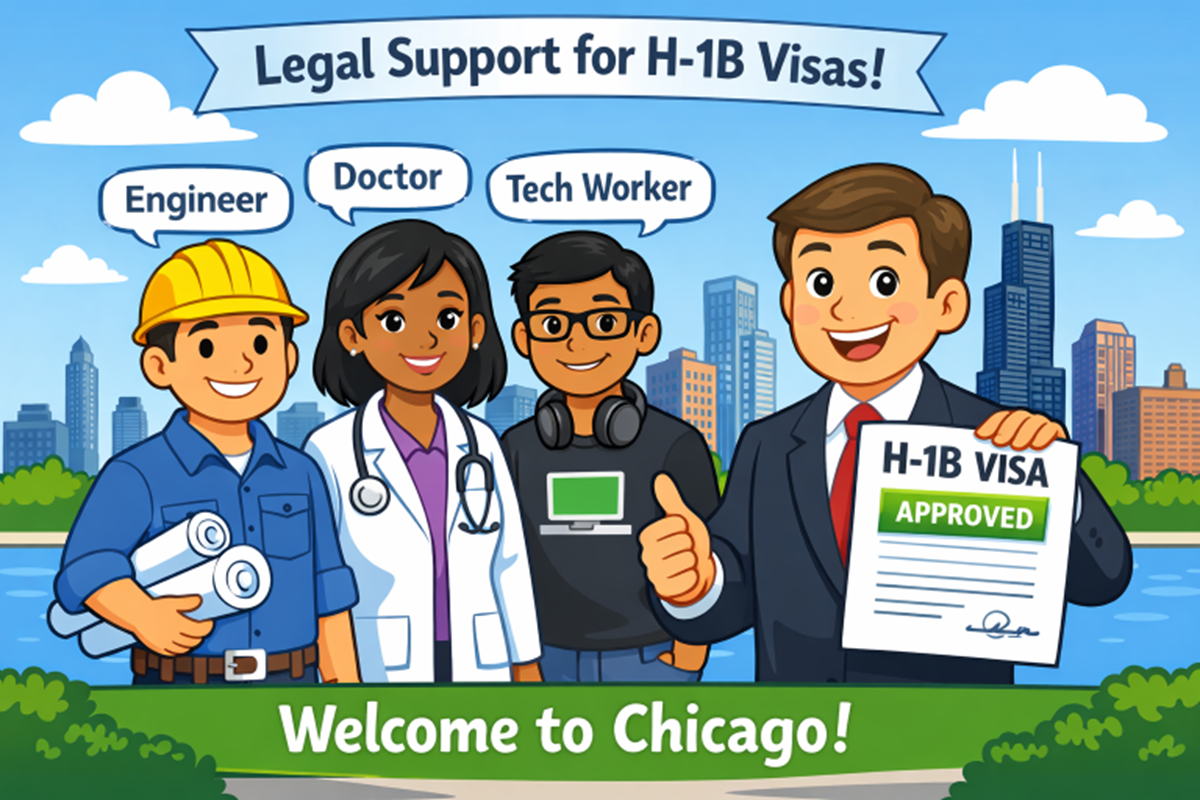

Find the right H-1B lawyer in Chicago with expert tips on experience, visa success rates, fees, and legal guidance to secure your work visa.
- Understanding the H-1B Visa Program in Chicago
- Educational and Professional Qualifications
- Specialty Occupation Requirements
- Employer Obligations and Labor Condition Application
- H-1B Cap and Lottery System
- Recent Policy Changes and Their Impact on Chicago Applicants
- Alternative Visa Options for Chicago Professionals
- Final Thoughts
The H-1B visa program is one of the most sought-after avenues for skilled professionals looking to work in the United States. For employers and aspiring employees in Chicago, Illinois, navigating the H-1B process requires specialized legal knowledge, familiarity with local labor market trends, and careful attention to federal procedures. Partnering with an experienced H-1B lawyer in Chicago can greatly improve your chances of success. For detailed guidance tailored to the Chicago area, seek out experts like https://www.lighthousehq.com/h-1b-lawyer/chicago.
Chicago professionals and employers benefit from working with legal experts who understand both the local job market and the specific nuances of H-1B requirements. Each step of the visa process, from proving educational qualifications to ensuring workplace compliance, impacts approval prospects. Understanding these details is critical for individuals and businesses seeking smooth and successful outcomes in the Windy City.
Understanding the H-1B Visa Program in Chicago
The H-1B visa allows U.S. companies, including Chicago’s leading corporations and startups, to employ foreign workers in specialty occupations requiring advanced knowledge and at least a bachelor’s degree or equivalent. Industries such as information technology, engineering, healthcare, finance, architecture, and sciences in Chicago regularly sponsor H-1B candidates to fill positions essential for business growth and competitiveness.
Local H-1B lawyers in Chicago assist employers in aligning workforce needs with immigration regulations. They ensure that petitions meet the requirements of the Department of Labor and U.S. Citizenship and Immigration Services (USCIS), reducing errors and delays. Given Chicago’s dense economic landscape and concentration of multinational companies, legal guidance is particularly valuable for employers and applicants navigating this competitive process.
Educational and Professional Qualifications
To qualify for an H-1B visa, applicants in Chicago must possess at least a relevant bachelor’s degree or its recognized equivalent. Graduates from local universities, including the University of Chicago and Northwestern University, often transition into Chicago’s workforce through H-1B sponsorship. For candidates without formal degrees, eligibility may still be established if a combination of education, specialized training, and progressively responsible work experience equates to a U.S. bachelor’s degree. This is particularly relevant in Chicago’s technology, engineering, and financial sectors, where industry certifications and hands-on experience carry significant weight.
Applicants should work closely with a Chicago-based attorney to compile documentation of qualifications and create a complete professional profile. Each application is carefully scrutinized, ensuring legal expertise and strengthening the petition.
Specialty Occupation Requirements
A core aspect of the H-1B petition is demonstrating that the offered position qualifies as a specialty occupation. In Chicago, specialty roles are typically found in IT, finance, healthcare management, engineering, architecture, and scientific research. These roles must require specialized knowledge and skills that can only be acquired through advanced education or equivalent experience. Employers in Chicago must provide detailed job descriptions, organizational charts, and evidence explaining why the position cannot be filled by local talent without the required expertise.
Employer Obligations and Labor Condition Application
Chicago employers sponsoring H-1B employees must submit a Labor Condition Application (LCA) with the Department of Labor. This ensures that wages are at or above the prevailing rate for similar roles in Chicago and that hiring foreign workers does not negatively affect local employees. Complying with LCA rules is critical in Chicago’s competitive workforce environment, as errors can result in audits, penalties, or delayed approvals.
H-1B Cap and Lottery System
The H-1B visa program has a strict annual cap: 65,000 new visas plus an additional 20,000 reserved for candidates with a U.S. master’s degree or higher. Due to high demand in Chicago, most petitions are subject to a lottery system. Local employers and applicants must prepare and submit petitions meticulously to maximize their chance of selection. Understanding lottery procedures and recent changes to filing periods is part of the services offered by an experienced H-1B lawyer in Chicago.
Recent Policy Changes and Their Impact on Chicago Applicants
Recent federal policy updates, including increased fees on new H-1B petitions, have affected both employers and candidates in Chicago. These changes require businesses to adapt workforce-planning strategies and applicants to ensure they meet updated filing requirements. Staying informed of federal and local regulatory changes is essential for success. Chicago-based legal counsel helps clients monitor developments, anticipate challenges, and respond efficiently.
Alternative Visa Options for Chicago Professionals
Given the competitive H-1B landscape, alternative pathways may be suitable for certain applicants. For example, the EB-1 visa is ideal for foreign executives, accomplished researchers, and individuals with extraordinary abilities seeking permanent residency. Chicago immigration lawyers guide clients in evaluating these options and aligning their professional profiles with the best-suited visa category.
Final Thoughts
Successfully obtaining an H-1B visa in Chicago requires a thorough understanding of eligibility criteria, compliance regulations, and local labor market dynamics. Both employers and foreign professionals benefit from working with a knowledgeable H-1B lawyer in Chicago, who can streamline petition preparation, reduce risk, and identify alternative pathways when appropriate.
With strategic legal guidance, careful documentation, and proactive preparation, Chicago-based applicants and companies can navigate the H-1B process confidently. By staying informed about policy changes, maintaining compliance, and leveraging expert advice, Chicago continues to attract and retain top global talent, strengthening the city’s position as a hub for innovation and professional excellence.