
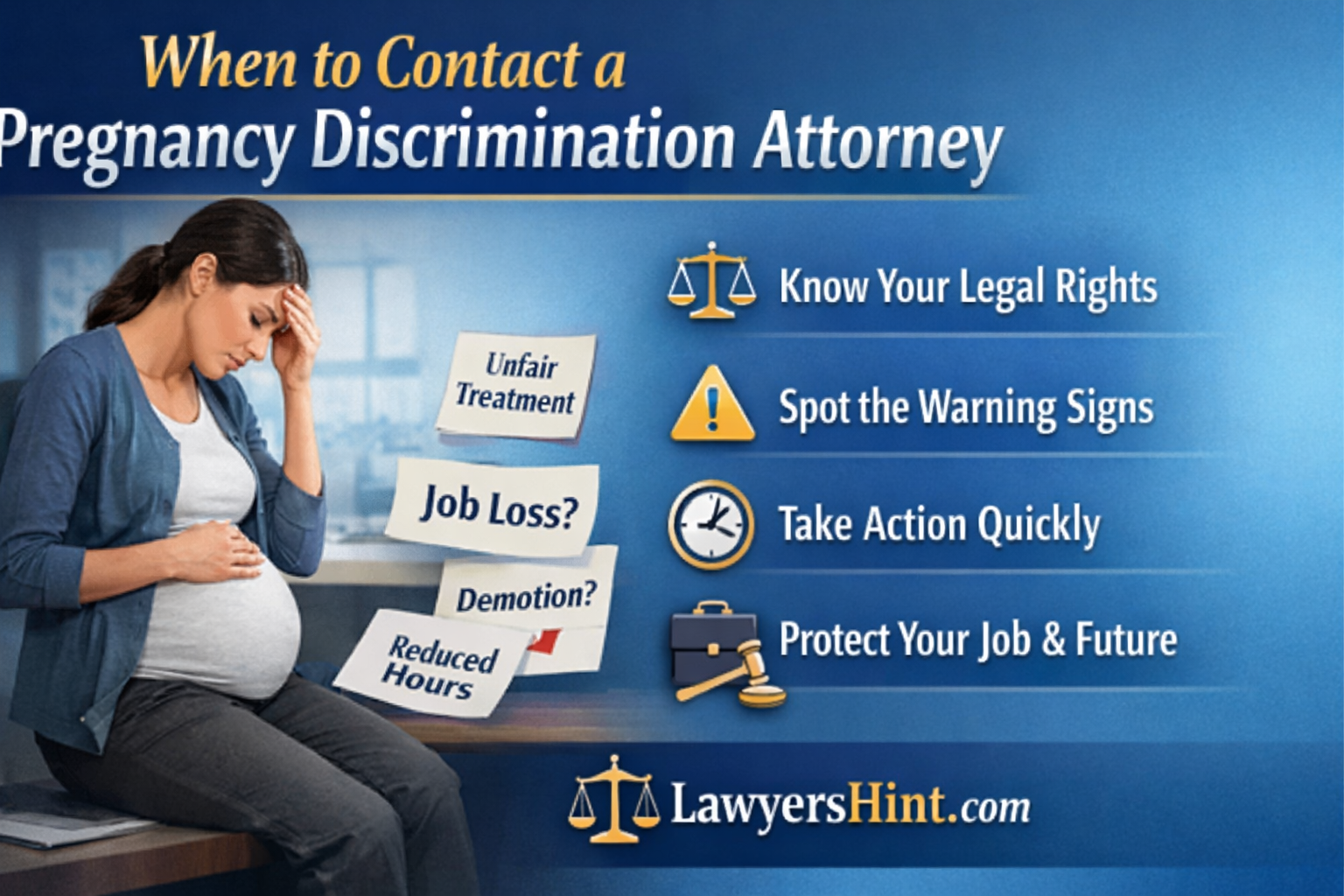

Know when to contact a pregnancy discrimination attorney, your legal rights, warning signs, and how timely action can protect your job and future.
- What Is Workplace Pregnancy Discrimination?
- Typical Symptoms of Pregnancy Discrimination
- The Intersecting Issues of Pregnancy Discrimination and Harassment
- So When Do You Call a Lawyer?
- Preparation of Steps Before a Lawyer
- How an Attorney Can Help You
- What Employers Can Do to Avoid Pregnancy Discrimination
- Final Thoughts
Pregnancy is supposed to be a happy and empowering experience in an individual life- not a stressful and fearful experience which includes unfair treatment at work. To the great dismay, a good number of employees continue to experience discrimination following the announcement of their pregnancy. Even the slightest form of bias to straight-up refusal of opportunities, pregnancy-related discrimination in the workplace may affect not only the development of the career but also its emotional effects.
In case you think that your employer is discriminating against you due to pregnancy, then it may be time to seek the legal services of a pregnancy discrimination lawyer, who will be able to inform you of your rights and see the most appropriate action to take depending on the circumstances.
What Is Workplace Pregnancy Discrimination?
Pregnancy Discrimination involves the employer treating an employee unfavourably based on pregnancy, childbirth, or other medical-related matters. This kind of discrimination is made illegal in various regions and falls under the employment and human right laws.
It may occur at any point of employment: at the point of hiring, promotion, job assignment or even dismissal. Employers must also make reasonable accommodations of pregnant employees just like accommodating other ailments.
Typical Symptoms of Pregnancy Discrimination
It is possible to be aware of the initial symptoms of discrimination and act at the first stage before the situation becomes worse. The following are some of the most prevalent indicators:
1. Abrupt Shifts in Work Accountabilities
This may be a red flag in case your responsibilities are minimized, reallocated or greatly changed upon your pregnancy announcement without any good reason.
2. The Reasoning: Being Overlooked in Promotions
Do you feel like you are not getting promotions although you are qualified? In case of the promotion of less qualified people, instead, pregnancy bias may be at play.
3. Unfavorable Reviews or Aggressive Natures
Barbed wire, comments, jokes, and inappropriate remarks about your pregnancy are definite indicators of poor work environment.
4. Failure to Reasonable Accommodations
Employers may be asked to offer accommodations like modified tasks, flexible working hours or medical leaves. Denying to do so without any reason can be a sign of discrimination.
5. Pressure to Take Leave Early
When your employer forces you to take leave at a time that is not yet required or when he or she is telling you not to resume work when you come back then it might be discriminatory.
6. Inappropriate Termination or Demotion
The fact that you have been demoted or fired soon after telling your employer about your pregnancy is enough of a reason to raise some serious warning signals.
The Intersecting Issues of Pregnancy Discrimination and Harassment
Pregnancy discrimination may also be combined with harassment in a few instances, particularly in instances where the employees are repeatedly subjected to inappropriate remarks or actions. It is in this place that a Sexual Harassment Attorney can also come in handy, since he or she could evaluate whether or not your case is a combination of several instances of inappropriate conduct in the workplace and advise you on the same.
So When Do You Call a Lawyer?
It is very important to know when to hire an attorney. Some of the reasons that justify contacting an attorney are as follows:
1. Ignoring Internal Complaints
You might need to take the case to court especially when you have reported the problem to the HR or the management and nothing has been done about it.
2. When You Are Revenged
Some of the possible forms of retaliation include; reduction of hours, demotion, exclusion or termination following the complaint filing. This is unlawful and has to be dealt with.
3. When You Caught on the Wrong Side of the Law
Should your employer deny you legally mandatory accommodations or benefits, an attorney will enforce your rights on you.
4. When You Are Not Sure About Your Case
A legal consultation can also help you know how to proceed even when you are not sure that what you are facing is discrimination.
Preparation of Steps Before a Lawyer
There are some crucial steps to consider before contacting an attorney that can help your case:
1. Document Everything
Take detailed notes about an event, dates, conversations, e-mails and eyewitnesses. This is one of the pieces of evidence that may be essential in the case building.
2. Review Company Policies
Know the policies of your employer on disability and discrimination. This will assist you in detecting violations.
3. File an Internal Complaint
The majority of companies have established channels of reporting discrimination. Having taken these steps demonstrates that you have tried to solve the problem in-house.
4. Gather Supporting Evidence
Keep medical records (where applicable), performance reviews, and other messages that help to prove your allegations.
How an Attorney Can Help You
An expert employment lawyer will be important in defending your rights and leading you through the process in court. Here’s how they can assist:
- Case Assessment: Decide whether your experience is considered as being discriminatory or not.
- Legal Advice: State your rights and available options.
- Negotiation: Have your employer come to an equitable agreement with you.
- Representation: Show for you in court should it be necessary.
Having a professional legal person can help you to have a positive outcome.
What Employers Can Do to Avoid Pregnancy Discrimination
The employers are also expected to establish a workplace that is fair and inclusive. They can do this by:
- This should be done by creating explicit anti-discrimination policies.
- Regular employee and training manager training.
- Delivering reasonable accommodations.
- Promoting open communication.
- Listening to complaints and responding to them in real-time.
Employees are not only safeguarded, but also trusting and workplace culture will be enhanced through an proactive approach.
Final Thoughts
It is not only unfair but in most cases pregnancy discrimination is contrary to the law. None of the employees must feel that he or she is being coerced to either decide on their career or have a family. Early identification of the signs and action may result in a lot of difference.
In case you feel discriminated, do not keep it to yourself. Note the experiences, report the problem, and consult legal advice where necessary. This is not only a way to defend your rights, but to make the work place a more equal place to other people.