
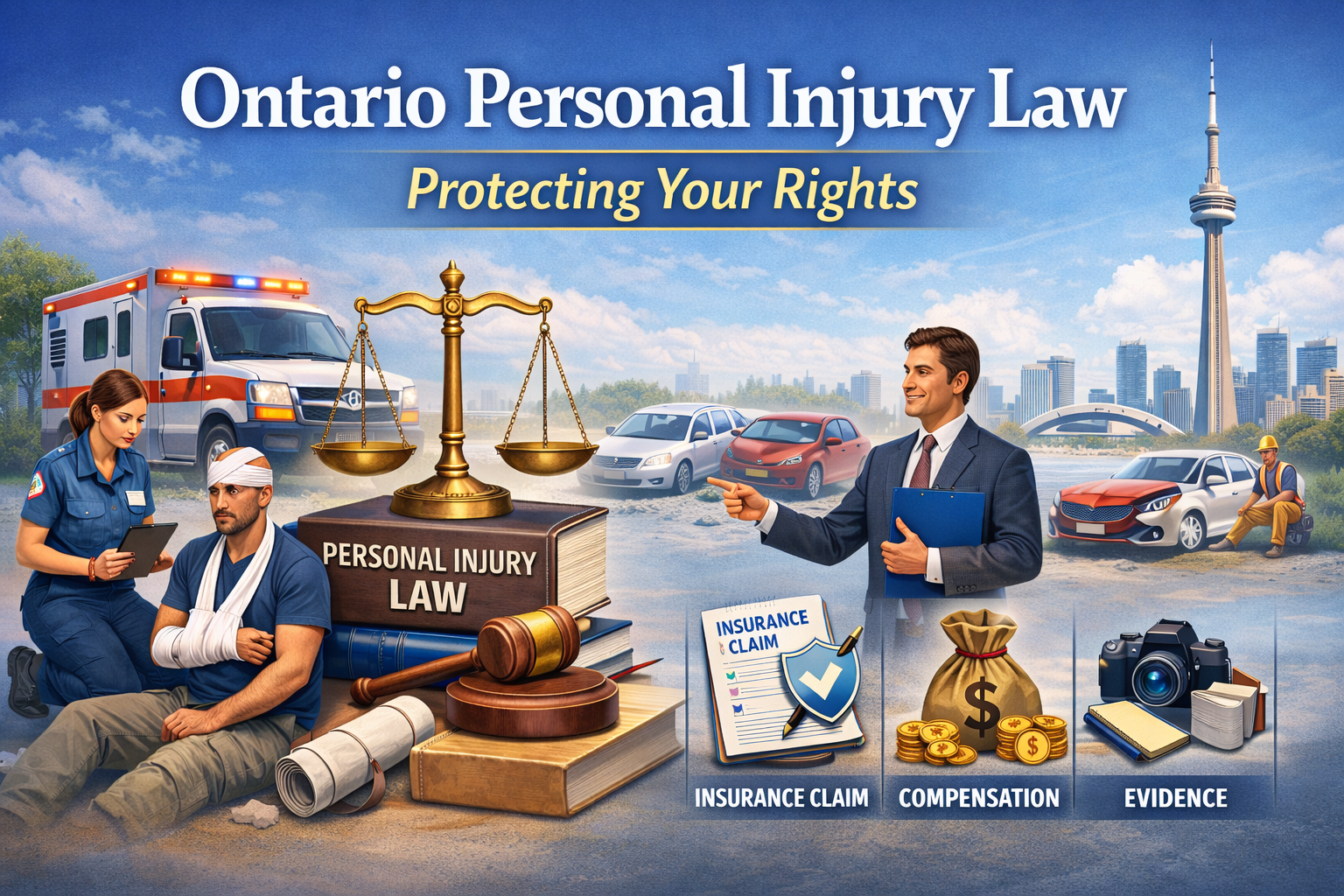

Learn how Ontario personal injury law protects accident victims, what steps to take after an injury, and how to pursue fair compensation.
- What Is Personal Injury Law in Ontario?
- Common Types of Personal Injury Cases in Ontario
- How Compensation Works Under Ontario Personal Injury Law
- The Importance of Time Limits in Ontario
- Why Legal Representation Matters in Personal Injury Cases
- What Sets Strong Ontario Personal Injury Lawyers Apart
- Contingency Fees and Access to Justice
- Final Thoughts
Personal injury law in Ontario exists to protect individuals who suffer physical, emotional or financial harm due to someone else’s negligence. Whether the injury results from a car accident, slip and fall, medical malpractice or workplace incident, Ontario’s legal framework ensures victims have a pathway to seek fair compensation. Navigating this system, however, can be complex, which is why many people look for the Best Personal Injury Lawyer in Toronto to guide them through the process.
This article explores how personal injury law works in Ontario, the types of cases covered, compensation rules and why choosing the right legal representation can make a life-changing difference.
What Is Personal Injury Law in Ontario?
Personal injury law deals with civil claims where an individual has been harmed due to another party’s careless or wrongful actions. In Ontario, these cases are governed by a combination of statutes, common law principles and court precedents.
The core idea behind personal injury law is accountability. If a person, business or institution fails to act responsibly and that failure causes harm, the injured party has the right to seek compensation. This compensation is meant to restore, as much as possible, the victim’s quality of life before the injury.
Ontario’s legal system emphasizes fairness, but strict rules and deadlines apply. Missing a filing deadline or failing to present proper evidence can significantly weaken a claim.
Common Types of Personal Injury Cases in Ontario
Personal injury law in Ontario covers a wide range of situations. Some of the most common include:
Motor Vehicle Accidents
Car, truck, motorcycle and pedestrian accidents are among the leading causes of personal injury claims. Ontario operates under a no-fault insurance system, meaning accident benefits are available regardless of who caused the crash. However, lawsuits for pain and suffering are still possible in serious cases.
Slip and Fall Accidents
Property owners in Ontario have a legal duty to maintain safe premises. If someone slips on ice, wet floors or poorly maintained walkways, the property owner may be held liable under the Occupiers’ Liability Act.
Medical Malpractice
When healthcare professionals fail to meet accepted standards of care, patients may suffer severe consequences. Medical malpractice cases are complex and require strong legal and medical evidence.
Workplace Injuries
Although many workplace injuries are handled through the Workplace Safety and Insurance Board (WSIB), some cases still allow for civil lawsuits, especially when a third party is involved.
Product Liability
Manufacturers and distributors can be held responsible if a defective product causes injury. These cases often involve consumer goods, machinery or medical devices.
How Compensation Works Under Ontario Personal Injury Law
Compensation in Ontario personal injury cases is designed to address both financial and non-financial losses. These may include:
- Medical expenses and rehabilitation costs
- Loss of income and reduced earning capacity
- Pain and suffering
- Future care costs
- Out-of-pocket expenses
Ontario law places caps and thresholds on certain types of damages, particularly in motor vehicle accident cases. For example, pain and suffering claims must meet a legal threshold of seriousness and awards may be reduced by statutory deductibles.
Because of these limitations, working with a Lawyer that gets big settlements for personal injury law in Toronto can be critical. An experienced lawyer understands how to build a strong case within Ontario’s legal framework and maximize compensation despite statutory restrictions.
The Importance of Time Limits in Ontario
Ontario has strict limitation periods for filing personal injury claims. In most cases, a lawsuit must be started within two years from the date of the injury or from when the injury was discovered.
Slip and fall cases against municipalities have even shorter notice requirements, sometimes as little as 10 days. Failing to meet these deadlines can result in losing the right to sue entirely.
Early legal advice helps ensure all notices and filings are completed correctly and on time.
Why Legal Representation Matters in Personal Injury Cases
Insurance companies are skilled at minimizing payouts. Without proper legal support, injured individuals may accept settlements that fail to cover long-term medical care, lost income or future needs.
The Best Personal Injury Lawyer in Toronto brings more than just legal knowledge. They provide strategic negotiation skills, access to medical experts and courtroom experience if the case goes to trial. Their role is to protect the victim’s interests and push back against unfair settlement offers.
Strong legal representation often leads to higher settlements because insurers recognize when a claim is well-prepared and trial-ready.
What Sets Strong Ontario Personal Injury Lawyers Apart
Not all personal injury lawyers offer the same level of service or results. Some key qualities to look for include:
- Deep understanding of Ontario personal injury statutes
- Proven experience with complex injury claims
- Strong negotiation and litigation skills
- Access to medical and financial experts
- Transparent communication and client support
A Lawyer that gets big settlements for personal injury law in Toronto typically has a track record of handling serious injury cases and is not afraid to take matters to court if negotiations fail.
Contingency Fees and Access to Justice
Most personal injury lawyers in Ontario work on a contingency fee basis. This means clients do not pay legal fees upfront. Instead, the lawyer is paid a percentage of the settlement or court award.
This arrangement improves access to justice by allowing injured individuals to pursue claims without financial risk during an already stressful time.
Final Thoughts
Personal injury law in Ontario is designed to protect victims, but the legal process can be challenging without the right guidance. Understanding your rights, acting within legal time limits and choosing experienced representation are all essential steps toward fair compensation.
Whether dealing with a car accident, slip and fall or medical negligence, working with the Best Personal Injury Lawyer in Toronto can significantly impact the outcome of your case. A skilled Lawyer that gets big settlements for personal injury law in Toronto understands how to navigate Ontario’s legal system, challenge insurance companies and fight for the compensation injured individuals truly deserve.
If you or a loved one has suffered an injury due to negligence, learning about personal injury law is the first step toward recovery and justice.
FAQ: Ontario Personal Injury Law
What is Ontario Personal Injury Law and how does it work?
Ontario Personal Injury Law covers legal rights and compensation options for people injured in accidents caused by someone else’s negligence.
Who can file a claim under Ontario Personal Injury Law?
Anyone injured in Ontario due to another party’s fault—such as in car accidents, slip and falls, or workplace incidents—may be eligible to file a claim.
How long do I have to file a claim under Ontario Personal Injury Law?
Most claims must be filed within two years, but some exceptions may apply depending on the situation.
What compensation is available under Ontario Personal Injury Law?
Compensation may include medical expenses, lost income, rehabilitation costs, pain and suffering, and future care needs.