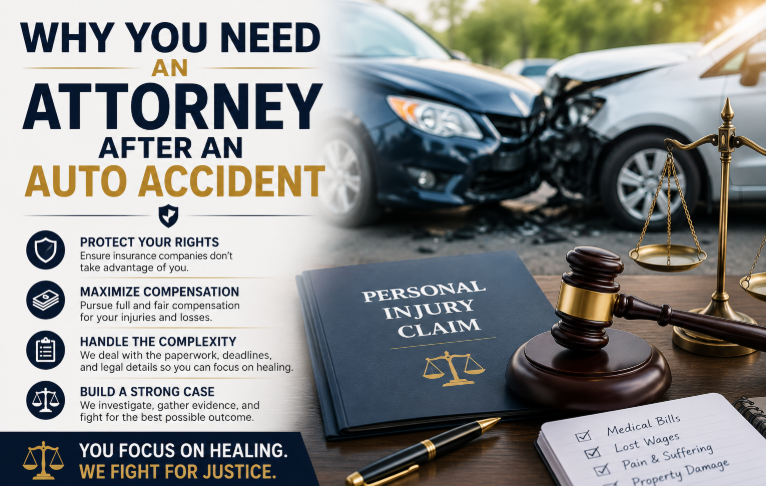

Choosing to speak with an attorney after an auto accident can provide valuable direction during a time filled with uncertainty and important decisions. Experienced auto accident attorneys help injured individuals understand their legal rights, evaluate the circumstances of a crash, and develop a strategy that protects their interests from the outset. Their guidance extends beyond legal procedures, offering practical support as clients navigate insurance issues, medical concerns, and the challenges that often accompany a significant injury.
- Early Advice Can Prevent Costly Missteps
- Hidden Injuries Often Appear Later
- Insurance Companies Measure Risk, Not Fairness
- Liability Is Not Always Obvious
- Damages Reach Beyond the Repair Shop
- Documentation Shapes Value
- Timing Rules Can Cut Off Rights
- Settlements Need Careful Review
- Severe Cases Need Stronger Proof
- Families Also Feel the Loss
- Taking the Right Steps After a Serious Collision
In Bakersfield, California, where busy highways, commuter traffic, and commercial vehicles contribute to a wide range of motor vehicle accidents, understanding the local legal landscape can be especially important. Every claim is influenced by California law, the specific facts of the accident, and the procedures followed in local courts. Working with an attorney familiar with Bakersfield and the surrounding area can give injured people greater confidence as they pursue the compensation and accountability they deserve.
Early Advice Can Prevent Costly Missteps
Shock often leaves injured people vulnerable to rushed choices. Insurance staff may request statements, medical releases, or quick payment before symptoms settle. Choosing to speak with an attorney after an auto accident gives a person space to protect records, avoid loose wording, and review losses before an insurer fixes the story in writing. That pause can prevent errors that later become expensive.
Hidden Injuries Often Appear Later
Pain does not always crest at the scene. Neck strain, mild brain trauma, and lumbar disc irritation may intensify over several days as inflammation spreads through affected tissue. A fast settlement can end payment before treatment needs are known. Legal counsel often urges prompt evaluation and complete charting. Clear medical records help connect delayed symptoms to the crash before gaps invite skepticism.
Insurance Companies Measure Risk, Not Fairness
Claims departments assess exposure, proof, and likely payout. Courtesy during a phone call does not change that financial goal. Recorded interviews, online photos, and incomplete treatment notes can weaken a case quickly. An attorney recognizes those pressure points early. Careful guidance helps injured people respond with precision and avoid handing over facts that shrink claim value before recovery is understood.
Liability Is Not Always Obvious
A damaged bumper may suggest an easy answer, yet fault often shifts after closer review. Camera footage, witness timing, skid marks, roadway design, and phone data can change the picture. Shared fault rules may also reduce compensation. Legal guidance matters here because small facts often control the final result. Missing one detail can turn a strong claim into a disputed one.
Damages Reach Beyond the Repair Shop
Property loss is only one part of harm. A serious crash can affect earnings, home responsibilities, sleep, childcare, and emotional stability for months. Many people track invoices yet miss losses tied to daily function. Counsel helps frame a fuller demand that reflects disruption across ordinary life. That broader view often changes how a claim is valued during settlement talks.
Documentation Shapes Value
Strong cases rest on organized proof. Photographs, treatment notes, pharmacy receipts, wage records, and expert opinions each support a different category of harm. Missing material gives insurers room to argue. Lawyers often help create a clean record with dates, timelines, and supporting files. Better documentation usually leads to firmer negotiations because the claim stands on verifiable facts rather than rough estimates.
Timing Rules Can Cut Off Rights
Every state applies filing deadlines and notice requirements that can end a case if ignored. Claims involving public vehicles or unsafe roads may trigger shorter time limits. Delay also weakens witness memory and allows physical evidence to disappear. Early legal review helps preserve options before a person learns that the calendar has quietly narrowed the path to recovery.
Settlements Need Careful Review
A release form may look routine, yet signing it usually ends the matter for good. Later symptoms, added imaging, or future procedures rarely reopen payment. People under stress may favor speed over full compensation. An attorney can compare an offer against likely medical needs and lost income. That review lowers the chance of accepting short money and carrying long-term costs alone.
Severe Cases Need Stronger Proof
High-impact injuries raise the stakes for everyone involved. Future surgery, chronic pain, reduced mobility, or long work absences require more than stacked invoices. These cases may call for physicians, economists, or reconstruction experts who can explain lasting impairment in practical terms. Legal counsel coordinates that proof. Strong expert support helps carriers grasp the medical and financial weight of permanent harm.
Families Also Feel the Loss
Crash injuries often strain an entire household. A spouse may take on bathing assistance, meal preparation, school pickups, or nighttime monitoring after a concussion. Children can lose routine attention, and family income may shrink quickly. Those ripple effects matter during claim review. Lawyers often present this wider picture with structure and supporting records, helping others see how one collision can upset home life.
Taking the Right Steps After a Serious Collision
Speaking with counsel after a wreck is less about conflict than protection. Early legal advice helps preserve evidence, connect medical findings to the crash, and measure losses before an insurer narrows the case. For many injured people, that guidance creates room to heal while someone else handles procedure and pressure. After a serious collision, informed action often separates a hurried payout from a fair, medically grounded result.