
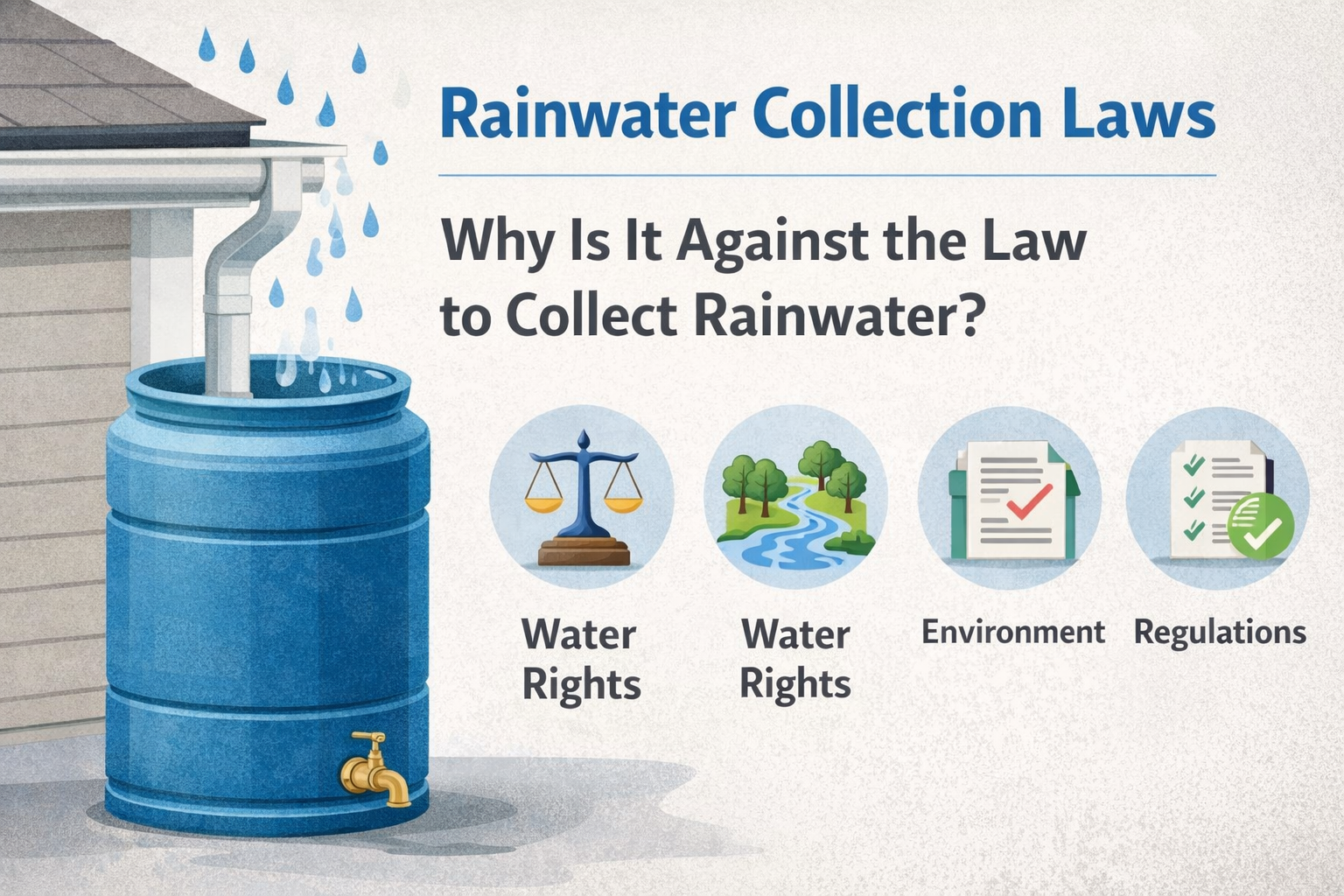

Many people are surprised to learn that collecting rainwater can be regulated or even restricted in certain places. After all, rain falls from the sky, so why would it be illegal to catch it in a barrel and use it for your garden or home?
- Why Is It Against the Law to Collect Rainwater?
- Key Reasons Rainwater Collection Can Be Restricted
- Water Rights Laws and the “Ownership” of Rain
- Rainwater Collection and Drought Regulations
- Environmental Concerns and Ecosystem Protection
- Stormwater Systems and Urban Drainage Planning
- Health and Safety Regulations
- Is Rainwater Collection Actually Illegal in Most Places?
- Benefits of Rainwater Collection (When Legal)
- How to Collect Rainwater Legally
- Final Thoughts
The truth is that rainwater collection laws are not designed to punish homeowners. Instead, they are tied to complex water rights systems, environmental concerns, and public water management policies. Understanding why is it against the law to collect rainwater requires looking at how water is legally treated in many parts of the world, especially in the United States.
This article explains the legal reasoning behind these restrictions, where rainwater collection is regulated, and what homeowners should know before installing a rainwater harvesting system.
Why Is It Against the Law to Collect Rainwater?
The main reason rainwater collection can be restricted is because water is often considered a shared public resource. In many states and regions, rainwater is legally connected to rivers, groundwater supplies, and watersheds. When rain falls, it doesn’t simply disappear, it becomes runoff, replenishes aquifers, and flows into streams and reservoirs.
In areas with limited water supplies, governments regulate water distribution carefully. Collecting rainwater on private property may reduce the amount of water flowing into public waterways or groundwater systems, which can affect other people who rely on those water sources.
So, when people ask why is it against the law to collect rainwater, the short answer is: because rainwater is often part of a regulated water system and may legally belong to someone else once it falls.
Key Reasons Rainwater Collection Can Be Restricted
| Reason | Explanation |
| Water Rights Laws | Rainwater may be legally tied to downstream water users. |
| Drought Management | States control water usage during shortages. |
| Environmental Protection | Runoff supports ecosystems, streams, and wetlands. |
| Public Water Supply Planning | Water agencies rely on natural flow patterns. |
| Groundwater Recharge | Rainwater contributes to aquifers that serve communities. |
| Infrastructure & Drainage Systems | Cities design drainage systems based on expected runoff. |
Water Rights Laws and the “Ownership” of Rain
One of the most important legal factors is water rights. In many parts of the United States, water rights follow legal doctrines that determine who can use water and how much they can use.
Two common systems include:
Riparian Rights (Eastern U.S.)
In states using riparian rights, property owners near rivers and lakes have the right to use water reasonably, but they cannot interfere with other users.
Prior Appropriation (Western U.S.)
In many western states, the “first in time, first in right” rule applies. This means whoever first claimed water rights gets priority. Water is treated like property, and people may legally own rights to the water flowing in rivers or streams.
Under this system, collecting rainwater could theoretically reduce the amount of runoff entering a river system. That runoff may already be legally allocated to farmers, municipalities, or businesses.
This is one major reason why is it against the law to collect rainwater in certain states.
Rainwater Collection and Drought Regulations
In drought-prone regions, water shortages are a serious issue. Governments often regulate water use heavily to protect reservoirs and ensure that essential users such as agriculture, firefighting, and public drinking systems, have enough water.
Rainwater harvesting may be restricted if officials believe it could reduce natural water flow into reservoirs and rivers during dry periods.
Ironically, some states now encourage rainwater collection because it reduces demand on public water systems. But in the past, drought-driven regulation often made rainwater collection controversial.
Environmental Concerns and Ecosystem Protection
Rainwater runoff supports local ecosystems. Streams, wetlands, and wildlife habitats rely on consistent natural water flow. Even small changes in runoff patterns can affect fish populations, soil moisture, and vegetation growth.
When a large number of households collect rainwater, the cumulative effect may reduce the water reaching nearby creeks and rivers. That is why local governments sometimes regulate collection systems to balance private use with environmental stability.
This is another key explanation behind why is it against the law to collect rainwater in specific regions.
Stormwater Systems and Urban Drainage Planning
Cities design stormwater drainage systems based on expected rainfall and runoff patterns. Storm drains, sewer systems, and flood prevention infrastructure are built assuming rainwater will flow naturally through the streets and drainage networks.
If rainwater is diverted into private storage tanks, it may reduce runoff, which is usually not a problem. However, in some cases, improperly installed systems can cause:
- Overflow flooding
- Soil erosion
- Standing water and mosquito breeding
- Contamination entering storm drains
Because of these risks, some municipalities require permits, inspections, or specific equipment standards.
Health and Safety Regulations
Rainwater is not always clean. It can pick up bacteria, bird droppings, chemicals from roofing materials, and pollutants from the air. If homeowners use collected rainwater for drinking or household plumbing without proper filtration, it can create health risks.
Many rainwater restrictions focus on preventing unsafe use. Some states allow collection for irrigation but require strict regulations if the water is used indoors.
In short, rainwater laws are sometimes more about public health than ownership.
Is Rainwater Collection Actually Illegal in Most Places?
In most states, rainwater collection is legal. However, the confusion comes from outdated laws and strict water rights rules in some western regions.
States like Colorado historically restricted rainwater harvesting because of prior appropriation of water rights. Over time, many laws have been updated to allow limited collection, especially for residential use.
Today, most restrictions are not outright bans. Instead, they may involve:
- Limiting the amount of rainwater you can collect
- Requiring a permit
- Restricting use to outdoor irrigation
- Requiring filtration if used indoors
So, while people commonly ask why is it against the law to collect rainwater, the reality is that in many areas it is legal, but regulated.
Benefits of Rainwater Collection (When Legal)
Rainwater harvesting has many advantages, which is why many governments now encourage it.
Some major benefits include:
- Reduced water bills
- Sustainable landscaping irrigation
- Emergency backup water supply
- Reduced demand on municipal systems
- Reduced stormwater runoff and erosion
In drought-prone regions, rainwater collection can help conserve drinking water by replacing it with harvested rainwater for non-drinking uses.
How to Collect Rainwater Legally
If you are considering a rainwater harvesting system, the safest approach is to follow local regulations. Most legal systems require basic compliance steps.
Here are common legal best practices:
- Check your state and local laws
- Install a covered rain barrel or sealed tank
- Avoid contamination from roof debris
- Use filters if required
- Do not connect rainwater systems directly to municipal plumbing unless approved
- Get permits if needed
If you are unsure, contacting your local water authority is a good first step.
FAQ
Why is it against the law to collect rainwater in some states?
Because rainwater is often legally considered part of a regulated water supply system, and collecting it may reduce runoff that others rely on.
Is collecting rainwater illegal in the United States?
In most states it is legal, but some states regulate how much you can collect and what you can use it for.
Why does the government regulate rainwater collection?
Governments regulate rainwater to manage water rights, protect ecosystems, ensure public health, and maintain consistent water supplies.
Can I collect rainwater for drinking?
Sometimes yes, but it usually requires proper filtration and compliance with health regulations. Many areas only allow rainwater use for irrigation.
What states have the strictest rainwater laws?
Historically, some western states like Colorado had stricter laws due to water rights doctrines, though many restrictions have been eased in recent years.
Do I need a permit to collect rainwater?
In many areas, small rain barrels do not require permits, but larger systems may require approval, inspections, or compliance standards.
Final Thoughts
The question why is it against the law to collect rainwater often comes from misunderstanding. Rainwater feels like a free natural resource, but legally it is connected to watersheds, rivers, groundwater systems, and public water planning.
Rainwater restrictions exist mainly to protect shared water resources, ensure fairness under water rights laws, and reduce environmental and public health risks. Fortunately, most modern laws are becoming more supportive of responsible rainwater harvesting.
If you want to collect rainwater, always check local regulations first, and when done properly, rainwater collection can be both legal and highly beneficial.