

Discover which cancers qualify for a Zantac lawsuit, how NDMA exposure is linked to specific malignancies, eligibility factors, legal steps, and FAQs.
The heartburn medication Zantac (ranitidine) was once one of the most widely used drugs in the world for treating acid reflux and ulcers. However, after the U.S. Food and Drug Administration (FDA) discovered that Zantac and other ranitidine products could contain high levels of NDMA, a probable carcinogen, thousands of lawsuits were filed alleging the drug caused cancer.
This article explores in detail which cancers are commonly included in Zantac lawsuits, what evidence supports these claims, eligibility criteria, and answers to frequently asked questions, all presented in an easy-to-understand format.
Why Zantac Lawsuits Exist: The NDMA Connection
What Is NDMA?
NDMA (N-Nitrosodimethylamine) is a chemical compound classified as a probable human carcinogen, meaning it’s potentially capable of causing cancer. It’s not intentionally added to medications but can form as an impurity or breakdown product.
In 2019, the FDA found that ranitidine, the active ingredient in Zantac, could break down into NDMA under certain conditions, especially as the drug aged on shelves. This raised significant safety concerns, leading to voluntary recalls and the eventual withdrawal of ranitidine products from the U.S. market.
How Cancer Claims Are Linked to Zantac
The lawsuits allege that prolonged exposure to NDMA from Zantac increased users’ risk of developing certain cancers. While scientific opinions vary, legal claims focus on product liability, including failure to warn consumers and design defects.
Cancers Often Included in Zantac Lawsuits
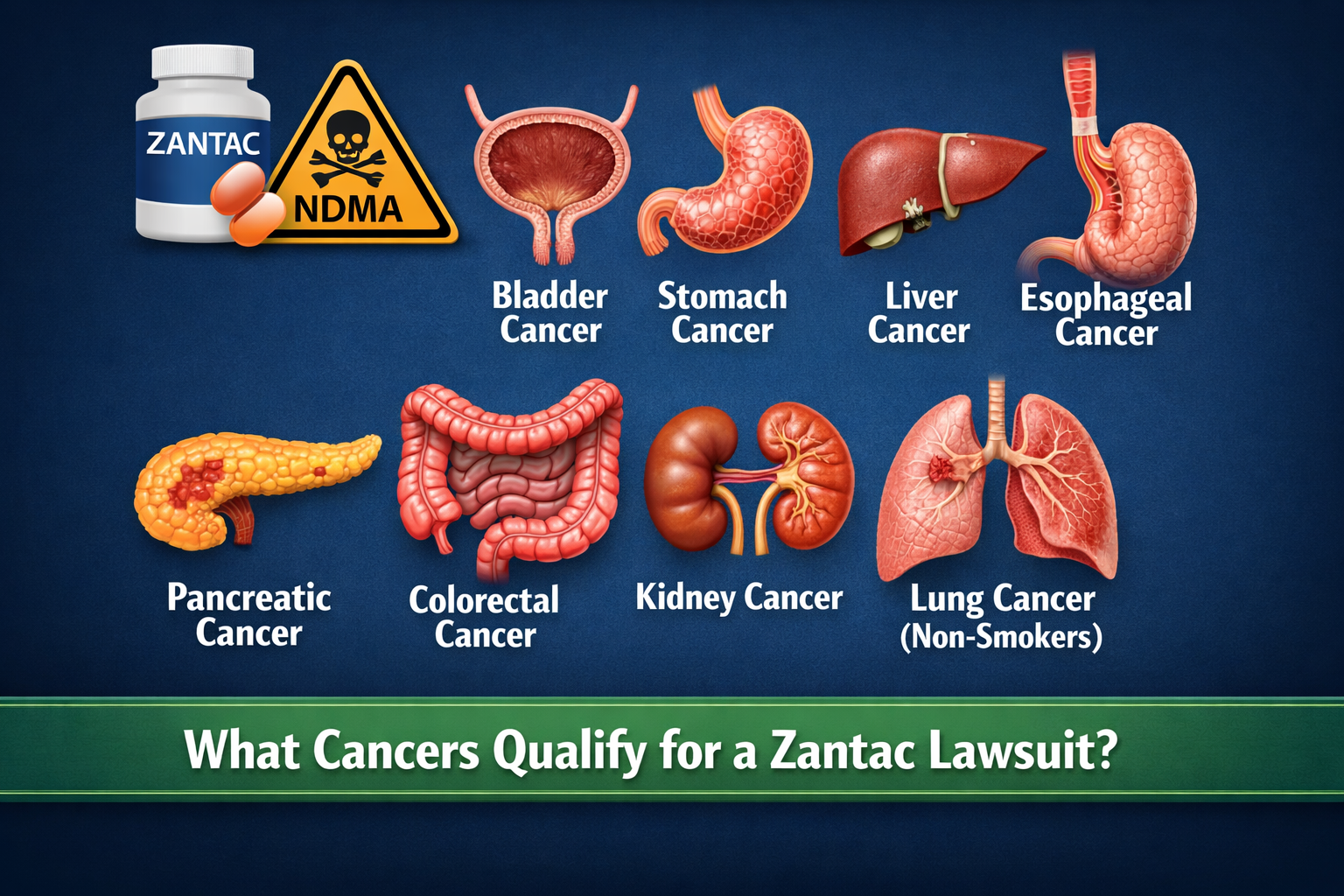
Across various legal sources and law firms involved in Zantac litigation, certain cancers are frequently listed as qualifying conditions. Below is a consolidated list:
| Cancer Type | Commonly Included in Lawsuits? | Notes |
| Bladder Cancer | Yes | One of the most frequently cited cancers. |
| Stomach (Gastric) Cancer | Yes | Strongly linked in many legal claims. |
| Esophageal Cancer | Yes | Part of gastrointestinal cancers cited. |
| Liver Cancer | Yes | NDMA is known to be toxic to the liver. |
| Pancreatic Cancer | Yes | Often included alongside other GI cancers. |
| Colorectal Cancer | Sometimes | Some sources include colon-related cancers. |
| Kidney Cancer | Sometimes | Less common but included by some firms. |
| Breast Cancer | Sometimes | Listed by some law firms as eligible. |
| Prostate Cancer | Sometimes | Cited by certain legal sources. |
| Lung Cancer (Non-Smokers) | In some claims | Rare but included by certain attorneys. |
Key Note on Lawsuit Cancers
While many cancers have been reported in lawsuits, not all are accepted in every legal proceeding. Some federal cases and multi-district litigation (MDL) have focused on a narrower set (e.g., bladder, stomach, esophageal, liver, and pancreatic cancers).
How Cancers Qualify for a Zantac Lawsuit
General Eligibility Criteria
To be eligible to file a Zantac cancer lawsuit, individuals generally must meet these conditions:
- History of Zantac Use
You took Zantac (or a ranitidine product) regularly — often defined as at least once a week for a period of time (many lawyers use one year as a benchmark). - Cancer Diagnosis
You were diagnosed with one of the cancers associated with NDMA exposure. - Timing of Diagnosis
The cancer diagnosis occurred after Zantac use and within a reasonable window (examples often cited are within up to 20 years after stopping use). - Documentation
You have medical records and proof (prescriptions, receipts) showing Zantac usage and your diagnosis.
Brand vs Generic Ranitidine
Some attorneys require that claimants prove they used brand name Zantac specifically, rather than generic ranitidine, though other lawyers accept both.
Understanding the Legal Landscape
Multi-District Litigation (MDL) and Lawsuit Outcomes
Zantac cases have been centralized in MDLs and state courts. Some cancers are more broadly supported with evidence, and certain categories (like prostate, breast, and some others) have seen reduced focus in federal litigation, though they may still be pursued in state cases.
Additionally, not all claimants receive compensation simply by filing, many cases have been dismissed, settled, or continue to move through courts.
Signs, Symptoms, and Early Detection
It’s important to understand that cancer symptoms vary by type, and many early signs can be subtle. Below are common symptom themes, not medical advice, always consult a doctor if you have concerns.
General Cancer Warning Signals
- Unexplained Weight Loss
- Persistent Pain
- Blood in Urine or Stool
- Difficulty Swallowing or Persistent Heartburn
- Unusual Fatigue or Jaundice
- Changes in Bowel Habits
Symptoms vary significantly by cancer type and should be evaluated by health professionals.
What to Do If You Think You Qualify
If you believe you may qualify for a Zantac lawsuit:
- Collect Medical Records — Document your Zantac use and cancer diagnosis chronology.
- Consult an Experienced Attorney — Choose lawyers with experience in product liability and pharmaceutical litigation.
- Talk to Your Doctor — Discuss your health concerns and appropriate screening.
Legal filings often have deadlines (statute of limitations), so act sooner rather than later.
Frequently Asked Questions (FAQ)
Which cancers are strongest in Zantac lawsuits?
The cancers most commonly accepted in major Zantac litigation include bladder, stomach (gastric), esophageal, liver, and pancreatic cancers.
Can you sue if you used Zantac decades ago?
This depends on the statute of limitations, often linked to the date of diagnosis, not the date of use. Many legal teams consider cancers diagnosed up to 20 years after exposure, but rules vary by state.
Do I need to show NDMA caused my cancer?
You don’t need to prove causation medically — your lawyer will build a case around medical evidence, timelines, and product liability arguments.
What compensation can you get?
Potential damages include medical bills, lost wages, pain and suffering, and more. Compensation isn’t guaranteed and varies by case.
Is Zantac still sold today?
Brand name Zantac with ranitidine was largely removed from the market after FDA’s safety warnings. Alternative heartburn medications are now recommended.
Conclusion
The question of which cancers qualify for a Zantac lawsuit has evolved as litigation and scientific analyses develop. While bladder, stomach, esophageal, liver, and pancreatic cancers are most consistently linked in major cases, other cancers may qualify depending on the jurisdiction and specific circumstances.
If you or a loved one used Zantac and later developed cancer, it’s important to understand your legal options. Carefully document your medical history, consult knowledgeable attorneys, and seek timely evaluation to protect your rights.