
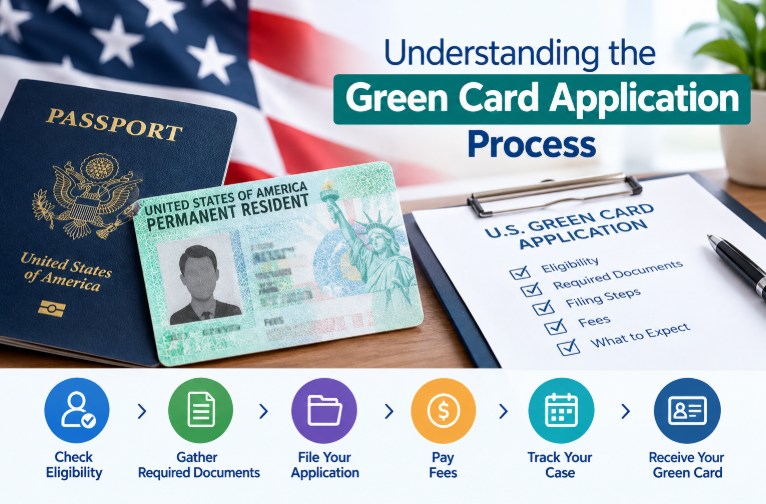

Learn about the green card application process, eligibility requirements, required documents, filing steps, fees, and what to expect after applying.
- Common Paths to Permanent Residence
- Family-Based Green Card Applications
- Employment-Based Green Card Options
- Adjustment of Status and Consular Processing
- Documents and Evidence Matter
- Green Card Costs and Processing Times
- Why Careful Preparation Is Important
- Frequently Asked Questions
- Making the Application Process Easier
Getting a green card can be a major step toward building a permanent life in the United States. Unlike temporary immigration status, lawful permanent residence allows eligible individuals to live and work in the country on a permanent basis. However, the process can vary greatly depending on a person’s family relationships, employment, immigration history, and eligibility category.
For anyone unsure about where to start, legal help for green card applications can provide useful direction. An immigration professional can review the circumstances of a case, explain possible immigration pathways, identify required documents, and help an applicant understand what to expect during the process. This guidance can be especially valuable when a case involves several forms, deadlines, or complicated immigration rules.
Common Paths to Permanent Residence
Family-based immigration is one of the most common ways people seek permanent residence. Certain relatives of U.S. citizens and lawful permanent residents may qualify under family-based immigration categories. The process can involve an immigrant petition, visa availability, and either adjustment of status or consular processing, depending on the person’s circumstances.
Employment-based immigration provides another path for eligible workers. The available categories cover different types of workers, including certain professionals, individuals with advanced qualifications, people with extraordinary or exceptional abilities, and certain business investors. Some employment-based cases also require employer sponsorship or labor certification before the application can move forward.
Family-Based Green Card Applications
Family-based cases generally begin with a qualifying relationship between the applicant and a U.S. citizen or lawful permanent resident. The exact requirements depend on the relationship involved. For example, immediate relatives and family preference categories are subject to different immigration rules and visa availability requirements.
Applicants should collect reliable evidence showing the qualifying family relationship. Birth certificates, marriage certificates, adoption records, and other civil documents may be relevant depending on the case. Any information submitted should be accurate and consistent across the forms and supporting evidence.
Employment-Based Green Card Options
Employment-based green cards are available through several immigration categories. These may include categories for workers with advanced degrees, individuals with extraordinary ability, certain multinational executives and managers, and qualified investors. Each category has its own requirements, so an applicant must determine which classification matches their qualifications and circumstances.
Some employment-based cases require the employer to complete the PERM labor certification process. This process can involve specific recruitment and documentation requirements. Because the employment-based process can include several stages, careful preparation by both the employer and employee can help reduce mistakes that may create problems later.
Adjustment of Status and Consular Processing
People who are already in the United States may be able to apply for adjustment of status if they meet the applicable requirements. This process allows an eligible person to seek permanent residence without leaving the country to complete immigrant visa processing abroad. Form I-485 is generally used for an adjustment of status application.
People applying from outside the United States generally follow the immigrant visa process through the appropriate U.S. embassy or consulate. The correct procedure depends on factors such as the person’s immigration category, location, visa availability, and individual circumstances. Understanding which process applies is an important early step.
Documents and Evidence Matter
A green card application may require a wide range of supporting documents. Depending on the immigration category, these can include identity documents, birth or marriage records, evidence of a family relationship, employment records, financial information, immigration records, and other supporting materials.
Accuracy is just as important as having enough documents. Names, dates, addresses, employment information, and immigration history should be consistent throughout the application. Missing records or conflicting information may result in additional questions or a request for evidence, which can add time to the process.
Green Card Costs and Processing Times
The total cost of a green card application depends on the type of case and the services required. Government filing fees may apply, along with expenses for medical examinations, translations, document preparation, and other required services. Employment-based cases may also involve costs connected with employer sponsorship and labor certification.
Processing times are also different from one case to another. Government workloads, immigration categories, visa availability, requests for additional evidence, and other factors can affect how long a case takes. No attorney can control government processing times, but careful preparation may help prevent delays caused by incomplete forms or missing documentation.
Why Careful Preparation Is Important
Immigration forms ask for detailed information about a person’s identity, family, employment, travel, and immigration history. Applicants should review every answer carefully before submitting the paperwork. Even a small error can create questions if it conflicts with other information in the application or government records.
For current information about green card eligibility, forms, and procedures, applicants can consult the official USCIS Green Card guidance. USCIS explains that lawful permanent residents have the right to permanently live in the United States, subject to applicable immigration laws and requirements.
Frequently Asked Questions
Can everyone apply for a green card?
No. A person must qualify under an available immigration category. Potential categories can include family-based immigration, employment-based immigration, humanitarian programs, special immigrant classifications, and other provisions established under U.S. immigration law.
Meeting one basic requirement does not necessarily guarantee eligibility. Applicants should consider their complete immigration history and the specific requirements of the category they are seeking.
Can an immigration lawyer guarantee approval?
No. An immigration attorney cannot guarantee that a government agency will approve an application. The final decision belongs to the appropriate government authority after reviewing the application and supporting evidence.
Legal guidance can still be useful for understanding eligibility, preparing forms, organizing documents, and responding to government requests. Professional assistance is intended to help applicants present an accurate and properly supported application.
How long does a green card application take?
There is no single processing time for every green card application. Timing can depend on the immigration category, visa availability, government workload, the applicant’s circumstances, and whether additional evidence is requested.
Applicants should check current government processing information for their particular form and immigration category. Processing estimates can change, so information from another person’s case may not accurately predict the timing of a new application.
What happens after a green card is approved?
After approval, the individual becomes a lawful permanent resident and receives documentation confirming permanent resident status. The green card serves as evidence of that status and may be needed for employment, travel, and other official purposes.
Permanent residents must continue following U.S. immigration laws and maintain the requirements associated with their status. Some permanent residents may later qualify to apply for U.S. citizenship if they meet the applicable eligibility requirements.
Making the Application Process Easier
A green card application involves more than completing forms and paying filing fees. Applicants need to identify the appropriate immigration category, understand its requirements, gather supporting evidence, and follow the correct procedure. The right process can be different depending on whether the application is based on family, employment, or another qualifying category.
Taking time to prepare the application carefully can make the process easier to manage. When questions arise about eligibility, documentation, deadlines, or the appropriate immigration pathway, qualified legal guidance can help applicants understand their options and approach the process with greater confidence.