
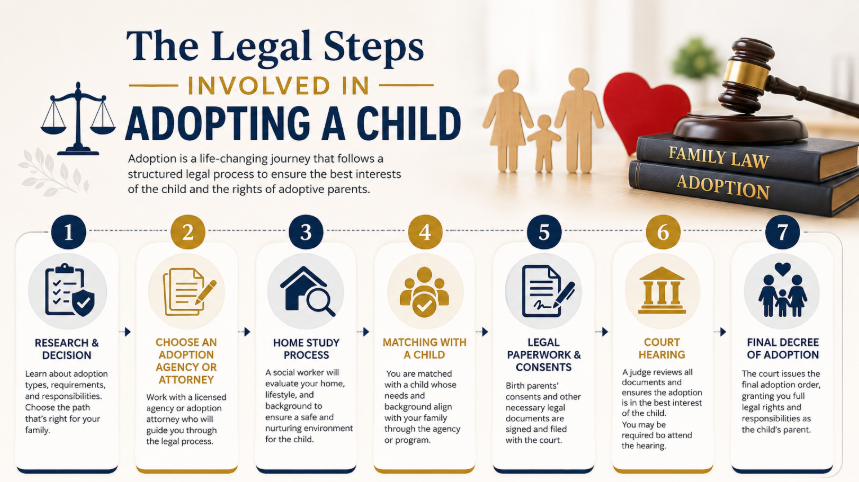

Adoption is one of the biggest decisions a family will ever make, and it comes with a legal process that can feel confusing if you have never gone through it before. There is no single form to fill out and no single hearing that finishes the case. Instead, adoption moves through several stages, and each one has its own requirements.
- Step One: Figure Out Which Type of Adoption Applies
- Step Two: Address Parental Rights
- Step Three: File the Adoption Petition
- Step Four: Complete a Home Study
- Step Five: Attend the Court Hearing
- Step Six: Finalize the Adoption
- What Can Slow Down These Steps
- Why Court Familiarity Matters at Every Step
- Moving Forward With Your Adoption
Knowing what those stages look like ahead of time can make the process feel less overwhelming. Working with a family law attorney for adoption early on can help you understand which steps apply to your situation and avoid delays caused by a missed form or a skipped requirement.
Step One: Figure Out Which Type of Adoption Applies
The legal steps in an adoption case depend heavily on the type of adoption involved. Stepparent adoption happens when a stepparent wants to legally adopt their spouse’s child, usually because the other biological parent is not involved. Relative adoption involves a family member, such as a grandparent or aunt, stepping in when a child’s parents can no longer care for them.
Agency adoption connects a prospective parent with a child through a licensed agency and typically involves more steps than a family adoption. There are also cases involving abandoned children who need a legal guardian to formalize custody. Identifying which category applies is usually the first real step, since it determines which forms and timelines follow.
Step Two: Address Parental Rights
Before an adoption can move forward, the legal rights of any existing parent have to be handled. In many cases, a biological parent signs a formal consent, agreeing to give up their parental rights. In other cases, a court has to terminate those rights involuntarily, which usually requires evidence that the parent has been absent, unable to care for the child, or unwilling to participate.
This step tends to take the longest. A parent who cannot be located has to be formally notified through the court before a judge will move forward, and a parent who objects may be entitled to a hearing before their rights are terminated. Until this step is resolved, the case generally cannot proceed.
Step Three: File the Adoption Petition
Once parental rights are addressed, the next step is filing a formal petition with the court. This document identifies the child and the prospective adoptive parents, and it needs supporting paperwork such as a birth certificate, any existing custody orders, and documentation of consent or termination of rights.
A few habits can help keep this stage moving smoothly.
- Gather documents connected to the child early, including birth certificates and existing custody orders.
- Keep a written timeline of important events, since courts often ask for this information.
- Respond quickly to requests from the court or home study agency to avoid unnecessary delays.
- Ask questions any time something is unclear instead of guessing at what a form requires.
- Filing errors and missing paperwork are common reasons a petition is delayed.
Step Four: Complete a Home Study
Most adoptions, outside of certain stepparent and relative cases, require a home study before the court will finalize anything. A licensed professional visits the home, interviews the family, and prepares a report on whether the placement appears safe and stable.
Families sometimes feel nervous about this step, but it is standard rather than a sign that something is wrong. Being upfront during the interview and having the home reasonably prepared is usually enough.
Step Five: Attend the Court Hearing
Once the paperwork is filed and any required home study is complete, the case moves to a court hearing. A judge reviews the petition, the supporting documents, and the home study report, and may question the adoptive parents directly. Agreed cases tend to have short hearings, while cases involving involuntary termination or contested consent may take longer and require more evidence.
Step Six: Finalize the Adoption
Once a judge signs the final adoption order, the child becomes a permanent legal member of the family, and the biological parents’ rights are typically terminated completely. A new birth certificate is issued showing the adoptive parents as the child’s legal parents, and the final decree should be kept in a safe place for future needs like school enrollment.
What Can Slow Down These Steps
Adoption cases rarely fail outright, but they can get stuck if certain issues come up. A birth parent who has not signed away their rights is a common reason for delay, since the court needs that step resolved first. Other complications include unpaid medical expenses connected to a birth, family disagreements, and a biological parent who cannot be located and must be notified through other means. International adoptions add visa requirements on top of state law. None of these issues automatically stop an adoption. They usually just mean more time and documentation.
Why Court Familiarity Matters at Every Step
Adoption procedures can differ slightly from one court to the next, even within the same state. Local judges and court staff who regularly handle family law matters tend to be familiar with the documentation and timelines involved, which can make the process smoother.
According to the Child Welfare Information Gateway, a service of the U.S. Department of Health and Human Services, adoption laws and procedures vary by state, which is part of why families benefit from guidance specific to where they live. Every case looks a little different, and the right path through these steps depends on the facts of that family.
Moving Forward With Your Adoption
Adoption is one of the most meaningful things a family can go through, but the legal steps need to be handled carefully. Missing a form or misunderstanding a timeline can add stress to an already emotional process.
Families who take the time to understand these steps, and who ask for help when something is unclear, tend to move through the process with fewer surprises. Getting clear answers early can make the road ahead easier to navigate.