

Learn the warning signs of nursing home neglect, including poor care, unexplained injuries, emotional changes, and unsafe living conditions.
Placing a parent or grandparent in a nursing home is one of the hardest decisions a family can make. Most people expect the facility to keep their loved one safe, fed, clean, and comfortable. When that does not happen, the results can be serious and sometimes life threatening.
If you have noticed changes in a loved one’s health or behavior after they moved into a facility, it may be time to ask harder questions. Speaking with a nursing home negligence attorney in Baltimore can help you understand whether what you are seeing points to a pattern of neglect rather than a normal part of aging.
Neglect Often Builds Slowly
Nursing home neglect rarely looks dramatic at first. It usually shows up in small ways that are easy to miss during a short visit. A resident might seem a little more tired than usual, or a room might smell like it has not been cleaned in a while. On their own, these details do not prove anything. Over weeks and months, though, a pattern can start to form.
Families are often the ones who notice this pattern first, since staff turnover and shift changes can make it harder for any single caregiver to track a resident’s condition over time. That is one reason regular visits matter, even when a loved one seems settled and comfortable.
Physical Signs That Deserve Attention
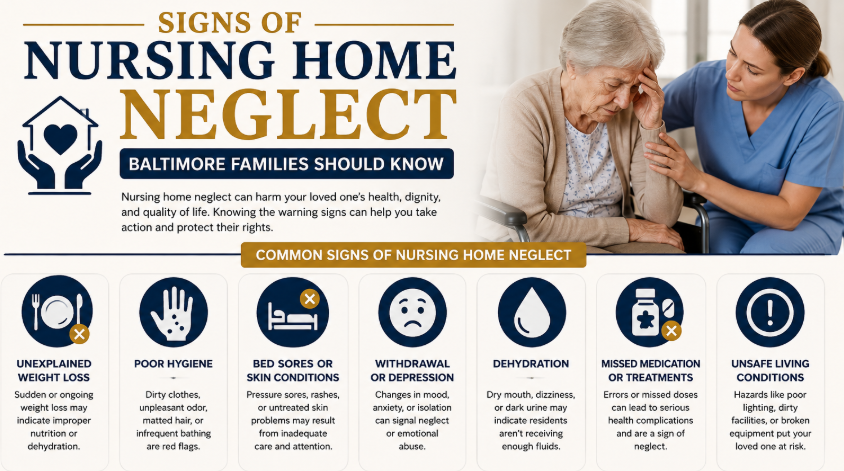
Some warning signs are easier to spot than others. Bedsores, also called pressure ulcers, are one of the clearest indicators that a resident is not being repositioned or monitored the way they should be. These sores can develop quickly in someone who spends long hours in a bed or wheelchair without help moving.
Unexplained weight loss and signs of dehydration are also common red flags. A resident who is not getting enough food or water may become confused, weak, or more prone to falls. Repeated urinary tract infections can point to poor hygiene practices, since these infections are often preventable with routine care.
Falls are another area worth watching closely. A single fall can happen to anyone, but repeated falls without a documented explanation may mean staff are not supervising residents closely enough, especially those with mobility or memory issues.
Behavioral and Emotional Changes Matter Too
Neglect does not only show up in physical symptoms. A resident who becomes withdrawn, anxious, or fearful around certain staff members may be responding to how they are being treated. Sudden mood swings, reluctance to talk about daily life at the facility, or a noticeable drop in personal hygiene can all be signs that something is wrong.
Family members sometimes hesitate to bring up these concerns, worried they are overreacting or that staff will treat their loved one differently afterward. That hesitation is understandable, but ignoring these signs can allow a problem to continue.
Understaffing Is Often at the Root of the Problem
Many neglect cases trace back to a facility not having enough staff to properly care for its residents. When nurses and aides are stretched across too many people, basic tasks like helping someone eat, turning a bedridden resident, or responding to a call button can get delayed or skipped.
Families in Maryland can review a facility’s staffing levels and inspection history through the CMS Care Compare tool, which publishes data collected from certified nursing homes across the country. Comparing a facility’s staffing numbers to similar homes in the area can help families decide whether ongoing problems are tied to a broader pattern rather than an isolated incident.
Baltimore Families Face This Issue Often
Baltimore is home to a large number of nursing facilities serving Baltimore City, Baltimore County, and the surrounding communities. With an aging population and a wide range of care providers to choose from, families in the area often have to make quick decisions about where to place a loved one, sometimes without much time to research a facility’s history.
That pressure can make it harder to spot warning signs before a resident moves in. It also means Baltimore families are dealing with a mix of large corporate facilities and smaller independent homes, each with different staffing models and levels of oversight. Knowing what to look for, both before and after placement, gives families a better chance of catching problems early.
What to Do If You Suspect Neglect
If you believe a loved one is being neglected, start by documenting what you see. Take photos of injuries, keep notes on dates and specific incidents, and save any communication with staff or administrators. Ask direct questions about care plans and request copies of medical records when possible.
You can also file a complaint with the Maryland Department of Health’s Office of Health Care Quality, which can trigger an inspection of the facility. That process is separate from any legal claim a family may choose to pursue, and the two can move forward at the same time.
Talking with a lawyer who handles these cases can help you understand what evidence matters and whether the facility’s conduct rises to the level of legal neglect. An attorney can also help identify whether the problem points to a single staff member, a broader staffing shortage, or decisions made higher up in the facility’s management.
Trust Your Observations
Families often second guess what they are seeing, especially when a facility insists everything is fine. But you know your loved one better than any staff member does, and changes in their health or mood are worth taking seriously.
Catching neglect early can protect a resident from further harm and preserve important evidence if the situation needs to be addressed through a formal complaint or legal claim. Staying involved, asking questions, and trusting your instincts are some of the most effective tools a family has.