


If you’re thinking, “a broker stole my money,” your transaction history can help you separate a transfer from a market loss. A missing brokerage balance may reflect a transfer you never approved, not a market decline. Your transaction history can show where the account’s funds went.
You may recover missing brokerage funds by recalling a transfer or obtaining reimbursement from the firm; a legal claim offers another route. Report the transfer right away if you suspect a broker stole your money, and keep your records. The right route depends on who moved the funds and your account agreement’s terms. Any reimbursement you’ve received already matters, too.
Immediate response to unauthorized transfers
Start recovering an unauthorized brokerage transfer by notifying your brokerage’s fraud department immediately, along with the receiving institution if you know it. Ask your brokerage to recall the payment, and ask the receiving institution to freeze the recipient’s account. Limit outgoing transfers while the brokerage investigates. Change your account and email passwords, and reset multifactor authentication. Get written confirmation and a complaint number. Report suspected theft to law enforcement, and file complaints with FINRA or the SEC.
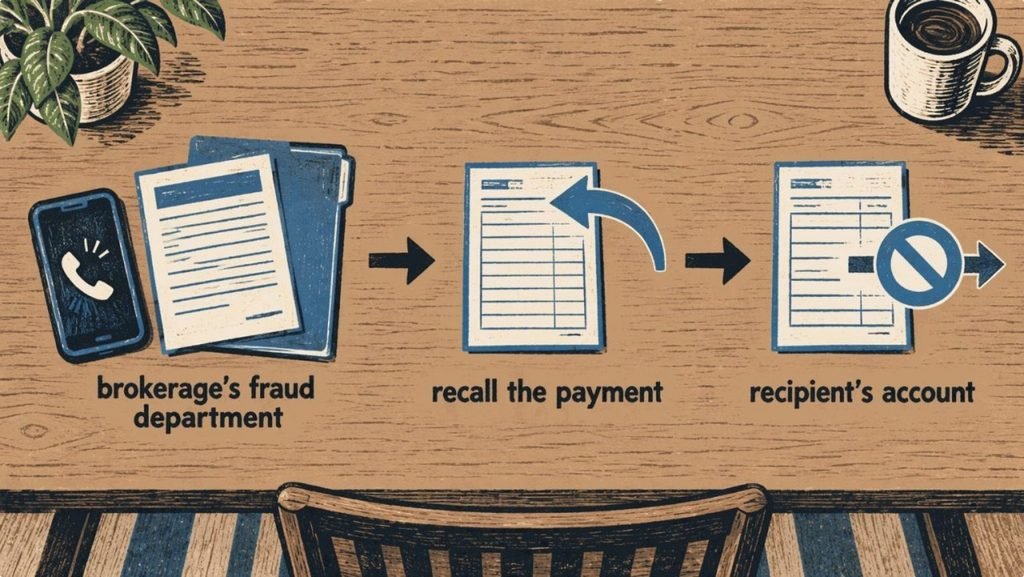
A quick report can help stop the money before someone moves it again, but it doesn’t guarantee repayment. News 12 Long Island reported on November 18, 2026, that a Shelter Island resident recovered $80,000 after fraudsters transferred money from his brokerage account and the receiving account was promptly frozen.
A broker stole my money: how the claim changes
Allegations of broker embezzlement of client funds concern the direct diversion or theft of account assets, rather than ordinary market losses or unsuitable investment advice. A missing balance alone doesn’t prove theft. Unsuitable advice concerns whether an investment suits your circumstances; unauthorized trading concerns whether the broker had permission to trade. Valid discretionary authority can permit trades without individual approval.
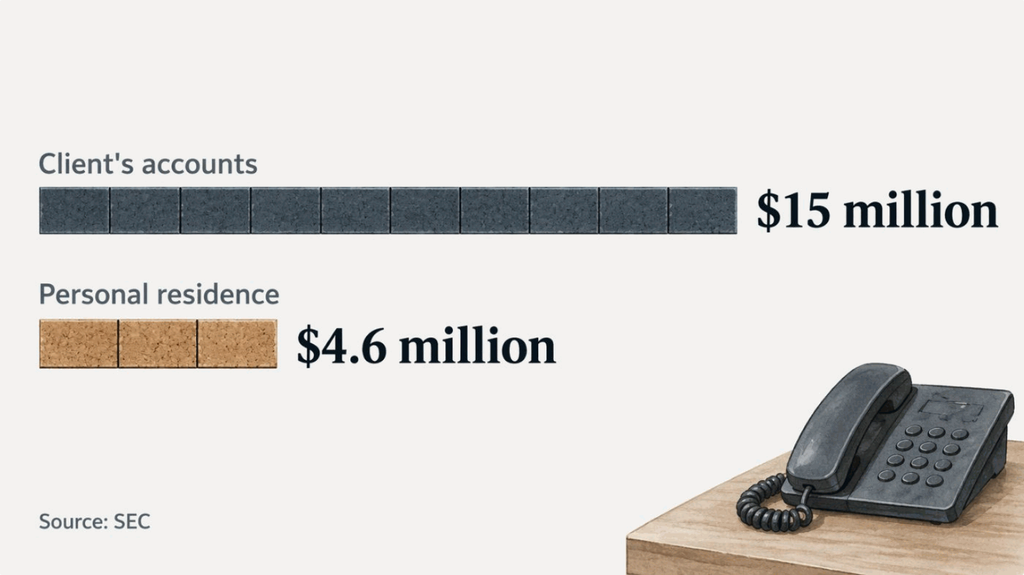
The SEC alleged that investment adviser Andrew Daniel Nash transferred more than $15 million from a client’s accounts between June 2022 and March 2023, including $4.6 million used to purchase a personal residence, according to the SEC.
Send a written complaint to the firm’s compliance department and request its decision on reimbursement. Ask which insurance or customer-protection policy applies, and ask what the policy excludes. The firm’s insurance doesn’t automatically entitle you to receive payment. Keep track of any repayment so your claim reflects the remaining loss.
FINRA arbitration for stolen brokerage funds
You may be able to pursue recovery of stolen brokerage funds through FINRA arbitration in a customer dispute with a member brokerage firm or associated broker. An arbitration clause may require arbitration rather than suing in court. Check which forum your agreement names. A securities lawyer can assess civil claims against those responsible and examine possible failures to supervise.
A federal judgment in the Scott Mason matter imposed joint and several liability of approximately $17.7 million in disgorgement and $4.9 million in prejudgment interest, with the amounts deemed satisfied through restitution and forfeiture orders, according to the SEC.
A court order doesn’t establish that every investor has received payment. Keep track of actual distributions and record any balance still unpaid.
Stock sales without specific permission
A broker may sell without asking your permission if valid discretionary authority permits the trade or a margin agreement allows liquidation to cover a shortfall. Read the signed authorization and your margin terms.
What evidence to keep after brokerage fraud
Keep the original account records and communications before filing your brokerage fraud claim. Save copies somewhere outside the account portal in case your access changes. Gather the records in this order:
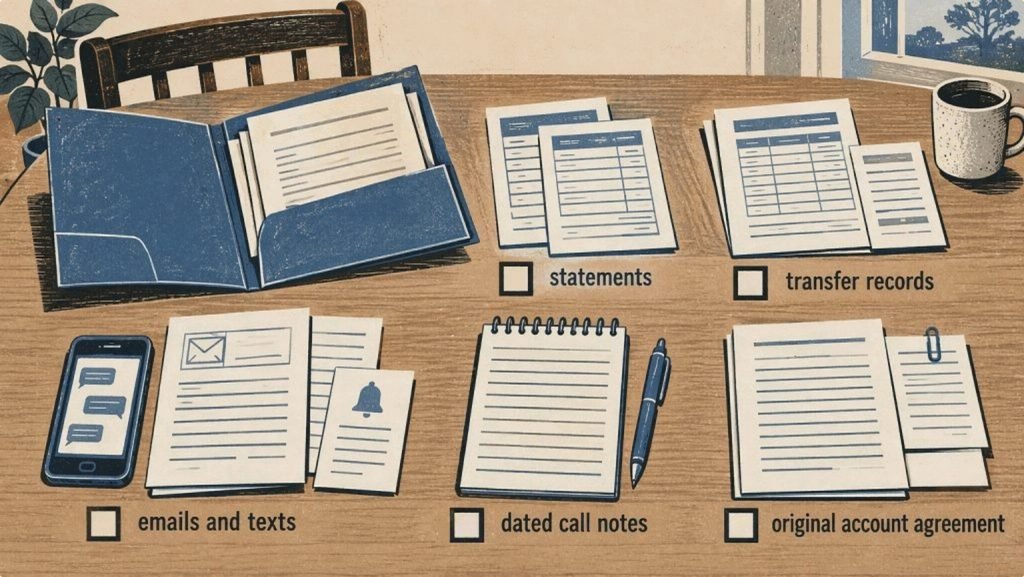
- Download statements showing balances before and after the suspected loss.
- Save transfer records with destination details and transaction IDs, and keep your trade confirmations.
- Export emails and texts in their original form. Keep authentication alerts with timestamps.
- Record complaint numbers and keep dated call notes identifying every person you contacted.
- Save the original account agreement and amendments, including discretionary authorizations and margin terms.
Don’t alter the originals or depend only on screenshots. Ask the firm to retain its access logs and transfer approvals.

Video: My Broker Stole $163K in Fees (And I Didn’t Notice) (YouTube)
Related fraud and recovery questions
Recovering a payment sent to a scammer
You may recover a payment sent to a scammer, but the payment method and how quickly you report it affect your available remedies. Ask your payment provider about recall or dispute options. The provider may treat your authorized payment differently from account theft.
Warning signs of a dishonest broker
Unexplained transfers or repeated withdrawal delays may indicate a broker scam. Differences between your statements and the custodian’s records may also signal one. Examine unexplained transfers and withdrawal delays; scrutinize statements that don’t match the custodian’s records. Confirm the transactions directly with the firm, using a number on a statement you already have.
Discovering the loss later
You may still have a claim when you discover a loss later, but filing deadlines and arbitration eligibility rules can restrict that claim. Don’t assume discovering the loss starts every deadline over. Tell your counsel when the transaction happened and when you learned of it.
Suing the broker or brokerage firm
You may be able to sue your broker over actionable misconduct, though your account agreement may require FINRA arbitration instead. You can seek compensation for actionable broker misconduct, but an arbitration clause may prevent a court lawsuit. Counsel should assess potential claims against both the broker and the firm.
Actions after a suspected broker scam
Stop sending money, and independently contact the firm’s fraud department. Keep the messages and your account records, and get legal guidance. Refuse demands for advance fees to release recovered funds, and keep those messages with your complaint.
Packages you never ordered
Packages you didn’t order can signal brushing, where sellers send unsolicited goods to support fake reviews. They can also signal that your personal data has been exposed. The packages alone don’t prove brokerage theft, so check the actual transactions in your account.
Choosing the next move
Act quickly, but don’t assume every missing dollar proves theft or that you’ll recover it. Keep your records and read the agreement that governs your account. Get qualified legal guidance when the amount you’ve lost or a dispute about the facts warrants it.