


Understand property settlement, asset division, legal rights, and practical steps to reach a fair agreement during separation or divorce.
Nobody sits you down and explains settlement before you buy a house. You figure it out on the fly, usually while stressed, usually while wondering why there’s so much jargon. Conveyancing, disbursements, adjustments. Who talks like that?
So here’s the whole thing in plain English, from someone who’s watched it play out thousands of times.
First, What “Settlement” Even Means
Settlement is the finish line. It’s the moment the property legally stops being the seller’s and starts being yours. Money changes hands, the title flips into your name, and you finally get the keys.
Everything before that, the offer, the contract, the finance, is just build-up. Settlement is where it becomes real and official. Miss that distinction and the rest of the process feels more confusing than it needs to.
Who’s Actually in the Room
Well, nobody’s really in a room anymore, but you get the idea. A settlement pulls together a handful of people, each with a job.
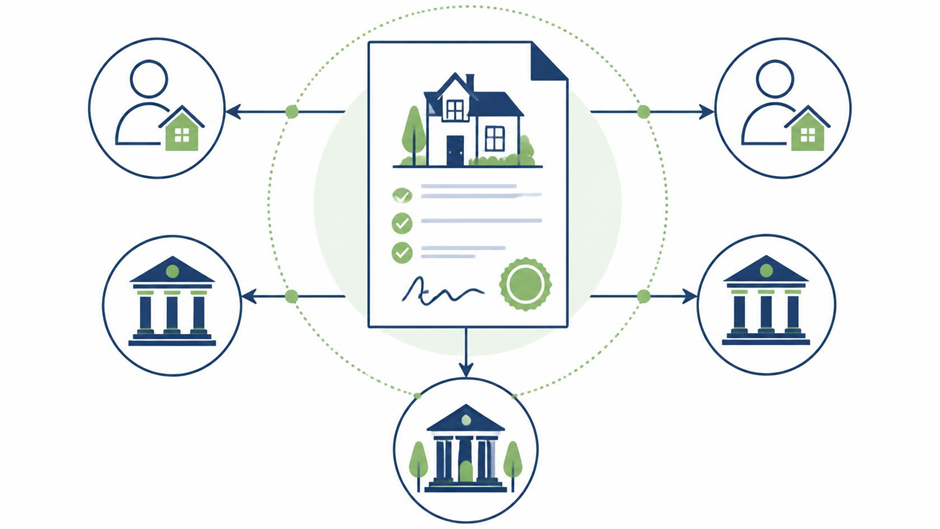
There’s you and your rep. There’s the seller and theirs. There’s your bank if you’re borrowing, and the seller’s bank if they’ve still got a mortgage to clear. And somewhere in the background, the land titles office that makes the whole thing official by registering the transfer.
Everyone’s got a part to play, and settlement only happens once every single one of them has done theirs. One slow bank, one missing signature, and the whole thing waits.
The Bit Where Stuff Actually Happens
Here’s roughly how it goes. Once the contract’s signed, your rep starts digging into the property, running title searches to confirm the seller actually owns it and checking for anything nasty registered against it.
Then come the numbers. Someone works out the settlement figures, including those adjustments I mentioned, splitting the council rates and water charges fairly between you and the seller based on the exact day you settle. A good settlement agent in Perth or wherever you’re buying handles all of this quietly in the background, and the process runs slightly differently depending on which state you’re in, but the bones of it are the same everywhere.
In the days before settlement, everyone’s talking to the banks, making sure the money’s ready and any old mortgage can be paid out. Then on the day itself, usually all done online now, the funds move, the title updates, and it’s done.
Let’s Talk About the Money
Settlement costs confuse people, and honestly, it’s not their fault. There are two separate things going on and they get lumped together.
One is what you pay your representative for actually doing the work. The other is government charges, stuff like title search fees, registration costs, and transfer duty. These aren’t your rep padding the bill. They’re set by the government and simply passed on.
Ask for a breakdown of both upfront. Any decent operator will happily give you one, and it saves you that little jolt of surprise when the final figure lands.
What Actually Goes Wrong
Most settlements go fine. But when they don’t, it’s usually one of a few culprits.
Finance not coming through in time is the big one. A bank dragging its feet on releasing money or clearing an old mortgage is another. And every so often a title search turns up something, a caveat, an unpaid debt, a boundary issue, that has to be sorted before anything can move.
This is exactly why picking the right person matters more than people think. A sharp operator sees these problems coming and heads them off before they blow up your settlement date. Whoever manages your property settlement should know these traps and steer around them. The difference between a smooth settlement and a stressful one is often just who you picked.
The Honest Bottom Line
Settlement sounds complicated, and legally, sure, it is. But from where you’re standing as the buyer or seller, a good one should feel like almost nothing. Your rep handles the messy stuff, keeps you in the loop, and hands you a clean result on the agreed day.
Knowing the basics of what’s happening behind the curtain just means you can ask smarter questions, spot trouble early, and back yourself to choose someone who’ll get it right. That’s really all there is to it.
Contributed by Hartfield Conveyancing, a licensed settlement agency with over 30 years of experience in property settlements.