
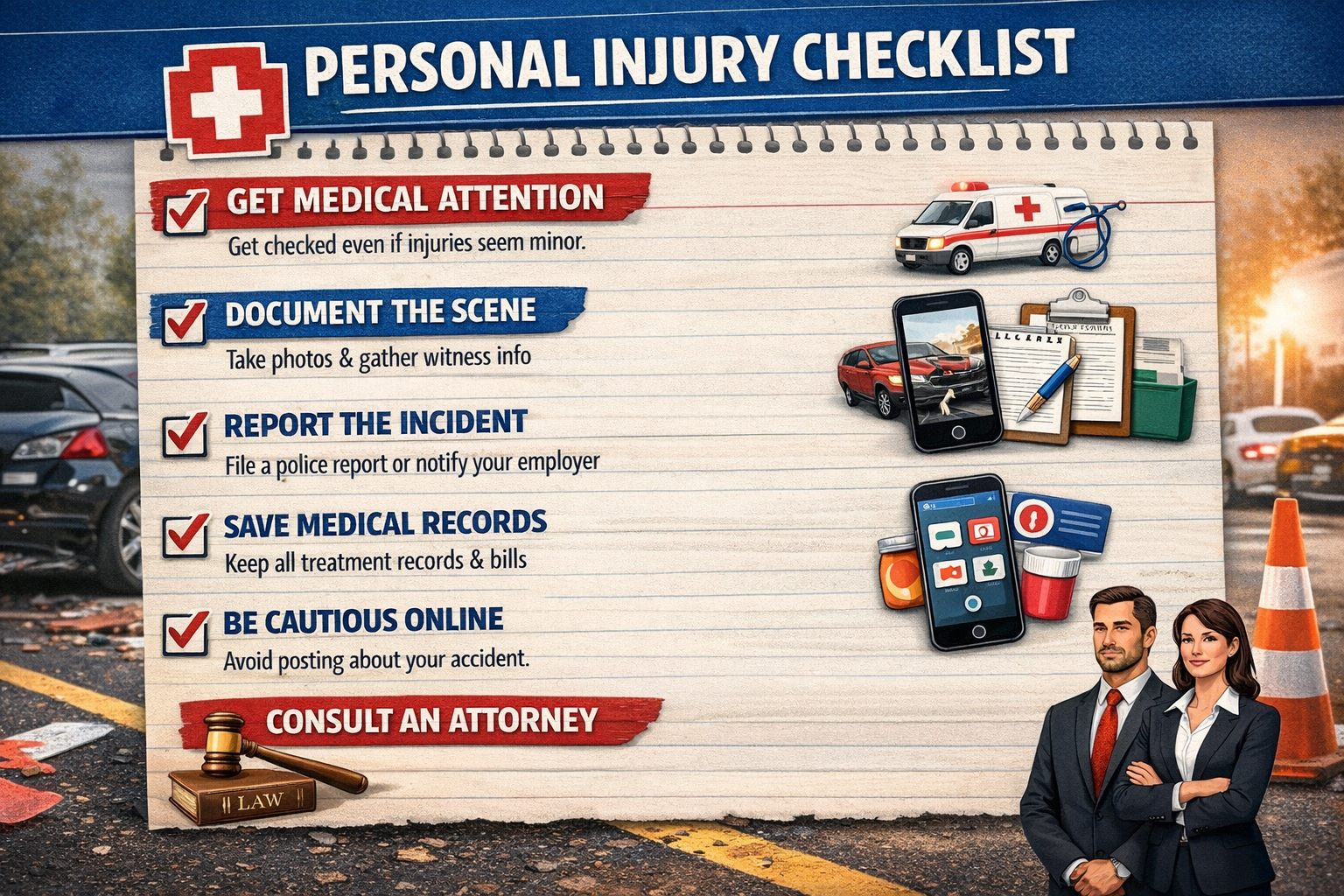

Personal Injury Checklist explains what to do after an accident, including medical care, evidence collection, reporting, and claim filing steps.
Experiencing a personal injury accident can be an overwhelming and disorienting experience. In those first moments and days, it is critical to take the right actions to safeguard both your physical health and any future legal claims. Knowing exactly what to do in these stressful situations makes all the difference when it comes to your recovery process, claim documentation, and financial protection. If you are unsure of the steps to follow, an Indianapolis personal injury lawyer can offer immediate advice and help you avoid common mistakes that harm your case.
After a personal injury accident, protecting your health and legal rights is essential. The steps you take immediately can affect your settlement or compensation. Seek medical care right away, even if injuries seem minor, because some symptoms appear later. Medical records also strengthen your claim. Proper reporting and strong documentation, such as photos, witness details, and official reports, can help insurance companies and courts evaluate your case fairly. Be cautious about what you share publicly, especially on social media, since it may be used against you. Consulting the right professionals can guide you through the process.
If you were injured in a collision and need advice tailored to traffic accidents, consider reaching out to a car accident lawyer Indianapolis for guidance specific to vehicle-related cases.
Seek Immediate Medical Attention
Your primary concern after an accident is your health. Even if you believe your injuries are minor, do not hesitate to get a medical evaluation quickly. Some injuries, including concussions or soft-tissue damage, may not show obvious symptoms right away but can still cause lasting harm. Prompt medical care not only helps your physical recovery but also generates records that serve as crucial evidence for your claim. Medical records, as emphasized by the Mayo Clinic, often become a key factor in both insurance and legal assessments of an injury’s severity.
Document the Accident Scene
At the scene, gather as much information as you can. Use your phone to take photographs showing where the accident occurred, any contributing hazards, damages to property, and your injuries. Make sure to collect the names and contact information of any witnesses who saw what happened. Record the time, date, and weather conditions at the scene, which can later help clarify the context of the incident.
- Photograph all damages and any visible injuries to yourself or others.
- Ask witnesses for statements and their contact details.
- Write down anything about the incident you remember, as details may fade.
Comprehensive documentation will provide strong support if you need to file a claim or seek compensation later on.
Report the Incident
It is essential to notify the proper authorities as soon as possible. For automobile accidents, call the police to file an official report. For workplace injuries, inform your supervisor or employer immediately. If the accident occurs on someone else’s property, such as a store or private residence, speak directly to the property owner or manager. Official reports document the occurrence and can be vital evidence if your claim is contested. For further details about why prompt reporting matters, visit this Nolo legal resource.
Consult with a Personal Injury Lawyer
Reaching out to a personal injury lawyer early in the process can make navigating the legal landscape much easier. An attorney helps you understand your rights, evaluate the strength of your claim, and avoid missteps that could jeopardize your compensation. Local lawyers can also guide you through jurisdiction-specific laws and deadlines that apply to your case. Many reputable firms offer free consultations to review your potential claim before any commitment is required.
Understand Your Rights and Responsibilities
It is important to familiarize yourself with your rights and responsibilities, including relevant statutes of limitations and the types of compensation you may be able to recover. Understanding your obligations, such as following medical advice and keeping records, ensures you stay on the correct side of both the law and your insurance policy. Reliable resources, including the Consumer Reports guide to post-accident steps, can provide helpful background information.
Avoid Discussing the Incident on Social Media
Even seemingly innocent posts about your accident or your injuries can be used against you by insurance companies or opposing legal counsel. Do not share updates or details about the incident or your recovery online. Anything posted can potentially be misconstrued to minimize your injuries or dispute your claim.
Follow Through with Medical Treatment
Make sure to follow all advice from your healthcare providers and attend every scheduled appointment. This not only aids your recovery but also demonstrates to insurers and courts that you are taking your injuries seriously. If you fail to follow through with treatment, it can appear as though your injuries are not as serious as you claimed.
Keep Detailed Records
Organization is essential when handling a personal injury claim. Keep copies of your medical bills, diagnostic reports, treatment plans, and any written correspondence from insurers or employers. Also, track additional expenses such as transportation to medical appointments and lost wages. Having these records ready makes substantiating your claim easier and increases your chances of a favorable outcome. By following these essential steps, you empower yourself to heal effectively and pursue the compensation you deserve after a personal injury accident. Taking proactive measures and consulting the right professionals ensures your health and legal rights are always protected.
FAQ: Personal Injury Checklist
1. What is a Personal Injury Checklist?
A Personal Injury Checklist is a step-by-step guide that helps injured individuals take the right actions after an accident to protect their health and legal rights.
2. Why is a Personal Injury Checklist important after an accident?
A Personal Injury Checklist is important because it helps you avoid mistakes that could reduce your compensation, such as missing medical care or failing to document evidence.
3. When should I start using a Personal Injury Checklist?
You should begin using a Personal Injury Checklist immediately after the accident, starting with medical treatment and evidence collection.
4. What should be included in a Personal Injury Checklist?
A Personal Injury Checklist should include medical care, accident reporting, evidence gathering, witness information, insurance notifications, and legal consultation.
5. How does a Personal Injury Checklist help with insurance claims?
A Personal Injury Checklist ensures you collect documentation like medical records, photos, and reports, which strengthens your claim and improves your chances of fair settlement.
6. Can a Personal Injury Checklist help in court?
Yes, a Personal Injury Checklist helps create strong evidence that can be useful in court if the insurance company disputes your injuries or liability.
7. What mistakes does a Personal Injury Checklist help prevent?
A Personal Injury Checklist helps prevent common errors like delaying treatment, admitting fault, failing to report the accident, or posting harmful content online.
8. Should I follow a Personal Injury Checklist for minor injuries?
Yes, even minor injuries should follow a Personal Injury Checklist because symptoms may worsen over time and documentation is still critical.
9. Does a Personal Injury Checklist apply to workplace injuries?
Yes, a Personal Injury Checklist applies to workplace injuries and includes reporting the incident to your employer and documenting unsafe conditions.
10. When should I contact a lawyer using a Personal Injury Checklist?
A Personal Injury Checklist recommends contacting a lawyer as soon as possible, especially if injuries are serious, liability is unclear, or the insurer offers a low settlement.