
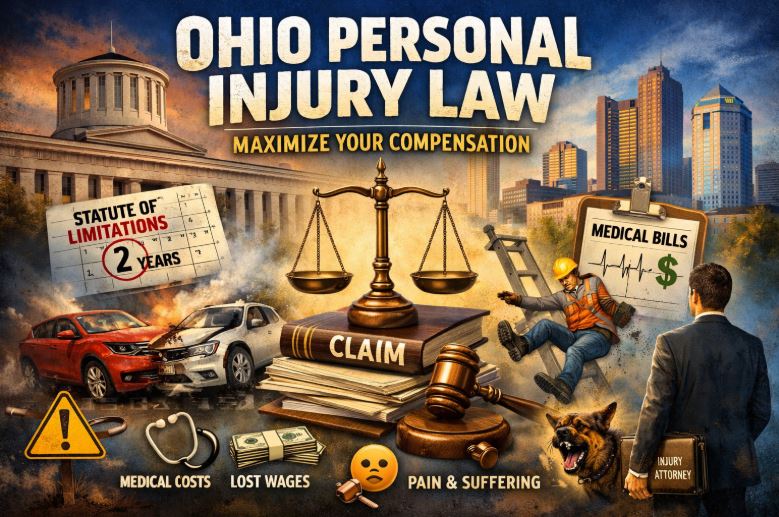

Learn Ohio personal injury laws and smart tips to maximize compensation after an accident. Find out when to contact an Ohio Personal Injury Attorney.
- Understanding Ohio Personal Injury Law Basics
- Ohio Statute of Limitations for Personal Injury Claims
- Ohio’s Comparative Negligence Rule
- Types of Compensation Available in Ohio
- Ohio Damage Caps: What You Need to Know
- How to Get the Most Compensation After an Injury
- Why Hiring an Ohio Personal Injury Attorney Helps
- Common Mistakes That Reduce Injury Compensation
- Final Thoughts
- FAQ
If you’ve been injured due to someone else’s negligence, understanding Ohio personal injury laws can make a major difference in how much compensation you receive. Many injury victims lose money simply because they don’t know what steps to take, what deadlines apply, or how insurance companies reduce payouts.
This guide explains the key personal injury laws in Ohio and provides practical tips to help you pursue the maximum settlement possible. If your injuries are serious, speaking with an Ohio Personal Injury Attorney can help protect your claim and prevent costly mistakes.
Understanding Ohio Personal Injury Law Basics
Personal injury law in Ohio covers accidents and injuries caused by another party’s negligence. Common claims include:
- Car accidents
- Truck and motorcycle crashes
- Slip and fall injuries
- Dog bites
- Medical malpractice
- Workplace injuries (third-party claims)
- Wrongful death cases
To win compensation, the injured person must usually prove that:
- The other party owed a duty of care
- They breached that duty
- Their actions caused the injury
- The injury resulted in damages (medical bills, pain, lost income, etc.)
Ohio Statute of Limitations for Personal Injury Claims
One of the most important laws in Ohio is the statute of limitations, which is the legal deadline for filing a lawsuit.
In most Ohio personal injury cases, the deadline is:
Two (2) years from the date of injury
If you miss this deadline, your case may be dismissed entirely, even if your injuries are severe.
Some exceptions may apply depending on the case type, such as medical malpractice or claims involving minors. Still, waiting too long can weaken evidence and reduce your settlement value.
Ohio’s Comparative Negligence Rule
Ohio follows a modified comparative negligence rule, which affects how much compensation you can recover.
Here’s how it works:
- If you are 50% or less at fault, you can still recover damages.
- If you are more than 50% at fault, you cannot recover compensation.
If you are partially responsible, your compensation is reduced by your percentage of fault.
Example:
If you are awarded $100,000 but found 20% at fault, your compensation becomes:
$100,000 – 20% = $80,000
This rule is one reason insurance companies try to shift blame onto injury victims.
Types of Compensation Available in Ohio
Ohio personal injury victims may be entitled to several categories of damages.
Economic Damages
These cover measurable financial losses such as:
- Emergency room and hospital bills
- Surgery, medication, and rehabilitation costs
- Future medical treatment
- Lost wages
- Reduced earning capacity
- Property damage
Non-Economic Damages
These cover personal suffering, including:
- Pain and suffering
- Emotional distress
- Loss of enjoyment of life
- Permanent disability or disfigurement
Punitive Damages
Punitive damages are awarded in rare cases when the defendant’s conduct was especially reckless or intentional, such as drunk driving or violent behavior.
Ohio law limits punitive damages in many cases, but they can still significantly increase the value of a claim.
Ohio Damage Caps: What You Need to Know
Ohio places limits on certain damages in personal injury cases.
Cap on Non-Economic Damages
In many cases, Ohio limits pain and suffering damages to the greater of:
- $250,000, or
- Three times the economic damages, up to a maximum of $350,000 per person and $500,000 per accident
However, these caps may not apply in cases involving catastrophic injuries such as permanent disability, severe disfigurement, or loss of limb.
Understanding whether a cap applies can dramatically impact your settlement strategy.
How to Get the Most Compensation After an Injury
To maximize your settlement, you must treat your injury claim like a legal case from day one. Even small mistakes can cost thousands of dollars.
1. Get Medical Treatment Immediately
Delaying medical treatment is one of the fastest ways to damage your claim. Insurance companies argue that:
- You were not really injured
- Your injuries were caused later
- Your condition is exaggerated
Follow all medical advice and attend every appointment.
2. Document Everything
Strong documentation increases claim value. You should keep:
- Photos of injuries and accident scene
- Police reports
- Medical records and receipts
- Lost wage documentation
- Notes about pain, sleep issues, and emotional distress
Keeping a daily injury journal can also help prove long-term suffering.
3. Do Not Give a Recorded Statement Too Quickly
Insurance adjusters often ask for recorded statements soon after an accident. Their goal is to collect comments that can later be used against you.
A simple statement like “I feel okay” may later be used to argue you weren’t seriously hurt.
It’s safer to consult an Ohio Personal Injury Attorney before speaking in detail.
4. Avoid Posting on Social Media
Insurance companies frequently monitor social media. A photo of you smiling at a family event could be twisted into evidence that you are not in pain.
Even innocent posts can reduce settlement value. It’s best to stay offline until your case is resolved.
5. Calculate Future Damages, Not Just Current Bills
Many victims accept settlements that only cover current medical bills. Serious injuries often require:
- long-term therapy
- future surgeries
- pain management
- permanent work restrictions
Your claim should include projected future costs, not just what you’ve already paid.
6. Don’t Accept the First Settlement Offer
Most initial offers are intentionally low. Insurance companies assume many people will settle quickly due to stress, fear, or financial pressure.
A fair settlement should include:
- full medical costs
- future care expenses
- lost income
- pain and suffering
- permanent injury effects
If your injuries are serious, settling too early can leave you paying future medical bills out of pocket.
7. Strengthen Liability Evidence
The more clearly you can prove the other party was at fault, the higher your compensation. Evidence may include:
- witness statements
- surveillance footage
- accident reconstruction reports
- medical expert opinions
- phone records (in distracted driving cases)
If fault is unclear, insurance companies often use Ohio’s comparative negligence rule to reduce payouts.
Why Hiring an Ohio Personal Injury Attorney Helps
A skilled Ohio Personal Injury Attorney can help increase your compensation by handling negotiations, gathering evidence, and calculating full damages.
They can also:
- identify all liable parties
- work with medical experts
- negotiate aggressively with insurers
- prevent you from accepting unfair offers
- file a lawsuit if settlement talks fail
Insurance companies typically offer higher settlements when they know an experienced attorney is involved.
Common Mistakes That Reduce Injury Compensation
Many injury victims unknowingly hurt their case by:
- delaying medical care
- missing doctor appointments
- giving recorded statements without legal advice
- signing releases too early
- accepting quick settlement offers
- failing to document pain and lost wages
Avoiding these mistakes can significantly increase your claim value.
Final Thoughts
Ohio personal injury laws can be complex, but the right approach can make a major difference in the compensation you receive. The key is acting quickly, collecting evidence, following medical treatment, and refusing to let insurance companies undervalue your injuries.
If you want the best chance of securing full compensation, speaking with an experienced Ohio Personal Injury Attorney may be one of the most important steps you take after an accident.
FAQ
1. What are Ohio Personal Injury Laws?
Ohio Personal Injury Laws are legal rules that allow injured victims to seek compensation when someone else’s negligence causes harm, such as in car accidents, slip and falls, or medical malpractice.
2. How long do Ohio Personal Injury Laws give you to file a claim?
Under Ohio Personal Injury Laws, most personal injury lawsuits must be filed within two years from the date of the accident or injury.
3. How does fault work under Ohio Personal Injury Laws?
Ohio Personal Injury Laws follow a modified comparative negligence rule. If you are 50% or less at fault, you can recover compensation. If you are more than 50% at fault, you cannot recover damages.
4. Do Ohio Personal Injury Laws limit pain and suffering compensation?
Yes, Ohio Personal Injury Laws may cap non-economic damages like pain and suffering in certain cases, although exceptions may apply for catastrophic injuries.
5. What damages can you recover under Ohio Personal Injury Laws?
Under Ohio Personal Injury Laws, victims may recover medical expenses, lost wages, future treatment costs, pain and suffering, and sometimes punitive damages in severe cases.
6. Can Ohio Personal Injury Laws cover future medical costs?
Yes. Ohio Personal Injury Laws allow injured victims to claim future medical expenses, including rehabilitation, surgeries, therapy, and long-term care if supported by medical evidence.
7. How can you maximize compensation under Ohio Personal Injury Laws?
To maximize compensation under Ohio Personal Injury Laws, seek immediate medical care, document evidence, avoid giving recorded statements, and consult an attorney before accepting a settlement.
8. Should you hire a lawyer for Ohio Personal Injury Laws cases?
Yes, working with an attorney can improve your outcome. An experienced lawyer understands Ohio Personal Injury Laws and can negotiate aggressively with insurance companies for higher compensation.
9. Can Ohio Personal Injury Laws apply to slip and fall injuries?
Yes, Ohio Personal Injury Laws apply to slip and fall claims if the property owner failed to maintain safe conditions or failed to warn visitors about hazards.
10. What happens if you miss the deadline under Ohio Personal Injury Laws?
If you miss the statute of limitations deadline under Ohio Personal Injury Laws, you may lose your right to file a lawsuit and recover compensation.