
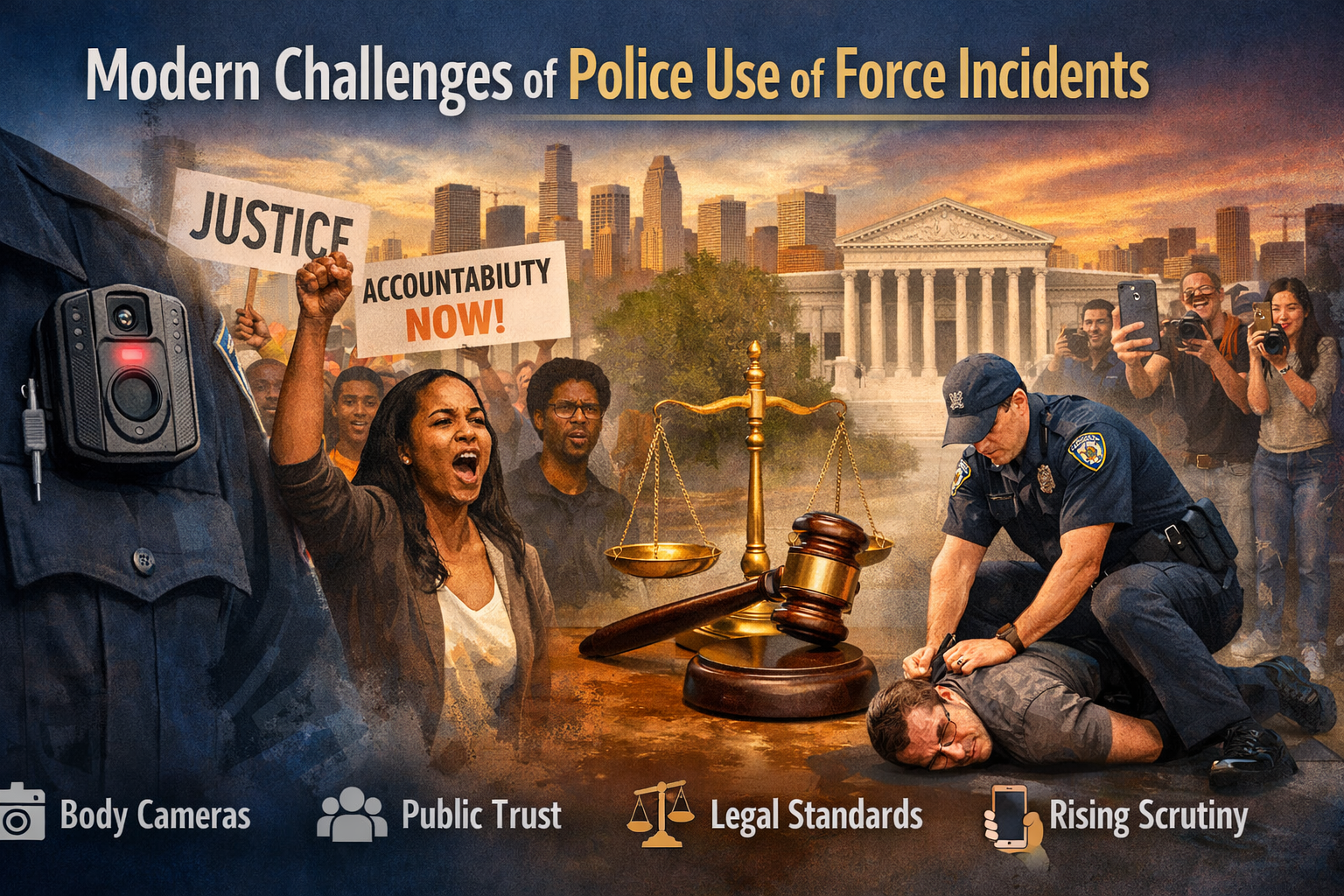

Modern challenges of police use of force incidents include accountability, body cameras, public trust, legal standards, and rising scrutiny in communities.
In recent years, society’s scrutiny of police use of force has grown more intense and more complex. Numerous factors, including legal standards, shifting social attitudes, and technological innovation, shape law enforcement practices and public expectations. For those interested in deeper regional insights, a comprehensive look at the use of force in California reveals distinctive state-level approaches and trends.
The demand for police accountability and transparency continues to rise, compelling departments to reassess their public safety strategies. Conversations about fairness and reform are fueled by both national statistics and local incidents. Community leaders, policymakers, and law enforcement agencies are tasked with navigating these evolving challenges while building trust. Meanwhile, ongoing debates shed light on disparities in how force is applied and highlight the need for more consistent practices guided by evidence and ethical standards.
Declining Trends in Use of Force
A mix of reforms and external pressure has contributed to noticeable shifts in the use of lethal force by police departments across the United States. According to research published by the University of Illinois, there was a 24 percent reduction in police-related deaths from 2021 to 2023, representing the lowest figures seen since 2015. This decline has prompted analysts to consider various contributing factors, including improved de-escalation techniques and increased body-worn camera use. Yet experts caution that the underlying drivers of this trend remain unclear. Comprehensive studies suggest that while lethal incidents are declining, the rate at which non-lethal force is applied has remained more consistent, pointing to areas where further reform could be beneficial.
Persistent Racial Disparities
Despite progress, substantial disparities persist in how police use force against different demographic groups. In Washington, D.C., recent oversight reports show that Black residents were the subjects of 89 percent of reported use-of-force incidents in 2024. This pattern reflects deeper systemic concerns and highlights the urgent need for targeted training and policy updates. Community advocates emphasize that building an equitable law enforcement system will require addressing longstanding racial disparities not only in use-of-force cases, but also throughout the entire criminal justice system.
Technological Innovations and Ethical Concerns
The rapid adoption of technology, from AI-powered drones to automated surveillance networks, is reshaping the operational capabilities of police departments. Over 1,500 law enforcement agencies in the United States have begun to integrate drones to assist with emergency response, crowd control, and search operations. These advancements promise increased efficiency and improved safety for officers and civilians alike. However, they also introduce new challenges, particularly concerning individual privacy rights, data retention, and oversight protocols. Privacy groups and ethics boards are calling for clearer frameworks to govern the use of new law enforcement technologies, warning of the potential for misuse or overreach without adequate safeguards.
High-Profile Incidents and Public Response
Public awareness and activism remain highest following high-profile incidents of lethal or excessive force. The 2023 death of Tyre Nichols in Memphis became a flashpoint, sparking national protests and renewed discussions about police accountability and reform. Similar cases routinely prompt calls for the prosecution of the officers involved and for wider systemic scrutiny. These incidents serve as reminders of ongoing community concerns, igniting dialogue that pushes policy reform and encourages law enforcement agencies to revisit their commitment to public service and transparency.
Legal Repercussions and Accountability
Legal actions against law enforcement for misuse of force have become more prevalent and consequential. In one example, bystanders injured in a 2022 Denver police shooting received a jury award of nearly $20 million against the city. Such verdicts signal a growing willingness among courts and juries to hold police departments and individual officers accountable for their actions. These outcomes are contributing to a culture of greater scrutiny, where officers must be mindful of both department policies and broader legal standards when making real-time decisions in the field.
Community Relations and Trust Building
Strong community relationships are fundamental to effective policing. Agencies across the country are revisiting old policies and implementing new strategies aimed at transparency and meaningful engagement. Initiatives include town hall meetings, body camera programs, and independent review boards with community representation. Experts agree that these efforts, alongside reforms in training and recruitment, can help restore trust and foster ongoing dialogue between law enforcement and the people they serve.
Future Directions and Policy Implications
The path forward calls for continued policy evolution and investment in officer training. Ethical considerations must become central to the adoption of any new law enforcement technology. Lawmakers and community organizers advocate for collaborative approaches that integrate community perspectives at every decision-making level, ensuring policies are both effective and fair. National leadership from groups such as the International Association of Chiefs of Police, as well as local pilot programs, suggests that lasting progress stems from transparency, accountability, and the willingness to learn from past incidents. While measurable reductions in police use of force represent major strides, persistent challenges underscore the importance of sustained vigilance and adaptive strategies. Reforms must remain balanced with officer and public safety, and communities should feel empowered to hold their local agencies accountable for just and equitable policing practices.