
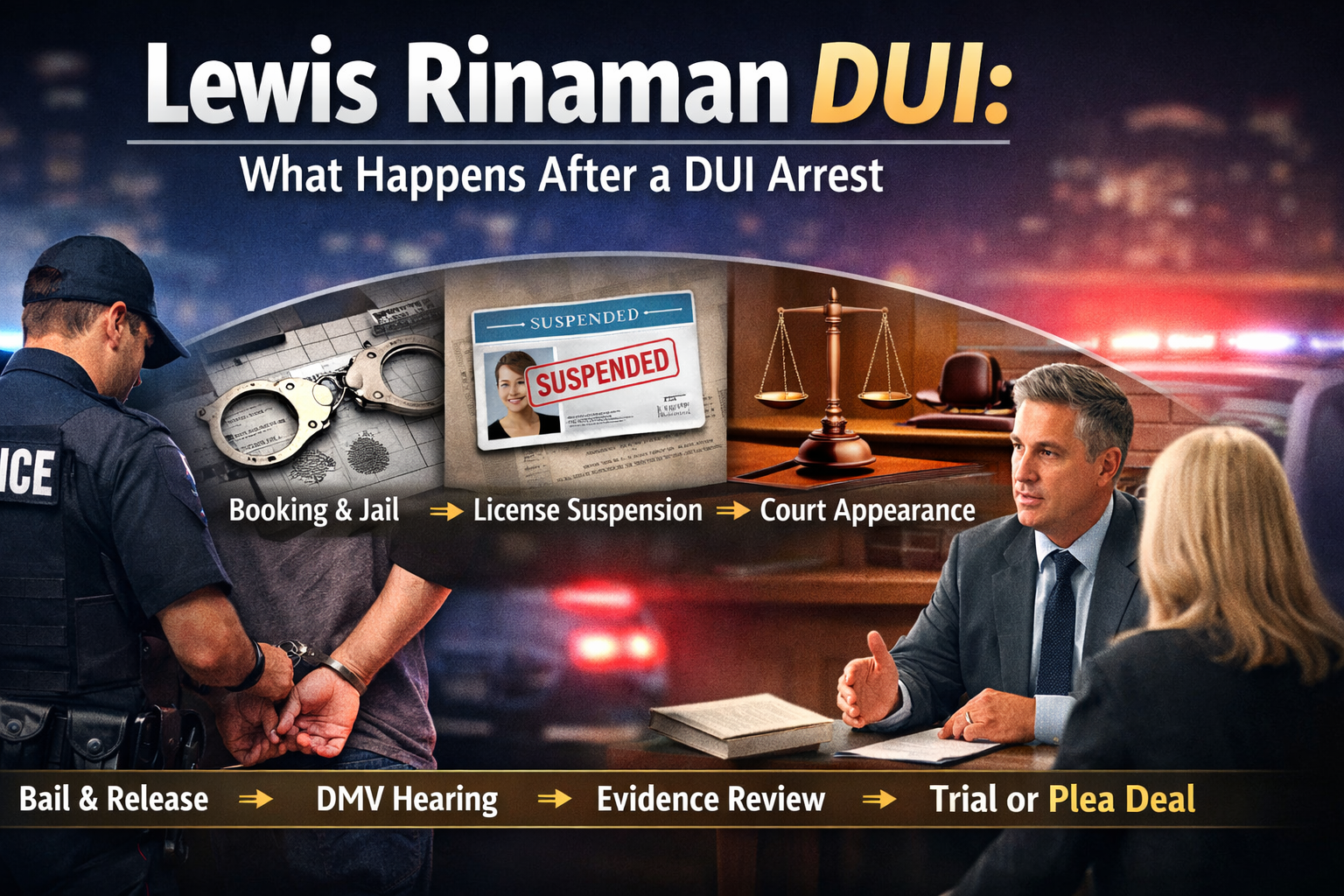

Lewis Rinaman DUI guide explaining what happens after a DUI arrest, legal steps, court process, penalties, and how a DUI lawyer can protect your rights.
- Step 1: The DUI Stop and Arrest Process
- Step 2: Booking, Fingerprinting, and Jail Processing
- Step 3: Bail or Release After DUI Arrest
- Step 4: Vehicle Impound and Towing Issues
- Step 5: Driver’s License Suspension and Administrative Hearings
- Step 6: Arraignment and First Court Appearance
- Step 7: Evidence Review and Discovery
- Step 8: Motions to Suppress Evidence
- Step 9: Plea Bargains and Negotiation
- Step 10: Trial or Sentencing
- Why Hiring a DUI Lawyer Matters
- Final Thoughts
Being arrested for DUI is one of the most stressful legal situations a person can experience. Many people feel panic, confusion, and uncertainty about what comes next. If you are searching for information related to Lewis Rinaman DUI, you may be trying to understand the DUI process, the legal consequences, and what steps are necessary to protect yourself.
A DUI arrest is not the end of the case, it is only the beginning. Understanding what happens after an arrest can help you stay calm, make smarter decisions, and avoid mistakes that may harm your defense.
This article explains what happens after a Lewis Rinaman DUI arrest, what legal consequences you may face, and how a DUI lawyer can help.
Step 1: The DUI Stop and Arrest Process
Most DUI cases begin with a traffic stop. Police officers may pull someone over for reasons such as:
- Swerving or unsafe lane changes
- Speeding
- Running a red light or stop sign
- Broken taillights or vehicle violations
- Suspicion of impaired driving
After the stop, the officer will observe behavior and may look for signs of intoxication, including slurred speech, bloodshot eyes, smell of alcohol, or confusion. If the officer believes impairment exists, they may request field sobriety tests and a breath test.
If the officer determines probable cause, the driver may be arrested for DUI.
In many cases, individuals researching Lewis Rinaman DUI are concerned about whether the arrest itself was lawful. That is an important question because unlawful stops or improper procedures can lead to evidence being suppressed.
Step 2: Booking, Fingerprinting, and Jail Processing
After a Lewis Rinaman DUI arrest, the driver is typically taken to jail for booking. This process often includes:
- Fingerprinting
- Photograph (mugshot)
- Recording personal information
- Property inventory
- Breath or blood testing (if not already completed)
Depending on the situation, the driver may be held for several hours or overnight. Some states require individuals arrested for DUI to stay in custody until they are sober enough to be released safely.
This is a critical stage because anything said during booking can be used later in court. A person arrested should remain respectful and calm but avoid explaining or defending themselves without a lawyer present.
Step 3: Bail or Release After DUI Arrest
After booking, a person may be released in one of several ways:
- Posting bail
- Being released on bond
- Being released on their own recognizance
- Waiting for a court appearance
The release process depends on the state, the driver’s criminal history, and whether aggravating factors exist (such as high BAC, an accident, or injury).
A DUI lawyer can sometimes help speed up the release process or request reduced bail conditions. In many cases connected to Lewis Rinaman DUI, early legal support can help prevent unnecessary complications.
Step 4: Vehicle Impound and Towing Issues
In many DUI arrests, police will tow and impound the vehicle. This creates additional costs such as:
- Towing fees
- Storage fees
- Impound release fees
Some people do not realize that impound fees can rise daily, making quick action important. A DUI attorney may be able to assist with the legal process of retrieving the vehicle and handling paperwork.
Step 5: Driver’s License Suspension and Administrative Hearings
One of the biggest surprises after a DUI arrest is that a driver’s license can be suspended even before a court conviction.
In many states, DUI arrests trigger an administrative suspension through the Department of Motor Vehicles (DMV). This is separate from the criminal case. The suspension may happen if the driver:
- Failed a breath test
- Refused to take a breath or blood test
- Tested above the legal limit
This is why DUI defense is not only about court. The DMV case is often time-sensitive. Some states require drivers to request a DMV hearing within a short period, sometimes as little as 10 days after arrest.
If you are researching Lewis Rinaman DUI, you should understand that missing DMV deadlines can result in automatic suspension with limited options to fight it later.
Step 6: Arraignment and First Court Appearance
After release, the next step is usually the arraignment. This is the first official court hearing where the accused is informed of the charges.
At arraignment, the judge may:
- Read the DUI charges
- Set bail conditions or modify release terms
- Issue protective orders if needed
- Set a schedule for future hearings
- Ask for a plea (guilty, not guilty, or no contest)
Most DUI defense attorneys recommend pleading not guilty at this stage until evidence can be reviewed. A DUI lawyer can also argue for reduced bond, permission to drive for work, or alternatives to harsh restrictions.
Step 7: Evidence Review and Discovery
After arraignment, the DUI defense process becomes more detailed. The defense attorney begins gathering evidence through discovery. Evidence may include:
- Police reports
- Dashcam footage
- Body camera footage
- Breathalyzer calibration records
- Blood test results
- Field sobriety test notes
- Witness statements
- Accident reports
A major focus in Lewis Rinaman DUI defense cases is identifying weaknesses in the prosecution’s evidence. DUI evidence is not always reliable, and errors can occur at many stages.
For example, breath tests can produce false readings due to:
- Improper calibration
- Medical conditions such as acid reflux
- Residual alcohol in the mouth
- Incorrect observation period by the officer
Step 8: Motions to Suppress Evidence
One of the most important legal tools in DUI defense is filing motions. These are legal requests asking the court to exclude evidence obtained improperly.
A DUI attorney may argue that:
- The traffic stop was unlawful
- The officer lacked probable cause
- The breath test was improperly administered
- The blood draw violated legal requirements
- The defendant’s rights were violated during questioning
If the judge agrees, key evidence may be suppressed. This can lead to reduced charges or even dismissal.
In many situations involving Lewis Rinaman DUI, the success of the case depends on whether the defense can challenge the arrest procedure and evidence collection.
Step 9: Plea Bargains and Negotiation
Not every DUI case goes to trial. Many cases end through plea agreements. Prosecutors may offer reduced charges depending on:
- BAC level
- Driving behavior
- Prior DUI history
- Cooperation during arrest
- Strength of evidence
A DUI may sometimes be reduced to reckless driving or a lesser alcohol-related offense. This can help reduce penalties and long-term consequences.
However, accepting a plea deal without understanding the full consequences can be a mistake. A DUI lawyer ensures the defendant understands what they are agreeing to, including fines, probation terms, and license penalties.
Step 10: Trial or Sentencing
If no agreement is reached, the case may go to trial. At trial, the defense can challenge the prosecution’s evidence and question officers, witnesses, and lab technicians.
If the defendant is convicted or pleads guilty, sentencing may involve:
- Fines and court costs
- Probation
- DUI education classes
- Community service
- Alcohol monitoring
- Ignition interlock device installation
- Jail time (especially for repeat offenses)
A conviction can also lead to long-term problems such as increased insurance rates, employment issues, and background check complications.
Why Hiring a DUI Lawyer Matters
A DUI arrest is serious, but it does not automatically mean a conviction. Many DUI cases contain errors, questionable evidence, or constitutional issues.
A DUI lawyer can help by:
- Investigating the traffic stop
- Challenging breath and blood test evidence
- Protecting your rights in court
- Negotiating reduced charges
- Fighting license suspension
- Building a defense strategy for trial
If you are facing a situation connected to Lewis Rinaman DUI, hiring legal representation early can be one of the most important steps to protect your future.
Final Thoughts
A DUI arrest can feel overwhelming, but understanding the process helps reduce fear and uncertainty. From booking and bail to DMV hearings and court appearances, every step matters. The choices made after an arrest can strongly impact the final outcome.
If you are dealing with a case involving Lewis Rinaman DUI, speaking with a qualified DUI defense lawyer as soon as possible may help you avoid costly mistakes and improve your chances of a better result.