
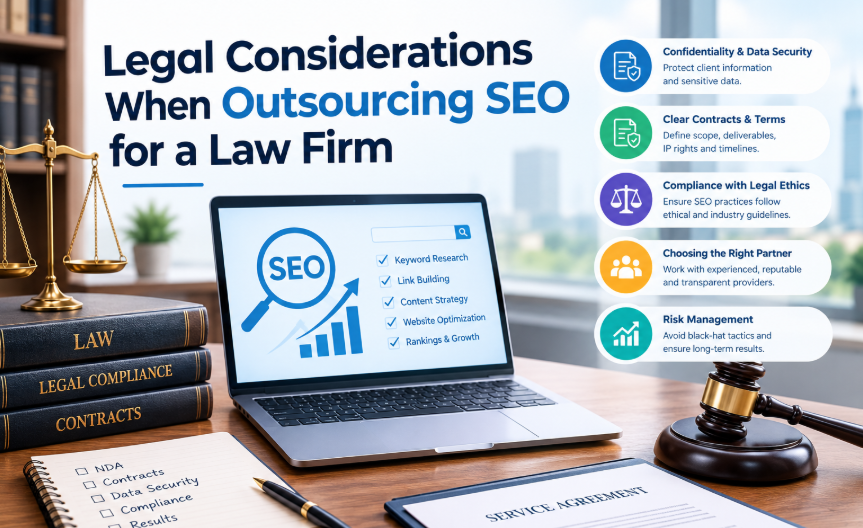

Search visibility can help a law firm reach people looking for legal information or representation, but outsourcing search engine optimisation (SEO) brings more than a marketing decision. A firm that hires an agency or freelancer remains responsible for how its services are presented and for protecting information entrusted to it. Before work begins, lawyers should consider professional conduct duties, advertising rules, confidentiality, intellectual property and the terms of the supplier relationship.
Understand What the Provider Will Do
SEO work may include technical website changes, keyword research, content writing, local listings and link building. In a white-label arrangement, an agency delivers some or all of these services under the hiring firm’s brand. The arrangement can extend an agency’s capacity, but it does not automatically transfer responsibility for the work or its consequences.
Ask for a clear description of the services, who will perform them, how work will be reviewed and what reporting will be provided. A useful guide to white-label SEO can help agencies understand common service models and questions to ask about providers. For a law firm, the same distinction matters when assessing whether an agency is managing work itself or passing it to subcontractors.
Check Advertising and Professional Conduct Requirements
Law firm marketing is subject to rules that vary by jurisdiction. Professional conduct requirements may address truthful communications, solicitation, claims about results, comparisons with other lawyers and the use of testimonials. A firm should not assume that a marketing supplier understands the rules that apply to its practice or can approve legal advertising on its behalf.
Set a review process before publication. A designated lawyer or staff member should check website copy, landing pages, social posts and other public-facing material for accuracy and compliance. Claims such as “best,” “guaranteed” or “specialist” may require particular care, depending on local rules and the facts supporting them. Avoid promises of a specific case outcome, and make sure descriptions of experience, fees and services are current and not misleading.
Contracts should also require the supplier to obtain approval before publishing or materially changing content. This is especially important where the firm serves clients in multiple jurisdictions, since one page or campaign may reach audiences subject to different requirements.
Protect Confidential Information and Personal Data
SEO providers generally need access to website systems and analytics, but they should not need unrestricted access to client files. Give each supplier only the permissions necessary for its work, use individual accounts where possible, and remove access when the engagement ends. Do not share confidential case details, client names or sensitive documents for content development unless there is a proper basis and appropriate safeguards.
Review whether the supplier will collect or process personal information through forms, analytics tools or advertising technology. The agreement should explain the parties’ roles, permitted uses, security measures, retention periods and incident-notification obligations. If a provider uses subcontractors or services located in other countries, ask how those arrangements affect data handling and any applicable legal obligations. A privacy notice should accurately describe the firm’s practices; marketing changes should not quietly make it out of date.
Set Ownership and Payment Terms in Writing
SEO engagements can produce articles, images, reports, website code and other materials. Do not assume payment alone settles who owns them or what rights the firm receives. The contract should address ownership or licensing, permitted reuse, access to source files and any third-party materials used in the work. It should also require the supplier to use content and images lawfully and to disclose any licence restrictions.
Define the scope, deadlines, review periods, fees and termination rights. Specify what happens to unfinished work, accounts and data at the end of the relationship. Clear terms can prevent disputes about whether a deliverable was completed, whether revisions are included and whether the firm can continue using work after a provider is replaced.
Assess Link Building and Provider Practices
Link building is a common SEO service, but the methods used matter. Paid or manipulative links can create search-engine penalties and reputational problems, while low-quality placements may offer little value. Ask how links are obtained, whether publishers are selected for relevance and editorial quality, and whether the provider will disclose paid placements or other material relationships. Be cautious of guarantees about rankings, traffic or a fixed number of high-authority links.
Before buying, request examples of work, references where available and a realistic explanation of reporting. Compare a managed provider with a self-serve marketplace based on the level of oversight the firm needs, not simply headline price. Marketplaces such as Osdire let buyers engage freelancers across categories including writing, technology and marketing; a buyer should still assess each seller’s experience, scope and working process.
Keep Oversight With the Firm
Outsourcing can make marketing more manageable, but it should not remove internal accountability. Assign someone to monitor performance, review public content and raise concerns promptly. Keep records of approvals and supplier instructions, and revisit access, privacy and compliance arrangements when the scope changes.
Where an engagement involves sensitive data, complex advertising rules or substantial expenditure, legal review of the contract and workflow may be worthwhile. A careful selection process and written expectations help a law firm benefit from outside expertise while preserving control over its professional obligations and reputation.