

In New York City, preventable injuries continue to send thousands of people to hospitals every year. Health data shows that one in three adults over 65 experiences a fall annually, leading to roughly 30,500 emergency room visits, 16,600 hospital stays, and nearly 300 deaths. Serious injuries also stem from unsafe stairways, broken flooring, poor lighting, falling objects, and neglected building conditions. Whether someone slips in an apartment hallway or gets struck by debris near a property entrance, the physical pain often brings financial pressure, missed work, and lengthy medical treatment.
After an accident, documenting the scene, seeking medical care, and reporting hazards quickly can protect your health and strengthen a legal claim. People injured on someone else’s property in NYC may face expenses tied to rehabilitation, lost income, or emotional distress. Speaking with a premises liability attorney can help clarify available options after a serious injury for injured New Yorkers.
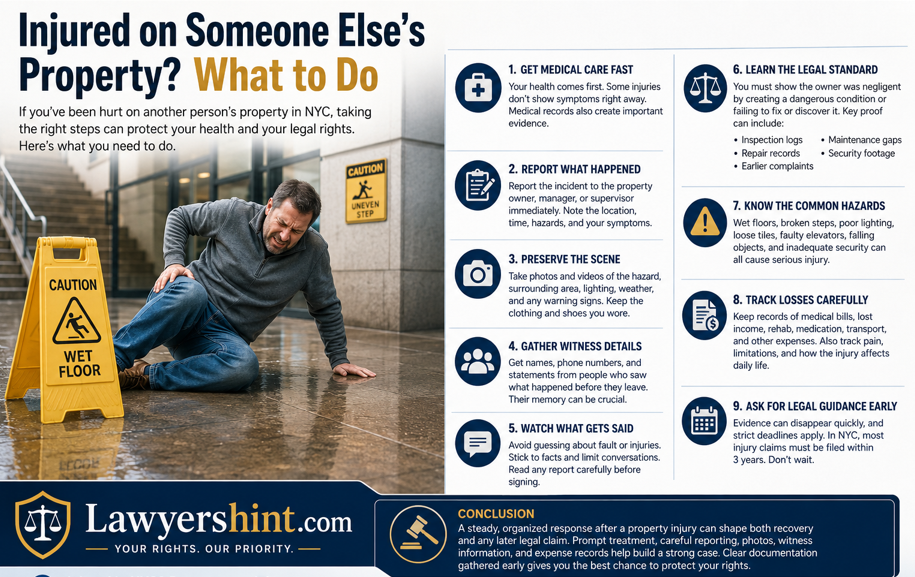
Get Medical Care Fast
Medical attention should come first, even when discomfort seems limited at the scene. Adrenaline can dull symptoms for hours, especially after a fall or blunt impact. Head injury, spinal strain, soft tissue damage, and internal bleeding may worsen after the body settles. Clinical notes also create a time-stamped record that connects the event with the harm. Physicians can document swelling, restricted motion, neurological changes, and the need for later treatment.
Report What Happened
Once urgent needs are addressed, the incident should be reported to the owner, manager, or supervisor without delay. Many people who were injured on someone else’s property in NYC typically encounter the following:
- Wet flooring
- Broken steps
- Dim corridors
- Missing handrails
- Loose pavement
A prompt written report can capture location, timing, visible hazards, and early symptoms before memory fades or conditions change.
Preserve the Scene
Photographs often become one of the strongest forms of proof after a premises injury. Images should show the hazard, the surrounding area, the lighting, weather, footwear, and any warning signs nearby. Short video clips may capture a sloped surface or unstable flooring more clearly than a still image. Clothing and shoes worn that day can matter as well. These items should remain undisturbed if they hold dirt, moisture, or tears.
Gather Witness Details
Witness accounts can help when a property owner disputes fault or denies prior notice. Names, phone numbers, and short statements should be collected before people leave the area. Neutral observers may recall a spill left untreated, a light that stayed out, or repeated complaints from others. Their recollection can support a stronger timeline. Independent memory often carries weight because it is less tied to either side’s financial interest.
Watch What Gets Said
Early conversations deserve care, as casual remarks can later be used out of context. People often apologize from habit while still shaken and in pain. Brief factual statements are safer than guesses about cause, blame, or recovery. No one should estimate future symptoms before a medical evaluation is complete. If a written report needs a signature, each line should be read closely so errors do not become part of the file.
Learn the Legal Standard
Premises liability cases usually turn on negligence. In practical terms, the injured person must show that an owner or occupier created a dangerous condition, knew about it, or should have discovered it. Reasonable care is the basic measure under New York law. Proof may include the following:
- Inspection logs
- Repair records
- Earlier complaints
- Maintenance gaps
- Security footage
Each item helps show whether the hazard was preventable before the event occurred.
Know the Common Hazards
Slip and fall incidents remain common, yet they are far from the only source of harm. Loose tiles, broken railings, poor lighting, faulty elevators, falling objects, and inadequate security can also cause severe injury. Busy city properties face constant wear from heavy foot traffic. That pressure increases risk when maintenance slips. Safe spaces depend on routine inspection, timely repair, and clear warnings while a hazard remains present.
Track Losses Carefully
The full cost of an injury usually extends past the first emergency bill. Lost income, rehabilitation visits, medication, transportation, and home assistance can quickly build up over weeks or months. A simple record with receipts, invoices, appointment notes, and missed work dates can show the financial effect clearly. Daily symptoms matter, too. Pain levels, sleep disruption, reduced mobility, and limits on household tasks should be recorded in plain language.
Ask for Legal Guidance Early
Early legal guidance can help preserve evidence before it disappears. Security footage may be erased, witnesses may become harder to reach, and damaged areas may be repaired within days. Time limits also matter in New York. Many injury claims must be filed within three years, while wrongful death actions often fall under the two-year period. Cases involving a public entity can require notice much sooner, which makes delay especially risky.
Conclusion
A steady, organized response after a property injury can shape both recovery and any later legal claim. Prompt treatment, careful reporting, photographs, witness information, and expense records help create a reliable account of what occurred. Owners who ignore unsafe conditions may face liability under New York law, but a strong case depends on proof. Clear documentation gathered early gives injured people and their families a better chance to protect their interests.