
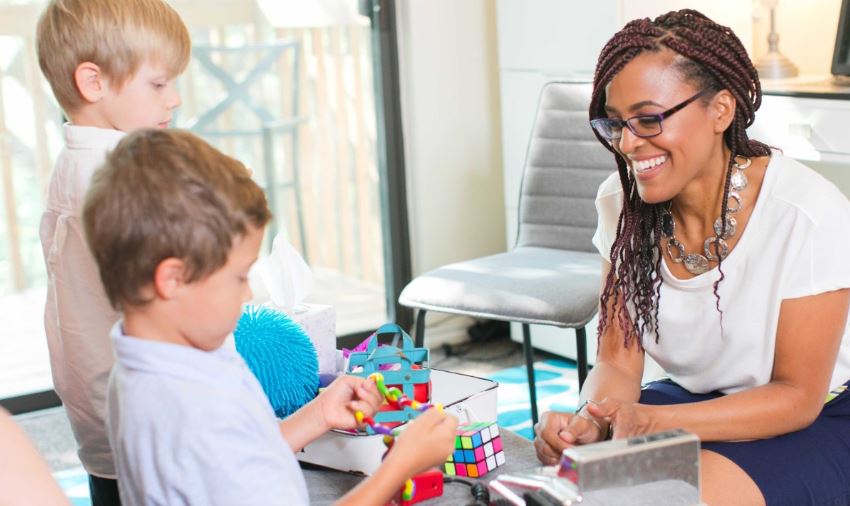

Separation may have a lot of consequences on the bond between children and the parents. Children usually get confused, sad, or angry even when the decision is made carefully. Finally, trust may be shaken, particularly when the routines are altered or communication fails. It is a long process of building that trust again. When parents take this process with sincerity and stability, they will be able to build a stronger bond and make their children feel safe once again.
Acknowledge Their Feelings
Children should be able to understand that their emotions are observed and valued. They can find it difficult to communicate what they are feeling after a separation or they may behave out. Parents should teach by listening to their children without interrupting or correcting to send them a strong message that they are heard. Although their emotions may be hard to listen to, without being defensive, admitting them will be the first step towards new levels of trust.
They should not be ignored and given hasty assurances that all will be well. Rather, react with compassion and simple explanations, which are related to their age and level of maturity. Children will be more at ease to open up when they are emotionally safe. With time, a regular process of validation makes them feel that you are reliable and that you are there emotionally.
Be Strauss and Be Age Approps
Truthfulness increases the level of trust when children are told the truth in a manner which they comprehend. Their requirements do not involve all the details, but they require an idea of what to expect in terms of changes. The certainty is minimized by simple explanations concerning living arrangements, schedules, and family routines. In case of legal procedures, including a session with a family lawyer Vaughan or the advice of a divorce lawyer Vaughan, they can be provided calmly and in an assuring way without overwhelming the child.
Never promise what you cannot deliver. One may be tempted to make promises on what could happen tomorrow to reassure them. Nevertheless, promises made and not kept may harm more. Rather, concentrate on what you can do i.e. attending school events, or communicating often. Dependability at minor issues contributes to the regaining of confidence at larger issues.
Form Stability and Consistency
When children become aware of stability in their day to day lives, they are able to gain trust once again. Having regular meal schedules, sleep schedules, home work schedules and schedules come as a norm. Although they may be adapting to the two households, there are patterns that are predictable, which offer comfort. Children experience less conflict between conflicting rules when there is a coordination of schedules and expectations by parents.
There is also the consistency of behavior and discipline. The change of parenting style may cause uncertainty on children. Attempt to have constant expectations as well as be patient as they adapt. One does not need perfection to be stable. It involves perseverance and persistence. Consistency helps children to realize that the parent is still a stable source of support.
Show Up and Follow Through
During the change process, action does speak a lot more than words. Attending vital occasions, maintaining appointments, and emotional availability restores trust slowly. Children observe when a parent makes an effort to remain part of his or her day to day lives. Such reiterated displays of dedication bring them back to their feeling of safety.
Follow through is also significant. When you promise to call, do call at the time you promise. When you promise to be at a game or a recital, make all attempts to be there. In situations where you are unable to do so, express yourself and be responsible. Accountability also informs the children that it is possible to admit mistakes and mend them which further enhances the parent child relationship.
Promote Free Communication
Restoring trust is not a single dialogue process but a continuous process. Give your children frequent time to express themselves without the fear of reprisals. Simple check-ins would be meaningful moments of connection on the car ride or just before going to bed. Make them aware that they are free to ask questions.
Be an example of calm and respectful communication, even talking about the other parent. Negative comments should be avoided and children should not be allowed to be the focal point of the conflicts between adults. It makes children feel better when they witness respectful behavior. This open communication will over time create trust that their relationship with you is stable and secure.
It takes a long time to restore trust once a separation has occurred. Parents can make their children more confident and build on their relationship with them by listening to them attentively, telling the truth, bringing stability, and keeping the word. Although the process might be slow, a steady work would restore a safe and enduring relationship.