

Dog bite cases involve legal rights, proper medical care, and fair compensation for injuries caused by another person’s animal attack.
- Step 1: Get Medical Care and Protect Your Health
- Step 2: Report the Bite and Document What Happened
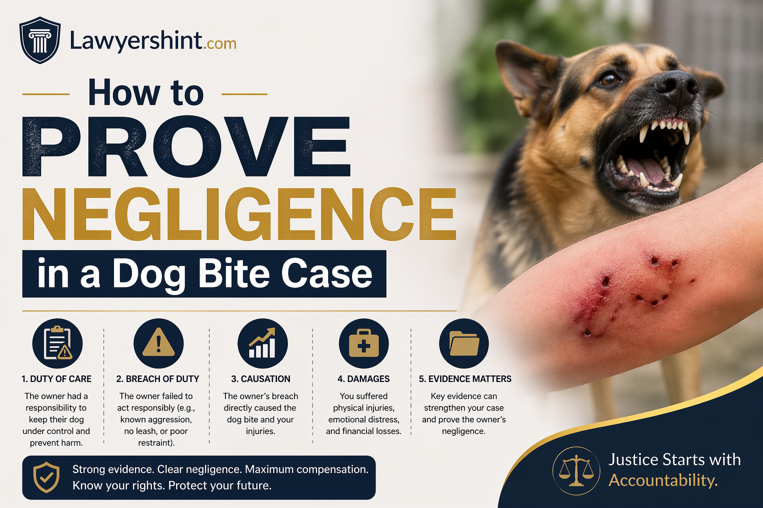
- Step 3: Understand the Four Parts of Negligence
- Jackson, MS 39216
- Step 5: Show That the Owner Ignored Clear Risk
- Step 6: Compare Negligence and Strict Liability
- Step 7: Guard Against Claims You Were at Fault
- Step 8: Talk With a Lawyer Early
A dog bite can leave you in pain, shocked, and unsure what to do next. You may face medical bills, missed work, and lasting fear. To recover money for your losses, you must prove that someone else was careless. That is negligence. This sounds simple. It is not. You need clear facts that show what happened, who was responsible, and how that choice or failure caused your injury.
You also need to know what evidence courts trust and what they reject. A dog bite attorney can guide you. Yet you should still understand the basic steps. This knowledge helps you protect your rights, speak with insurance companies, and decide if a lawsuit makes sense. This guide explains what negligence means, what you must prove, and what proof you should collect after a dog bite.
Step 1: Get Medical Care and Protect Your Health
Your health comes first. A dog bite can cause infection, nerve damage, and scars. It can also spread rabies. You protect yourself and your claim when you seek care fast.
Do three things right away:
- Wash the wound with clean water and soap
- Go to an emergency room or clinic the same day
- Follow the treatment plan and keep every visit
Doctors do more than treat you. They also create records. These records show the date of the bite, the type of injury, and the care you needed. That proof links the dog to your wounds. You can learn more about dog bite treatment and rabies risk from the Centers for Disease Control and Prevention.
Step 2: Report the Bite and Document What Happened
Next you must show that the bite happened and that the owner knew or should have known about the risk. You do this through reports and records.
Take these steps:
- Call animal control or local police as soon as you can
- Ask how to file an official dog bite report
- Get a copy of the report number and later the full report
The report can show:
- Where and when the bite took place
- Who owns or controls the dog
- Whether the dog has a history of bites or running loose
You can see state and local laws on dog bites through links from https://www.avma.org/resources-tools/avma-policies/dog-bite-prevention. That page from the American Veterinary Medical Association links to education that supports dog safety and owner duties.
Step 3: Understand the Four Parts of Negligence
To prove negligence, you must show four things. Courts use this same simple structure in many injury cases.
| Element | What It Means | Dog Bite Example |
|---|---|---|
| Duty | The owner had a legal duty to keep others safe from the dog | Owner must keep dog on a leash in public or behind a fence at home |
| Breach | The owner failed to act with reasonable care | Owner let dog roam free or left a gate open |
| Causation | The failure directly led to your injury | Because the dog was loose, it ran at you and bit your arm |
| Damages | You suffered real losses | Medical bills, missed pay, and pain from the bite |
You must prove all four. If even one part is missing, you may not recover money.
Seek Legal Help
Timbs Injury Law
5 Lakeland Circle
Jackson, MS 39216
Step 4: Collect Proof That Shows Carelessness
Courts trust proof that is clear, specific, and timely. You should gather three broad types of proof.
First, collect physical and visual proof:
- Photos of the bite wounds from day one through healing
- Photos of the scene, fences, gates, and warning signs
- Any torn clothes or broken items
Second, collect written proof:
- Medical records and bills
- The animal control or police report
- Prior complaints about the same dog, if any
Third, collect human proof:
- Names and contact information of witnesses
- Written statements from people who saw the bite or the loose dog
- Notes about how the injury changed your daily life
Step 5: Show That the Owner Ignored Clear Risk
Negligence often turns on what the owner knew. You must show that a careful person would have acted differently.
You may show this by proving that:
- The dog had bitten or snapped at someone before
- Neighbors had complained about the dog running loose
- The owner broke leash laws or housing rules
Each fact adds weight. Together they can show a pattern of careless choices.
Step 6: Compare Negligence and Strict Liability
Some states follow negligence rules. Others use strict liability for dog bites. Under strict liability, you may not need to prove that the owner was careless. You may only need to show that the dog bit you and that you were lawfully present.
This table shows a simple comparison.
| Rule Type | What You Must Prove | Common Defenses |
|---|---|---|
| Negligence | Duty, breach, causation, and damages | You teased the dog or ignored clear warnings |
| Strict Liability | Dog bit you and you had a legal right to be there | You trespassed or clearly provoked the dog |
Your rights depend on state law. That is why local legal advice matters.
Step 7: Guard Against Claims You Were at Fault
The owner or insurer may say you share blame. They may claim you teased the dog, stepped toward it after a warning, or went onto private property. These claims can cut your recovery.
Protect yourself by:
- Writing down every detail while memory is still sharp
- Saving texts, emails, or messages about the bite
- Not posting about the event on social media
Stay factual. Do not guess. Do not fill in gaps.
Step 8: Talk With a Lawyer Early
Negligence law is strict. There are filing deadlines. Evidence can fade fast. A lawyer who handles dog bite cases can explain your rights, speak for you with insurers, and build the proof you need.
You do not need to wait. Early help can ease stress on you and your family. It can also help you focus on healing while someone else protects your claim.