
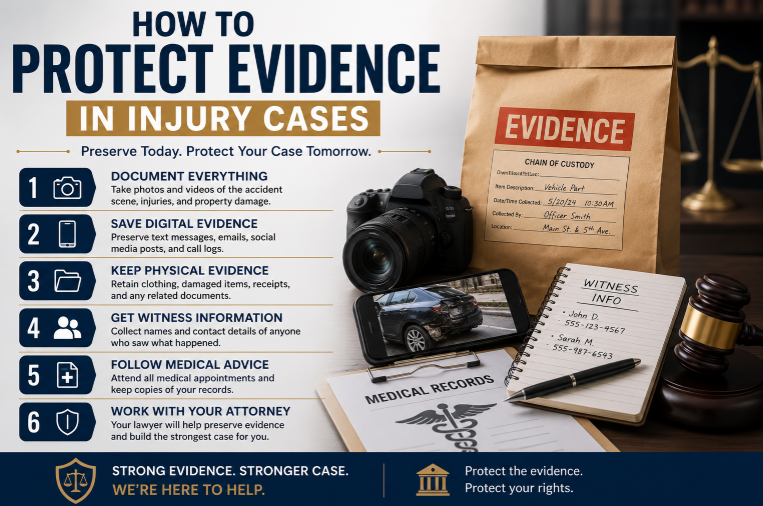

Understand Evidence in Injury Cases, including key evidence types, preservation tips, and how strong documentation can support your personal injury claim.
When your life is disrupted by an accident, you face more than physical and emotional barriers to hurdle. You also bear the responsibility of proving what happened through clear and convincing evidence.
“But it can be overwhelming to know what evidence to collect at the time. From witness statements to medical bills, each item must be carefully managed to help make your case more solid and avoid unnecessary postponements,” says Tom A Killoren, a lawyer at KD Trial Lawyers.
To help you prepare sufficiently for a personal injury lawsuit, this article focuses on valuable pieces of evidence and how they can be preserved.
Medical Records
Medical records are useful for correlating your injuries with the accident. Hospitals, urgent care centers, and family doctors maintain thorough records of your care, such as X-rays, surgical reports, and medications.
You can obtain them right from your providers. South Carolina law allows patients to access their medical records, but obtaining them can take time, so plan ahead and avoid procrastination.
Detailed records support your claim by indicating the severity of your injuries and the amount you spent on medical expenses. You can only present them to people you trust, like your attorney or insurance company, to keep you anonymous.
Photos and Videos
Clear visual evidence can substantiate your claim of injury by illustrating the scene following the accident. These could be images of the accident site, visible injuries, car damage, or hazards that caused the accident.
Videos also capture real-time data, such as weather, traffic flow, or conversations, after the incident. This is something that photographs would not capture.
It is important to back up all files in multiple locations, such as cloud storage and external hard drives, to avoid accidental loss. Also, make use of timestamps where possible to verify when they were taken.
Witness Statements
Witness statements provide an objective perspective about what occurred around the time of the accident. A clear explanation from someone who witnessed it can help clarify what occurred and establish fault.
You should obtain names, addresses, and brief statements from each witness as soon as possible. Memories fade with the passage of time, so timing is critical to getting the facts straight.
Handwritten or verbal statements are highly valuable in personal injury claims. Your attorney can use such statements during negotiations or where cases proceed to court to support your testimony and challenge conflicting testimonies by other people.
Police Reports
If officers visited the accident location, their report is then an official version of events. It may include comments from officers and witnesses, as well as citations issued.
It’s quick to obtain a copy of a police report by applying to the relevant law enforcement department, either online or in person. Ensure that you provide them with the necessary details, such as the incident number and date.
Insurers and courts consider police reports to be objective facts because they are authored by skilled professionals. Police reports can describe fault, document the force of the occurrence, and provide a believable account of what happened in sequence.
Physical Evidence
Physical objects at the location also help prove what happened. Things like torn clothing, broken personal property, or crumpled pieces of autos provide concrete evidence of force released during the crash.
Ensure you have them stored in a dry, secure place. Also, avoid cleaning or altering them, as their condition reflects part of the story. Take pictures if you can and keep them for additional background information.
Sometimes, physical evidence can support claims about the severity of the injury or the level of negligence. Your attorney can present it with other paperwork to create a stronger, more complete case for you.
Conclusion
Strong proof determines how your injury story is presented and accepted. Without it, a clear case may become lost in suspicion or lag behind.
Ideally, start gathering details before they get fuzzy. If you’re not sure where to begin, consult a local attorney familiar with how South Carolina courts treat different types of evidence.