
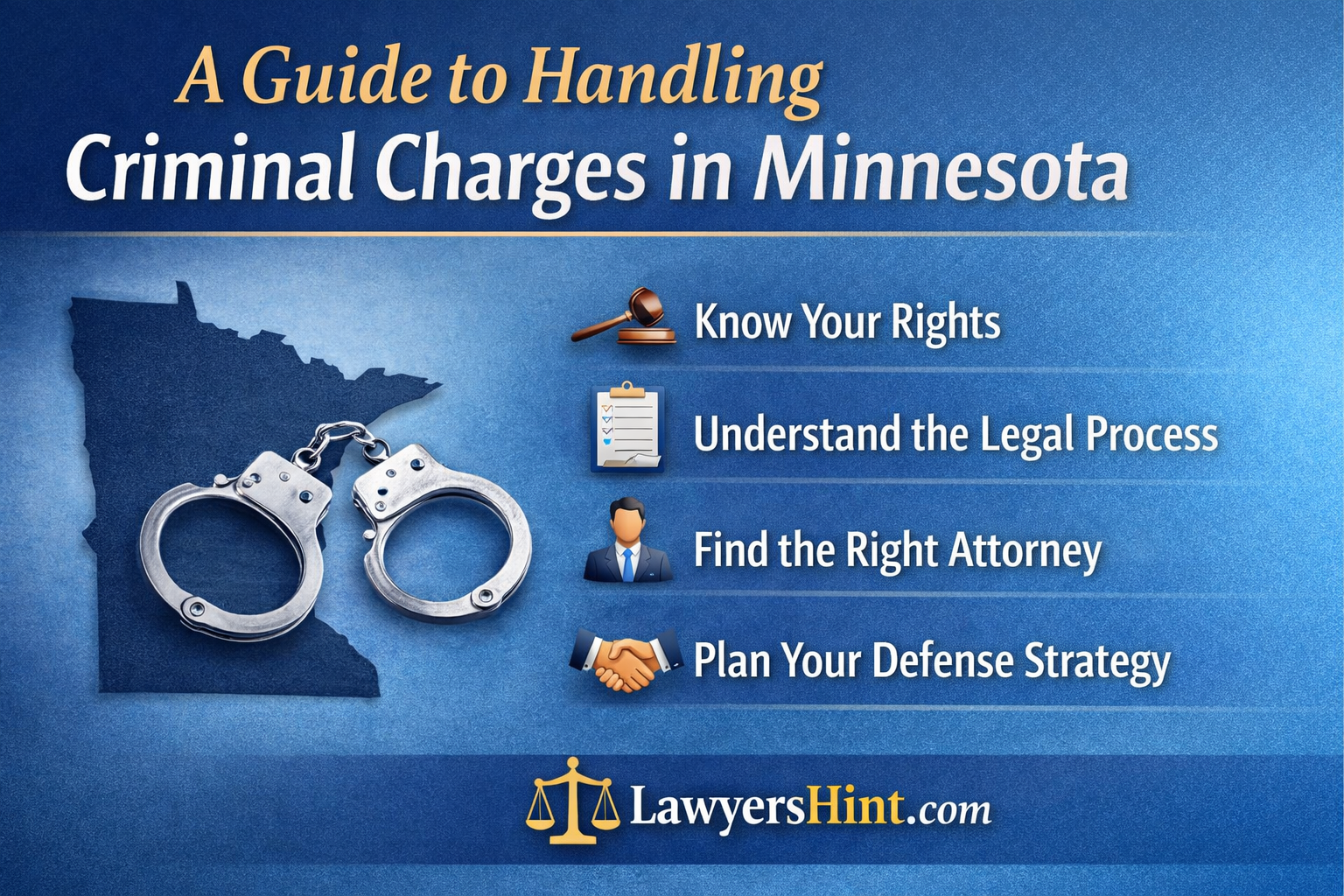

Facing criminal charges can be overwhelming, confusing, and stressful. Whether it’s your first encounter with the legal system or not, understanding the process can make a significant difference in how your case unfolds. If you’re dealing with legal trouble, consulting a Criminal Defense Attorney Minneapolis early can help you protect your rights and build a strong defense strategy from the beginning.
- Understanding Criminal Charges in Minnesota
- Step 1: Stay Calm and Exercise Your Right to Remain Silent
- Step 2: Hire an Experienced Criminal Defense Lawyer
- Step 3: Understand the Charges and Possible Penalties
- Step 4: Attend the Arraignment Hearing
- Step 5: Prepare for Pre-Trial Proceedings
- Step 6: Consider Plea Bargaining Carefully
- Step 7: Trial Preparation and Court Proceedings
- Step 8: Understand Sentencing and Possible Outcomes
- Step 9: Explore Appeals and Post-Conviction Options
- Step 10: Protect Your Future After the Case
- Why Legal Guidance Matters Throughout the Process
- Final Thoughts
This comprehensive guide walks you through the essential steps you should take when handling criminal charges in Minnesota, ensuring you are informed, prepared, and confident throughout the legal process.
Understanding Criminal Charges in Minnesota
Before diving into the steps, it’s important to understand how criminal charges work in Minnesota. Crimes are generally classified into:
- Misdemeanors (less serious offenses)
- Gross misdemeanors
- Felonies (more serious crimes with harsher penalties)
Each category carries different consequences, including fines, probation, or imprisonment. Knowing the severity of your charge helps determine the legal strategy you’ll need.
Step 1: Stay Calm and Exercise Your Right to Remain Silent
The moment you are arrested or questioned, your behavior matters. It’s natural to feel anxious, but staying calm is critical.
You have the right to:
- Remain silent
- Avoid self-incrimination
- Request legal representation
Avoid discussing your case with law enforcement without your lawyer present. Anything you say can be used against you in court.
Step 2: Hire an Experienced Criminal Defense Lawyer
One of the most important decisions you’ll make is choosing the right attorney. A skilled criminal defense lawyer understands Minnesota laws, court procedures, and how to negotiate with prosecutors.
Your lawyer will:
- Analyze evidence
- Identify weaknesses in the prosecution’s case
- Build a defense strategy tailored to your situation
- Represent you in court
Early legal representation often leads to better outcomes, including reduced charges or even case dismissal.
Step 3: Understand the Charges and Possible Penalties
After your arrest, you’ll be formally charged. This is when you should fully understand:
- What crime you’re accused of
- The legal elements required to prove the charge
- Possible penalties if convicted
Your attorney will explain these details and help you evaluate your options, including whether to fight the charges or consider a plea agreement.
Step 4: Attend the Arraignment Hearing
The arraignment is your first court appearance. During this stage:
- Charges are formally read
- You enter a plea (guilty, not guilty, or no contest)
- Bail or release conditions may be set
It’s crucial to follow your lawyer’s advice when entering a plea. In most cases, defendants initially plead “not guilty” to allow time for case preparation.
Step 5: Prepare for Pre-Trial Proceedings
The pre-trial phase is where much of the legal work happens. This stage includes:
Evidence Discovery
Both sides exchange information, including:
- Police reports
- Witness statements
- Physical evidence
Motions
Your attorney may file motions to:
- Suppress illegally obtained evidence
- Dismiss certain charges
Negotiations
Many cases are resolved during this phase through plea bargaining.
Step 6: Consider Plea Bargaining Carefully
A plea deal may be offered by the prosecution to resolve the case without trial. This could involve:
- Reduced charges
- Lesser penalties
- Avoiding jail time
While this may seem appealing, it’s important to carefully weigh the pros and cons with your attorney before accepting any agreement.
Step 7: Trial Preparation and Court Proceedings
If your case goes to trial, preparation is key. Your lawyer will:
- Develop a compelling defense strategy
- Prepare witnesses
- Cross-examine prosecution witnesses
- Present evidence in your favor
During the trial, both sides will present arguments, and a judge or jury will determine the outcome based on the evidence.
Step 8: Understand Sentencing and Possible Outcomes
If you are found guilty, the court will proceed to sentencing. Penalties may include:
- Fines
- Probation
- Community service
- Jail or prison time
Your attorney may argue for reduced sentencing based on factors such as your background, lack of prior offenses, or mitigating circumstances.
Step 9: Explore Appeals and Post-Conviction Options
A conviction is not always the end of the road. You may have the right to:
- Appeal the decision
- Request a new trial
- Seek sentence modification
These options depend on errors in the trial process or new evidence that could impact the outcome.
Step 10: Protect Your Future After the Case
Criminal charges can have long-term consequences on your life, including employment, housing, and reputation. After your case:
- Consider expungement if eligible
- Follow all court orders strictly
- Rebuild your personal and professional life
Even if your case is resolved, taking proactive steps can help minimize long-term damage.
Why Legal Guidance Matters Throughout the Process
Navigating the criminal justice system alone can be risky. Laws are complex, procedures are strict, and mistakes can be costly. While some individuals may also be dealing with other legal matters—such as working with a Personal Injury Lawyer Minneapolis Mn—it’s essential to have the right legal expert focused specifically on your criminal case.
An experienced attorney not only protects your rights but also ensures that every legal avenue is explored to achieve the best possible outcome.
Final Thoughts
Handling criminal charges in Minnesota requires knowledge, preparation, and the right legal support. From the moment of arrest to the final resolution, every step plays a crucial role in determining your future.
By staying informed, exercising your rights, and working with a qualified defense lawyer, you can navigate the legal system with greater confidence and clarity. Remember, the earlier you act, the stronger your defense will be.
If you or someone you know is facing criminal charges, don’t delay—take the necessary steps today to protect your rights and your future.