
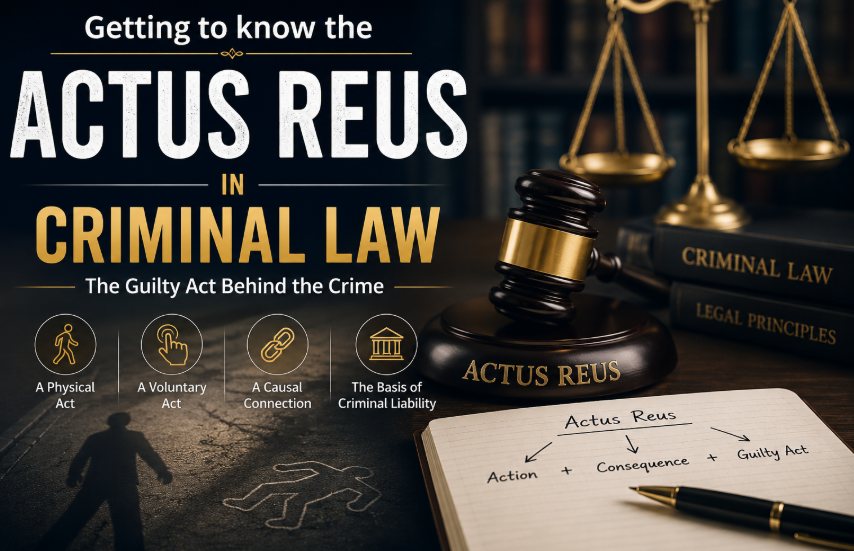

Understand actus reus in criminal law, its legal meaning, key elements, real-world examples, and why proving the guilty act matters in criminal cases.
In Minnesota, criminal cases can seem overwhelming when one does not understand the concepts on which proving guilt is based. Actus reus is a crucial principle and not merely an act of wrongdoing. It dwells on what an individual has done, not only on what they meant.
“People are often surprised to learn that you can’t be punished just for having bad thoughts. To commit a crime, you must actually do something, and that action must be a voluntary choice,” explains Omeed Berenjian, Founding Partner at BK Law Group.
When you know actus reus, you can view the process of constructing, dissecting, and appealing criminal charges in court.
Definition and the Meaning of Actus Reus
The physical aspect of a crime is known as actus reus. It is the act, or rather the inaction, which the prosecution has to demonstrate happened.
In Minnesota criminal proceedings, prosecutors should demonstrate that a defendant engaged in conduct that is unlawful. This distinction is one of the differences between legal and punishable conduct.
The absence of actus reus does not mean that there is no crime due to the presence of harmful intentions. The law requires a tangible physical act to establish liability for a crime.
Types of Acts and Omissions
Actus reus incorporates the acts as well as omissions. An act could be stealing, beating, or damaging property.
However, the difficulty here is that the omissions may also form the basis of criminal liability when there was an expectation for a particular person to act. Examples include parental responsibilities or duties that result from a contract or statute.
The Minnesota courts pay close attention to the existence of a duty and an absence of harm as a direct result of acting. Unless the omissions are part of a legal obligation, this fact is likely to contribute to a criminal offense.
Voluntary or Involuntary Actions
To have actus reus, the act has to be voluntary. The movement that occurs during a seizure or reflex cannot serve as a basis for criminal liability.
Voluntariness ensures fairness because the law shouldn’t punish citizens for activities they cannot control. That principle safeguards the defendants against accidental liability arising from involuntary conduct.
Issues of voluntariness are likely to be questioned in situations that relate to intoxication, medical disorders, or duress. Whether the defendant had meaningful control over his actions is analyzed by the courts.
Correlation between Actus Reus and Mens Rea
Actus reus and mens rea collaborate to prove criminal responsibility. Actus reus is a reference to the physical act, and mens rea is a reference to the mental state or intent linked to the physical act.
Minnesota needs two components to commit most crimes. In the case of theft, one must not only have the property but also have the intention to deprive its owner of it.
This knowledge helps explain why certain acts are criminal and others are not. An attempt to commit a harmful act that is not intentional can result in a minor sentence or no sentence.
Common Legal Challenges and Defenses
Attorneys representing the defense often challenge the actus reus element when the action is unclear, contested, or forced. Surveillance footage, witness testimony, and physical evidence can determine this aspect.
A second defense is based on the idea that no legal duty was present in cases involving omission. Criminal liability can fall flat if prosecutors cannot establish legal duty.
These obstacles underscore the necessity of the actus reus requirement. It prevents the legal system from punishing individuals based on assumptions or incomplete facts.
Final Reflection
Actus reus serves as a guide: criminal responsibility in Minnesota does not start with assumptions and opinions but is founded on established evidence. It does not distract attention from what someone thought or dreaded would happen, but from what actually occurred.
When you realize how the law assesses actions, the criminal process will be less abstract. You get a clear picture of why courts insist on evidence, why intent is important, and how the principles ensure justice in all cases.