
Accidents are sudden and often overwhelming, and they can leave anyone feeling disoriented and stressed. Thoroughly documenting the scene is crucial to protecting your legal and financial interests in subsequent claims. Proper evidence collection empowers you to convey what happened more accurately to insurance companies and to your Albuquerque personal injury lawyer during the recovery process.
The steps you take immediately after an accident in Albuquerque can have a major impact on your ability to secure compensation or defend against claims. Effective documentation methods include preserving both physical and digital evidence, understanding local procedures, and compiling comprehensive reports. Awareness of these strategies gives you a significant advantage when dealing with insurance adjusters and legal representatives.
In Albuquerque, local laws and requirements make it even more essential to understand what is expected of accident victims. Be prepared to act quickly and methodically so you collect all necessary information before evidence disappears or memories fade. These efforts not only support your side of the story but also provide clarity to all parties involved.
By following a clear, step-by-step approach focused on safety, thorough evidence gathering, and clear communication, you will have the best chance of protecting your rights throughout any insurance or legal proceedings. The following guide provides detailed instructions to help you navigate the process with confidence and organization.
Ensure Safety and Seek Medical Attention
Your first priority after any personal injury accident is to make sure you and others are safe. If you are able, move yourself and others to a secure area away from traffic or hazards. Contact emergency services as soon as possible if there are injuries or any suspicion of harm. Even seemingly minor injuries can worsen over time, so it is important to receive a professional medical evaluation promptly.
Timely medical attention not only safeguards your health but also establishes a record directly linking your injuries to the incident. Medical documentation is frequently required by insurance companies and legal authorities when reviewing your case.
Contact Law Enforcement
In Albuquerque, accident victims are legally required to report any crash resulting in injury, death, or property damage over $500. Calling the police ensures that a formal report is created. A law enforcement officer will investigate, collect statements, and compile their findings in an official document. This police report provides critical, unbiased evidence that helps corroborate your version of events and is a core requirement for most insurance and legal claims. For more information on proper accident reporting, refer to the Albuquerque Police Department’s guidelines on obtaining traffic accident reports.
Gather Information from All Parties Involved
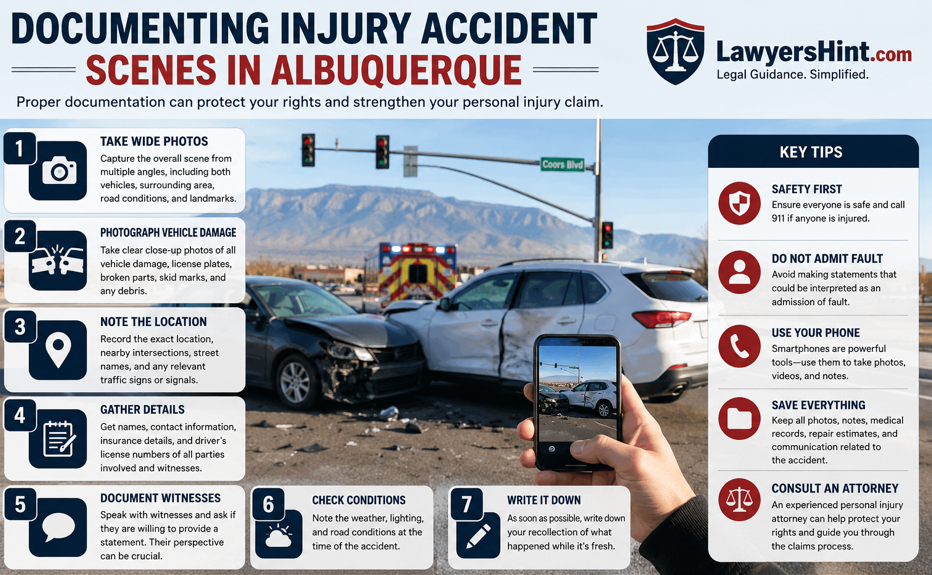
Exchange essential information with everyone involved in the accident. Collect names, contact information, driver’s license numbers, vehicle registrations, and insurance details from each driver. Recording the make, model, color, and license plate number of all vehicles involved provides additional clarity. Accurate and comprehensive information ensures you can stay in touch with responsible parties and witnesses if questions arise later.
Document the Scene with Photographs and Videos
Detailed visual documentation is one of the most important parts of establishing the context of your accident. Use your smartphone or camera to capture photographs and videos of the entire scene. Make sure to capture wide shots from various angles, close-ups of vehicle damage and visible injuries, skid marks, debris, street signs, and any traffic control devices. Include time and location details in your images if possible. Clear, well-lit photos can help reconstruct events and are often more reliable than written accounts alone. For additional tips on capturing effective accident photos, see this Nolo resource.
Collect Witness Statements
Identify bystanders or other witnesses to the incident and request their contact information. If they are willing, ask them to provide a written or audio statement describing what they saw. Witness accounts can serve as impartial testimony, supporting your narrative or clarifying any conflicting stories from other drivers or passengers.
Write a Personal Account of the Incident
As soon as possible, write a detailed description of how the accident happened from your perspective. Note the date, time, and location. Include information about weather or road hazards, the sequence of events before and after the incident, and any initial injuries you observed. This account helps fill gaps that may not be evident from photos or police reports and can be valuable if you need to recall specifics later.
Preserve Physical Evidence
Keep all physical evidence related to the accident, including damaged belongings, clothing, and vehicle components. Do not make repairs to your vehicle until it has been inspected and documented by the insurance company. Preserving evidence ensures that nothing is lost or compromised, which could weaken your claim or case.
Consult with a Personal Injury Attorney
Consider speaking with a personal injury attorney familiar with Albuquerque’s legal practices as soon as possible after your accident. Attorneys provide valuable insight into the claims process, advocate on your behalf with insurance companies, and guide you through the complexities of New Mexico’s legal requirements. Prompt legal counsel can help you secure fair compensation and avoid critical mistakes. For further information on selecting the right legal support, you might find guidance from the Nolo Legal Encyclopedia.
Documenting the accident scene thoroughly is key to protecting your health, finances, and legal rights. By being prepared, acting methodically, and maintaining organized records, you improve your chances for a smooth claims process and a positive outcome in any legal dispute.