
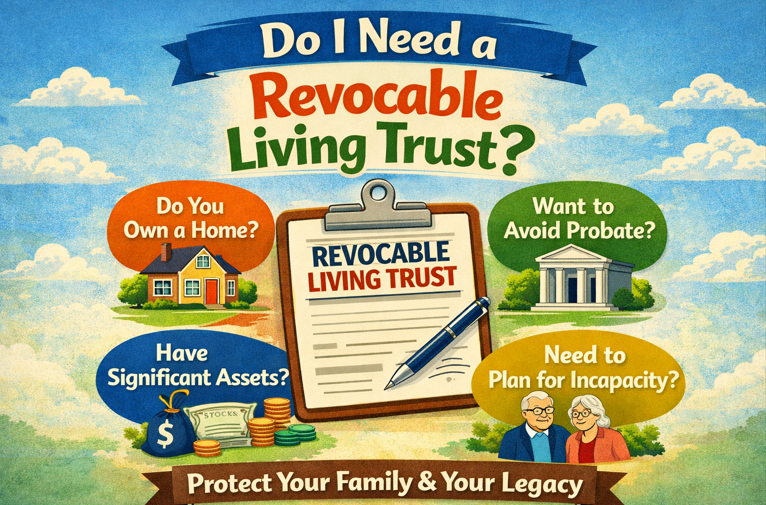

You may wonder if a will is enough to protect the people you love. A revocable living trust can offer more control. It can also prevent a harsh court process after your death. This trust holds your house, bank accounts, and other property while you are alive. You still manage everything. You can change or cancel the trust at any time. Then, when you die or become very sick, your chosen person steps in. No court fight. No public record. Only a clear plan.
- What Is A Revocable Living Trust
- How A Trust Differs From A Will
- What A Revocable Living Trust Can Do For You
- Limits Of A Revocable Living Trust
- Who May Need A Revocable Living Trust
- Who May Not Need A Revocable Living Trust
- Key Steps To Set Up A Trust
- When To Speak With An Attorney
- Choosing What Works For Your Family
This blog helps you decide if a trust fits your life. It explains how a trust works, who needs one, and who does not. It also shares when you should talk with a Los Angeles estate planning attorney. You deserve a simple, honest guide. You also deserve a plan that protects your family when they feel the most alone.
What Is A Revocable Living Trust
A revocable living trust is a written plan for your property. You create it while you are alive. You move your property into the trust. You act as the trustee and keep full control. You can change the trust. You can remove property. You can end the trust.
When you die, your backup trustee follows your written plan. Your property goes to your chosen people or groups. The court does not run this process. Your plan stays private.
The Consumer Financial Protection Bureau explains that trusts can shape how and when people receive money and property. You can read more about that on the CFPB managing someone else’s money page.
How A Trust Differs From A Will
You may already have a will or plan to write one. Both tools pass property after death. Yet they work in very different ways.
| Feature | Will | Revocable Living Trust |
|---|---|---|
| When it works | Only after death | During life if you are very sick and after death |
| Court process | Usually needs probate court | Often avoids probate court |
| Privacy | Public court record | Private document |
| Control while alive | No help if you are alive but cannot act | Backup trustee can step in during illness |
| Cost and effort | Lower setup effort | Higher setup effort and ongoing upkeep |
| Use in other states | May need new probate in each state with property | One trust can cover property in many states |
Both tools still matter. You often need a will even if you use a trust. A will can name a guardian for your minor children. It can also handle property you forget to place in the trust.
What A Revocable Living Trust Can Do For You
A revocable living trust can give you three main forms of help.
- It can avoid probate. Probate can drain time and energy from your family. The trust can pass property without that court process.
- It can protect your privacy. A will becomes part of the court record. A trust usually does not. Your choices stay within your family.
- It can plan for illness. If you lose the power to act, your backup trustee can pay bills and manage property under your rules.
A trust also lets you shape how your loved ones receive money. You can spread gifts over time. You can hold money until a child reaches a set age. You can add clear rules for a child who struggles with money.
Limits Of A Revocable Living Trust
A revocable living trust is strong but not magic. It does not give you every form of protection.
- It does not shield property from your own creditors while you are alive.
- It does not replace the need for a power of attorney for some tasks.
- It does not remove income tax duty on money the trust earns during your life.
The trust also only controls property you move into it. If you never change a house deed or bank account title, the trust cannot manage those things. You must keep your trust updated after life events such as a new child, divorce, or new home.
Who May Need A Revocable Living Trust
Not everyone needs this tool. Yet some people gain clear value.
You may want a revocable living trust if you:
- Own a home, rental unit, or land.
- Have young children or children from a prior relationship.
- Care for an adult child with a disability.
- Own property in more than one state.
- Run a small business or family business.
- Fear family conflict after your death.
People with larger savings often use trusts. Yet even people with modest property can gain peace of mind and fewer court costs for their family.
Who May Not Need A Revocable Living Trust
You may not need a revocable living trust if you:
- Own very little property.
- Hold most money in joint accounts with a spouse.
- Use payable on death or transfer on death designations on accounts.
- Live in a state with a short and simple probate system.
Many states offer forms that let you name who receives your car or home at death without a trust. You can review your state laws through resources from your state court or bar. The National Institute on Aging guide on advance care planning can help you think about how your legal choices fit your health choices.
Key Steps To Set Up A Trust
If you decide a trust fits your life, you can follow three clear steps.
- Write the trust. Work with a qualified professional. State law rules are strict. You choose your trustee, backup trustee, and who receives each piece of property.
- Sign the trust. You sign in front of a notary. Your backup trustee should know where to find the document.
- Move property into the trust. You change titles on your house, bank accounts, and other assets. You update beneficiary forms where needed.
Without this last step, your trust is an empty shell. The work to move property into the trust is what gives your family relief later.
When To Speak With An Attorney
You should speak with an attorney if you face any of these issues.
- Children from more than one relationship.
- A child or adult who receives disability benefits.
- A business you want to pass on.
- Property in more than one state.
- Family conflict or risk of challenge to your plan.
An attorney can explain state law, tax effects, and the exact forms you need. You can start by talking with a trusted local advisor such as a Los Angeles estate planning attorney if you live in that region. Careful advice now can spare your family painful disputes later.
Choosing What Works For Your Family
You do not need to chase every planning tool. You only need a clear plan that matches your life, your property, and your family. For some people, a simple will and well chosen account titles work. For others, a revocable living trust brings structure, privacy, and calm during crisis.
You protect your family when you face hard questions now. You also show love when you leave clear written steps instead of confusion. A revocable living trust is one strong way to do that.