
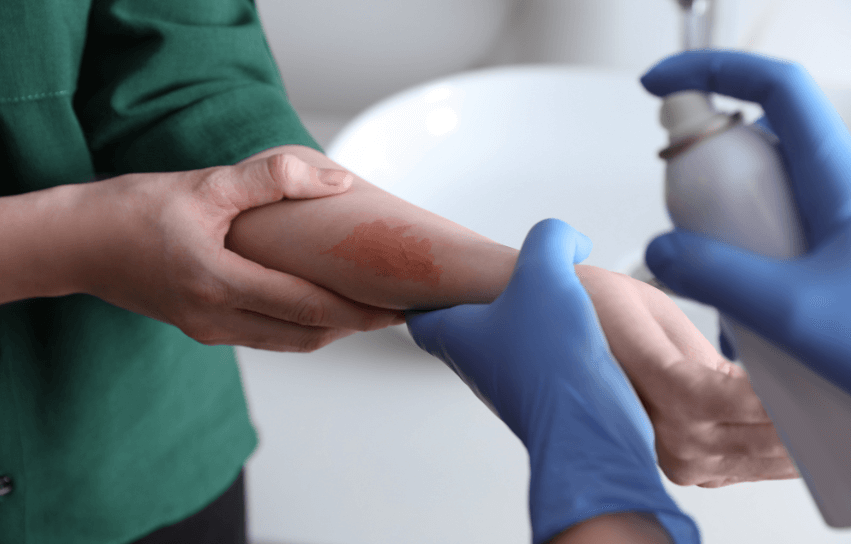

If you were burned at work, the first few minutes can make a big difference for your health, your paycheck, and your future.
Burn injuries can look small at first and then get worse. Many workers, especially Latino immigrants, try to “push through” the pain because they are afraid of losing their jobs or causing problems. This article is here to help you understand what to do after a job injury, step by step, in clear and simple language.
For workers exposed to multiple risks, it’s essential to know that not all burns are the same. A thermal injury at the jobsite (from fire, hot metal, or steam) needs a different response than a chemical exposure skin injury or an electrical incident. On construction sites and industrial jobs, these risks often exist at the same time. That is why knowing the appropriate response before an accident happens is essential.
Always look for medical attention after a burn injury at work; all the costs associated with your burn injury should be covered by your workers’ compensation insurance. If your employer or supervisor minimizes the injury, refuses medical care, or insurance support, you might have the right to sue them.
Safety First: The First 5 Minutes After An On-the-Job Burn Injury
This step is about stopping the danger and protecting your life. The first thing to do is get away from the source of the burn. That might mean stepping away from heat, fire, steam, chemicals, or electrical equipment. If you cannot move safely, call out for help right away.
If the injury involves chemicals, remove the contaminated clothes right away and flush the affected area with clean water for at least 20 minutes. Do not try to “neutralize” chemicals with household products. According to the Centers for Disease Control (CDC) and the National Institute for Occupational Safety and Health (NIOSH), flushing with water is the safest first step for chemical burns in the workplace.
If the injury may involve electricity, never use water or touch the person who is still in contact with a power source. Turn off the power as fast as you can and call 911. Electrical injuries can cause serious internal damage even when the skin looks okay at first.
Remove rings, watches, jewelry, and clothes near the burn injury as soon as safely possible. Swelling can start quickly and cause the jewelry to become a tourniquet, obstructing blood flow.
Avoid using ice; use cool running water when possible. Ice can further harm the tissue.
First Aid that Actually Helps
After you are safe, basic first aid can help reduce damage. For many burns, running cool, not icy cold, water over the area for 10 to 20 minutes can help. Cool water can limit how deep the burn goes and ease pain. Do not use ice, butter, toothpaste, or home remedies you may see online.
After cooling, gently cover the burn with a clean, dry dressing. Do not pop blisters, even if they are painful. Opening blisters increases the risk of infection. Over-the-counter pain medicine may help, but avoid mixing medications and follow label directions.
If you are not sure how serious the burn is, treat it as serious and get medical help. Burns can worsen hours later, especially an on-the-job burn injury involving chemicals or electricity.
“Do I need the ER?”
This is one of the most stressful questions for workers. However, when your health is involved, safety comes first. Go to the ER or call for emergency help right away if any of the following are true.
If there is trouble breathing, coughing, soot in the mouth or nose, hoarseness, or facial burns, this could be an inhalation injury. Inhalation injuries can be life-threatening and need urgent care.
Electrical injuries always need medical evaluation. Even without visible burns, electrical arc injury symptoms can include heart rhythm problems and internal damage.
The American Burn Association recommends burn-center care for burns involving the face, hands, feet, genitals, major joints, large partial-thickness burns, third-degree burns, chemical burns, electrical burns, and inhalation injuries.
Even if the burn injury is relatively small, as long as you think you will need some type of medication, ask to be treated by a medical professional. All the medical costs resulting from your work-related injury should be covered by your workers’ compensation insurance.
If you are unsure about what to do, it is safer to go and get checked. Call your trusted workers’ compensation lawyer to receive free guidance.
What To Do After A Job Injury: The 24-hour checklist
If you suffered a burn injury at work, these steps can help protect your health and your future:
Within 1 hour
Get medical care as soon as possible. This may be an on-site clinic, urgent care, or emergency room. Ask for an after-visit summary and keep it. Medical records matter later.
Take photos of the injury and the scene if it is safe to do so. Include hazards, tools, warning signs, chemicals, and protective equipment. Write down or record on a voice memo what happened. Include the time, location, and who was there.
Within 8 hours
Report the injury to a supervisor in writing if you can. An email or text creates a record. Ask for an incident report number and a copy if available. Identify witnesses and save their names and phone numbers.
According to OSHA, employers have responsibilities to record and, in some cases, report serious injuries. Reporting helps protect you if insurers or employers try to deny your claim.
Before you leave work / end of day
Preserve clothing and personal protective equipment. Place items in a paper bag, not sealed plastic, if they are wet. Save receipts for prescriptions, bandages, travel, and any missed work notes.
Start a symptom log. Write down pain levels, swelling, sleep problems, and limits on movement. Burns, including a scald injury at the workplace or a workplace heat injury, often worsen after the first day.
Within 24 hours
Schedule follow-up care if recommended. Burns can change quickly, and early treatment reduces complications.
If the injury was severe, employers have strict OSHA reporting deadlines. Independently documenting what happened is still important.
If you suspect safety violations or fear retaliation, keep copies of messages, screenshots, and dates. Workers have the right to report injuries without retaliation.
Call a successful work injury law firm to receive a free consultation and guidance in your case. Oftentimes, insurance companies try to pay as little as possible to injured workers. Job injury lawyers will never charge you out of pocket.
Protect Your Health And Your Legal Claim
If you were burned at work, taking the right steps in the first 24 hours can protect your health and your future. You do not have to figure everything out at once or alone:
- Get away from the hazard
- Wash with running water (in a secure location away from electrical hazards)
- Take jewelry and tight clothes off
- Get medical attention
- Report to your supervisor
- Call a workplace injury lawyer
Get the medical attention and legal protection you need to be safe after being burned at work.