

Las Vegas is a city where fast-paced living, busy roads, and a constant flow of residents and visitors can make everyday life feel unpredictable. When a family suddenly loses someone they love, however, the disruption reaches far beyond the circumstances of that moment. Familiar routines can change overnight, leaving relatives to navigate emotional pain alongside responsibilities that cannot simply be postponed.
Decisions involving the household, finances, employment, and future plans may suddenly fall on people who are still trying to process what has happened. Rebuilding in these circumstances is rarely about finding a quick return to normal. It is more often a gradual effort to create stability while making thoughtful choices about what comes next. Having reliable information, organized records, and appropriate support can make that process less overwhelming and help families avoid decisions they may later regret. A Las Vegas wrongful death lawyer can provide guidance when a family’s loss may also involve legal and financial consequences.
Address Immediate Needs First
Families should identify urgent responsibilities during the first days after a death. Someone needs to contact medical providers, arrange funeral services, secure the home, care for children, and notify employers. Assigning each task to a trusted relative prevents one person from shouldering all responsibilities while grieving. Financial pressure also requires prompt attention. Families should gather bank statements, insurance policies, loan records, pay stubs, and household bills. A written list of monthly obligations shows which payments need attention and which services can wait.
Create a Thorough Record of the Loss
A written timeline provides the family with a reliable record for insurers, investigators, employers, and legal professionals. It should include what happened, when emergency services arrived, where treatment occurred, and who communicated with the family. Digital evidence needs protection as well. Relatives should save relevant messages, photographs, videos, social media posts, and location information. They should store copies in more than one secure place and avoid deleting original files. Families should also record expenses connected to the death. Funeral costs, travel, counseling, childcare, household services, and lost income can create a substantial financial burden. Receipts and payment confirmations make those losses easier to calculate.
Protect the Household Budget
The death of a wage earner can affect rent, mortgage payments, utilities, tuition, transportation, and medical expenses. Families should review available benefits before using savings or accepting a quick settlement. Employers, insurers, retirement plans, and government programs each follow different rules and deadlines. A surviving relative should avoid signing releases or accepting final payments without reviewing the terms. A settlement document can end future claims, even when the family does not yet know the full financial impact of the death. Budget planning should cover immediate expenses and longer-term changes. The family might need to replace lost income, modify housing, arrange transportation, or reduce work hours to care for the caregiver. A written budget gives relatives a clearer basis for difficult choices.
Make Space for Grief
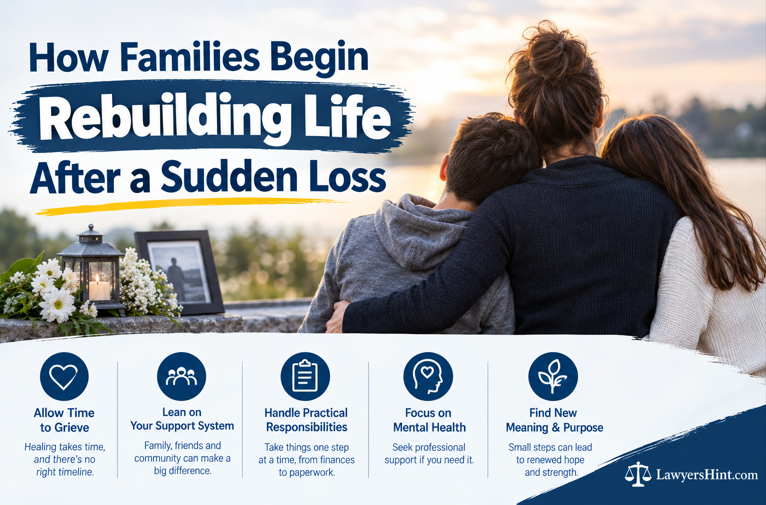
Support from a licensed counselor can help relatives manage panic, guilt, depression, and conflict. Faith communities, schools, employers, and local support groups can also reduce isolation. A family does not need to process every feeling on the same schedule. Physical care matters during this period. Regular meals, hydration, sleep, prescribed medication, and short periods of movement support basic functioning. Relatives should watch for thoughts of self-harm, dangerous substance use, or an inability to manage essential daily tasks. Those signs require immediate professional help.
Prepare for Long-Term Decisions
Families often face major decisions after the first weeks, including housing changes, employment adjustments, estate administration, and care arrangements for dependents. Waiting for perfect certainty is unrealistic, but rushed decisions can create lasting problems. A designated family coordinator can track appointments, documents, deadlines, and communication. This role reduces confusion and gives other relatives time to focus on emotional recovery. Written updates also limit repeated conversations that reopen painful details.
Conclusion
Rebuilding after a sudden loss starts with manageable actions rather than a single dramatic recovery. Families can assign immediate tasks, preserve records, track expenses, protect household finances, and seek qualified emotional support. Each step creates more room for grief without allowing urgent responsibilities to disappear. The next practical move is to choose one trusted coordinator, gather essential documents, and schedule a consultation about available legal and financial options before signing any final agreement.