
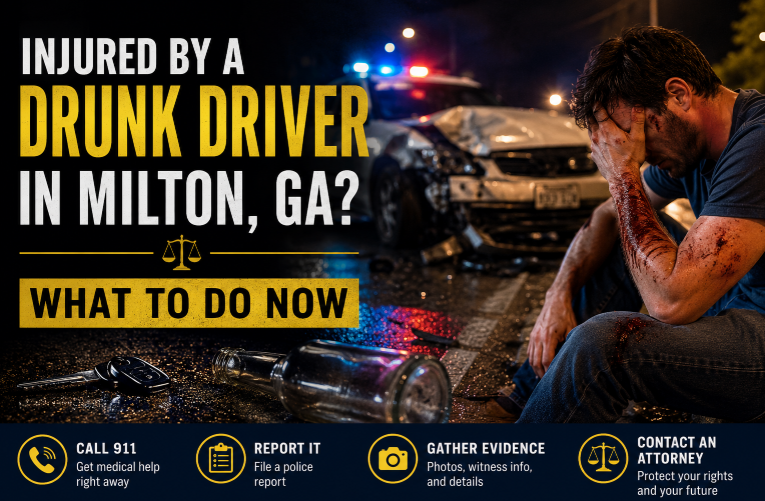

Injured by a drunk driver? Learn what steps to take, how to protect your rights, and when to seek legal help after a serious accident.
- Why a Drunk Driving Accident Is Different From a Regular Crash
- What To Do in the First 24 Hours
- Preserve What You Can
- Common Injuries and Losses After a Drunk Driving Crash
- Milton, Georgia and the Reality of Impaired Driving
- Dealing With the Insurance Company
- How Long You Have to File a Claim
- Frequently Asked Questions
- Getting Help After the Crash
Getting hit by a drunk driver is not like a normal fender bender. One moment you are driving home from work or picking up groceries, and the next you are dealing with an ambulance ride, a wrecked car, and a string of insurance calls you never asked for.
On top of the physical pain, there is a mental weight that comes with knowing someone made a choice to drive impaired and put your life at risk. If this has happened to you, talking with a Milton drunk driving accident lawyer early on can help you understand what your case is worth and what steps come next.
Why a Drunk Driving Accident Is Different From a Regular Crash
Most car accident claims come down to carelessness, like someone glancing at a phone or misjudging a turn. Drunk driving is different because it involves a choice. The driver knew, or should have known, that getting behind the wheel after drinking was dangerous, and they did it anyway. That distinction matters in a legal case. Depending on where the accident happened, this kind of reckless conduct can open the door to additional compensation beyond medical bills and lost wages, since the law often treats intentional risk taking more seriously than an honest mistake.
What To Do in the First 24 Hours
The hours right after a crash are stressful, but a few steps can protect your health and your case at the same time. Call 911 so police can respond and create an official report. Even if you feel fine, get checked out by a paramedic or a doctor, since injuries like whiplash or a concussion do not always show symptoms right away. Take photos of the vehicles, the road, and any visible injuries if you are able to do so safely. If there were witnesses, ask for their names and phone numbers before they leave the scene, since it can be hard to track them down later.
Preserve What You Can
A drunk driving case often depends on details that can disappear fast. Police may conduct a breath or blood test on the other driver, and that result can become an important piece of the record. Surveillance footage from a nearby business, a dashcam video, or receipts from a bar can also matter if there is a chance someone kept serving alcohol to a driver who was already impaired. Keep your own paperwork organized too. Save medical bills, repair estimates, pay stubs showing missed work, and any letters from insurance companies, since these documents help show the full financial impact of the crash.
Common Injuries and Losses After a Drunk Driving Crash
Drunk driving accidents tend to happen at higher speeds or without any braking at all, since the impaired driver often does not see the danger in time to react. This can lead to more severe injuries than a typical fender bender, including broken bones, spinal injuries, traumatic brain injuries, and long recovery periods. Beyond the medical side, victims often face lost income, a reduced ability to work the same job, and ongoing pain that affects everyday life. Understanding the full scope of these losses, not just the initial hospital bill, is an important part of building a claim that reflects what actually happened to you.
Milton, Georgia and the Reality of Impaired Driving
Milton sits in North Fulton County and has a reputation as a quiet, family oriented community, but that does not make it immune to impaired driving. The city connects to busy roads like Georgia 400 and Highway 9, and drivers pass through Milton on their way to and from Alpharetta, Roswell, and other parts of metro Atlanta. Weekend nights, holidays, and events at nearby restaurants and bars can bring more impaired drivers onto local roads, and a crash at a busy intersection can leave lasting injuries. Because these cases often involve local police reports, nearby hospitals, and Fulton County court procedures, working with someone familiar with the area can make the process move more smoothly.
Dealing With the Insurance Company
Once a claim is filed, the drunk driver’s insurance company will likely reach out. An adjuster may ask for a recorded statement or push for a quick settlement before you know the full extent of your injuries. It helps to remember that the adjuster’s job is to protect the insurance company’s bottom line, not to look out for you. A low early offer might not cover future treatment, ongoing therapy, or wages you lose while recovering. Before agreeing to anything, it is worth understanding the total cost of the crash, including expenses that might not show up until months later.
How Long You Have to File a Claim
Every state sets a deadline for filing a personal injury lawsuit, often called a statute of limitations. Miss that deadline and you generally lose the right to pursue compensation through the courts, no matter how strong your case might have been. According to the National Highway Traffic Safety Administration, alcohol impaired driving crashes continue to cause thousands of deaths across the country every year, and the resulting injury claims each carry their own timeline and evidence requirements. Because gathering police reports, medical records, and witness statements takes time, it is smart to start the process well before any deadline gets close.
Frequently Asked Questions
Do I still need a lawyer if the drunk driver was already arrested?
A criminal case and a personal injury claim are two separate things. The criminal case punishes the driver for breaking the law, while your injury claim is about getting compensation for your medical bills, lost income, and pain. A conviction can help support your case, but it does not automatically pay for your damages, so it still makes sense to pursue a claim on your own behalf.
What if I was partly to blame for the crash?
Being partly at fault does not automatically block you from recovering compensation, though it can reduce the amount you receive depending on the laws where the accident happened. An attorney can look at the police report and other evidence to get a clearer picture of how fault is likely to be divided and what that means for your claim.
How much does it cost to hire a drunk driving accident lawyer?
Most personal injury attorneys handle these cases on a contingency fee basis, which means you do not pay anything upfront. The lawyer only collects a fee if they recover money for you, usually as a percentage of the final settlement or verdict. This setup lets injured people get legal help without adding to their financial stress.
What happens if the drunk driver did not have insurance?
This situation comes up more often than people expect. If the at-fault driver was uninsured or did not carry enough coverage to pay for your losses, your own auto policy may include uninsured or underinsured motorist coverage that can step in to help. Reviewing your policy with an attorney can clarify what coverage is available and how to pursue it.
Getting Help After the Crash
No two drunk driving cases look exactly alike. The severity of your injuries, the available insurance coverage, and the evidence collected at the scene all shape what a fair outcome might look like. A free consultation with an attorney costs nothing and can help you understand whether you have a case worth pursuing, so there is little downside to asking questions early. Recovering from a crash caused by someone else’s reckless decision is hard enough without also trying to sort out insurance forms and legal deadlines on your own, and getting informed early can make the rest of the process much easier to manage.