
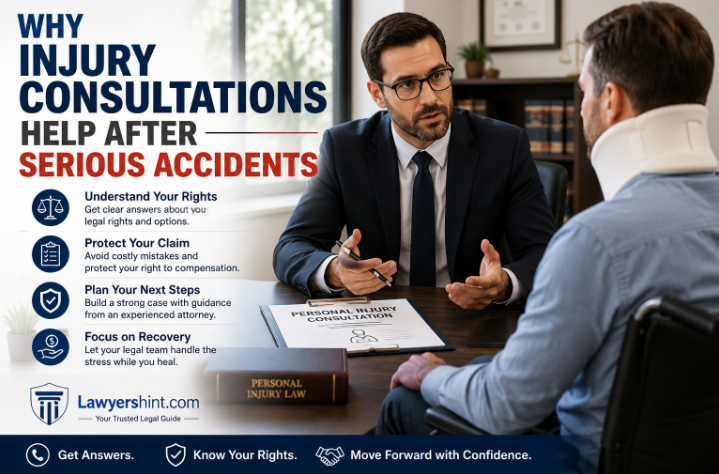

Injury consultations help you understand your legal options, protect your rights, and take the right steps after a serious accident.
- Early Advice Protects Important Choices
- Medical Records Clarify the Injury
- Evidence Can Disappear Quickly
- Fault Requires Careful Review
- Insurance Conversations Need Preparation
- Damages Extend Beyond Hospital Bills
- Pain and Daily Limits Matter
- Family Members May Need Support
- Deadlines Can Limit Recovery
- The Importance of Injury Consultations
Massachusetts is home to busy urban centers, suburban communities, workplaces, and transportation networks where unexpected accidents can disrupt ordinary life in an instant. When a serious injury occurs, the physical consequences are often accompanied by uncertainty about medical care, financial responsibilities, insurance communications, and the next steps.
For an injured person and their family, trying to address these concerns alone can make an already difficult period feel even more overwhelming. For Massachusetts residents coping with a significant injury, seeking a free consultation after an accident can offer a practical opportunity to discuss the situation, understand potential legal considerations, and make informed decisions while meaningful options remain available.
Early Advice Protects Important Choices
After a major crash or harmful incident, an injured person may feel pressure to accept an insurer’s offer. A consultation can explain what that payment may exclude, including later treatment, loss of earning capacity, or lasting impairment. Anyone seeking an early consultation can discuss facts, records, and immediate concerns before signing statements or releases. That early review helps preserve options while memories remain clear and evidence remains available.
Medical Records Clarify the Injury
Medical documentation connects an accident with physical harm. Emergency reports, imaging results, prescriptions, therapy notes, and specialist opinions can show how symptoms developed. Consistent care also demonstrates that the injured person took reasonable steps toward recovery. Gaps in treatment may give an insurer grounds to question severity. A legal review can identify missing records and help organize them in a clear timeline.
Evidence Can Disappear Quickly
Surveillance footage, vehicle data, work logs, photographs, and electronic messages may be altered or disappear. Witnesses can forget details, move away, or become difficult to reach. Early case review helps identify which materials matter most. A legal team may request records, contact observers, and preserve information before ordinary business practices erase it. These steps can strengthen proof of fault and reduce disputes over basic facts.
Fault Requires Careful Review
Accidents often involve more than one contributing factor. A distracted driver, an unsafe property condition, a defective product, or a careless employer may share responsibility. Reviewing traffic reports, photographs, maintenance records, and witness accounts can reveal connections that an initial report misses. Massachusetts uses a modified comparative fault rule, according to the law firm’s inspection page. A person may recover damages while bearing 50 percent or less responsibility.
Insurance Conversations Need Preparation
Adjusters may request recorded statements soon after an incident. Questions can appear routine, yet unclear wording may create harmful interpretations. An injured person may also underestimate symptoms before a diagnosis becomes complete. Legal guidance can help manage communications and explain which information supports a fair review. This approach does not prevent honest cooperation. It helps keep answers accurate, consistent, and limited to known facts.
Damages Extend Beyond Hospital Bills
Financial harm may continue after emergency care ends. A complete claim can include ambulance charges, surgery, medication, rehabilitation, travel for treatment, and assistive equipment. Lost wages may represent only part of the reduced earning capacity. Severe injuries can affect promotions, household duties, education, and retirement plans. Reviewing each category creates a more realistic financial picture than counting invoices alone.
Pain and Daily Limits Matter
Physical discomfort is easy to overlook in a calculation focused on receipts. Serious harm can also affect sleep, mobility, concentration, relationships, and enjoyment of ordinary activities. Scarring, permanent disability, and emotional distress may carry lasting consequences. Detailed journals, therapy records, family observations, and physician notes can help document those effects. Clear descriptions give decision-makers a stronger basis for evaluating nonfinancial losses.
Family Members May Need Support
A severe injury often changes responsibilities across an entire household. Relatives may provide transportation, personal care, meal preparation, or supervision. Some families also face changes at home, vehicle adaptations, or reduced income due to a caregiver’s absence. A consultation can help identify these indirect effects and connect them to available compensation categories. Early planning may also assist families facing wrongful death claims and funeral costs.
Deadlines Can Limit Recovery
Every injury claim has filing rules, and the applicable period depends on the parties, location, and legal theory. Government defendants, minors, medical events, and wrongful death matters may involve different requirements. Waiting can reduce access to records or cause a deadline to pass. Prompt advice gives an injured person time to confirm the correct limitation period. A calendar entry alone cannot replace a legal assessment.
The Importance of Injury Consultations
A serious accident can create medical, financial, and personal burdens that are difficult to measure alone. Injury consultations help identify responsible parties, protect time-sensitive evidence, organize treatment records, and assess losses beyond immediate bills. Early guidance may also prevent damaging statements and missed filing rules. Families benefit from clear information before accepting an offer or choosing a course of action. A careful review gives injured people a stronger foundation for informed decisions and fair compensation.