


Injury Law Representation can play an important role after a car accident in Nashville, especially when victims face physical injuries, emotional distress, and growing financial burdens. Understanding how to protect your legal rights during this difficult time can help support your recovery and protect your future well-being.
- Key Benefits of Professional Personal Injury Law Representation
- Selecting Qualified Personal Injury Law Representation in Tennessee
- Immediate Steps Following a Car Accident in Nashville
- Navigating Tennessee Fault Laws and Legal Time Limits
- Types of Compensation in Nashville Accident Claims
- Frequently Asked Questions About Personal Injury Claims
- Conclusion
This extensive guide aims to demystify the process of car accident claims in Nashville. It will cover everything from immediate post-accident steps to understanding Tennessee’s unique fault laws and securing fair compensation. Our goal is to equip you with the knowledge needed to navigate this complex legal landscape effectively.
Understanding your options and knowing when to seek professional guidance from a trusted personal injury law firm can significantly impact your recovery and the outcome of your claim. This article will help you make informed decisions every step of the way.
When faced with the aftermath of a car accident, the idea of engaging with the legal system can feel overwhelming. This is precisely where a dedicated personal injury attorney in Nashville becomes an invaluable ally. Their primary role is to serve as a legal advocate, taking on the complex legal and administrative burdens so that accident victims can focus on their physical and emotional recovery.
An attorney specializing in car accidents will conduct a thorough claim evaluation, meticulously gathering evidence, interviewing witnesses, and consulting with experts to build a robust case. Their expertise ensures that your rights are protected at every turn, preventing insurance companies from exploiting your vulnerability or lack of legal knowledge. From the initial investigation to potential litigation, a skilled attorney guides you through each phase, ensuring every detail contributes to the strength of your claim.
Key Benefits of Professional Personal Injury Law Representation
The decision to hire an attorney after a car accident in Nashville brings numerous advantages that significantly enhance the likelihood of a favorable outcome. One of the most critical benefits is expert insurance negotiation. Insurance adjusters are trained professionals whose primary goal is to minimize payouts. An experienced attorney understands their tactics and can effectively counter lowball offers, advocating for the full and fair compensation you deserve. They possess the expertise for accurate claim valuation, considering not just immediate expenses but also long-term medical needs, lost earning capacity, and non-economic damages like pain and suffering.
Furthermore, attorneys are adept at evidence collection, securing crucial documents, police reports, medical records, and expert testimonies that might otherwise be overlooked. Should negotiations fail, they are prepared for trial readiness, possessing the litigation skills necessary to present a compelling case in court. This comprehensive approach, from meticulous preparation to aggressive representation, ensures that all aspects of your claim are handled with professional diligence. For those seeking comprehensive legal support and dedicated advocacy, consulting with a knowledgeable personal injury law firm can provide clarity and strategic direction during a challenging time.
Selecting Qualified Personal Injury Law Representation in Tennessee
Choosing the right car accident attorney in Nashville is a pivotal decision that can profoundly influence the outcome of your case. When making this choice, several factors warrant careful consideration. Firstly, seek an attorney with significant local experience in Nashville and Davidson County. Their familiarity with local courts, judges, and legal precedents can be a distinct advantage. It’s also crucial to understand their fee structure; reputable personal injury attorneys almost exclusively work on a contingency fee basis, meaning they only get paid if you win your case, and their fees come as a percentage of the settlement or verdict. This arrangement ensures that quality legal representation is accessible to everyone, regardless of their current financial situation.
Inquire about their trial history and settlement success rates, as this can indicate their willingness and ability to litigate effectively if a fair settlement cannot be reached. Beyond professional credentials, look for an attorney who offers personalized care, demonstrating genuine empathy and clear communication throughout the process. A strong reputation for community trust, built on integrity and successful client advocacy, is also a significant indicator of a qualified legal professional.

Immediate Steps Following a Car Accident in Nashville
The moments immediately following a car accident in Nashville are critical, not only for your safety but also for protecting your legal rights. Your actions during this chaotic time can significantly impact any future personal injury claim. The very first priority is ensuring scene safety by moving to a safe location if possible and checking for injuries. Always call 911 to report the accident, even if it seems minor. A police report is an indispensable piece of evidence, documenting the accident’s circumstances, involved parties, and initial observations. Following the police’s arrival, seek emergency care for any injuries, no matter how insignificant they may seem. Adrenaline can mask pain, and prompt medical attention creates an official record of your injuries linked directly to the accident. Finally, consider seeking initial legal counsel as soon as possible. A Nashville car accident attorney can provide guidance on what to say (and what not to say) to insurance companies and help you navigate the immediate aftermath.
Preserving Crucial Evidence at the Scene
While still at the accident scene, if your condition allows, take proactive steps to preserve evidence. This includes taking extensive photo evidence from multiple angles, capturing vehicle damage, road conditions, traffic signs, skid marks, and any visible injuries. These visual records can be invaluable in establishing fault and the extent of damages. Collect witness details, including names, phone numbers, and email addresses, as their unbiased accounts can corroborate your version of events. Obtain a copy of the crash reports once it’s available, as it contains vital information such as the officer’s assessment, citations issued, and insurance details of all parties. Documenting overall scene conditions, such as weather, time of day, and any relevant environmental factors, further strengthens your case by providing a comprehensive picture of the incident.
Avoiding Common Insurance Settlement Traps
After an accident, insurance companies often contact victims quickly, sometimes even before they’ve fully processed what happened. It’s crucial to be aware of common tactics they use to minimize payouts. One prevalent trap is requesting a recorded statement. While you must cooperate with your own insurance company, you are generally not obligated to provide a recorded statement to the at-fault driver’s insurer without legal counsel. These statements can be used against you later, potentially twisting your words or leading you to admit fault inadvertently. Be wary of early settlements, especially if offered before you have a clear understanding of the full extent of your injuries and medical costs. These offers are often far below the true value of your claim. Avoid medical delays; delaying treatment can allow the insurance company to argue that your injuries were not caused by the accident or were exacerbated by your inaction. Finally, never sign quick releases or waivers without having an attorney review them. These documents can waive your right to future compensation, even if new symptoms or complications arise.
Navigating Tennessee Fault Laws and Legal Time Limits
Understanding Tennessee’s specific legal framework for car accidents is paramount for any victim seeking compensation in Nashville. Tennessee operates under a fault-based insurance system, meaning the at-fault driver’s insurance company is generally responsible for covering damages. However, determining fault is not always straightforward, especially when multiple parties contribute to an accident. The state also adheres to a modified comparative fault rule, which significantly impacts how compensation is awarded. Furthermore, strict legal deadlines, particularly the statute of limitations, dictate how long you have to file a lawsuit, making timely action essential. In a bustling area like Davidson County, where accidents are frequent, navigating these laws requires precise knowledge and often the assistance of an experienced legal professional.
Tennessee Modified Comparative Fault Rule
Tennessee’s modified comparative fault rule, specifically the “50 percent bar rule,” states that a claimant can only recover damages if their percentage of fault for the accident is 49% or less. If a court or insurance adjuster determines you are 50% or more at fault, you are barred from recovering any compensation. If your fault is determined to be 49% or less, your recoverable damages will be reduced proportionally. For example, if you are awarded $100,000 in damages but are found to be 20% at fault, your final compensation will be reduced by 20% to $80,000. This fault allocation system makes proving the other driver’s negligence crucial and underscores the importance of gathering strong evidence. An attorney can help meticulously reconstruct the accident to minimize your attributed fault and maximize your financial recovery.
Strict One-Year Statute of Limitations
One of the most critical aspects of car accident claims in Tennessee is the strict one-year statute of limitations. This means that accident victims have only one year from the date of the accident to file a personal injury lawsuit. Missing this filing deadline almost invariably results in the forfeiture of your right to pursue compensation, regardless of the merits of your case. This short timeframe, which is among the shortest in the nation, emphasizes the need for immediate action. The longer you wait, the greater the risk of evidence loss, as witness memories fade, physical evidence deteriorates, and surveillance footage is overwritten. Given this tight legal timeframe, consulting with a Nashville car accident attorney as soon as possible after an accident is not just advisable, but often essential to protect your legal rights and ensure your claim is not time-barred.
Types of Compensation in Nashville Accident Claims
When pursuing a car accident claim in Nashville, victims can typically seek two broad categories of compensation: economic damages and non-economic damages. Economic damages are quantifiable financial losses directly resulting from the accident, such as medical bills, lost income, and property damage. Non-economic damages, on the other hand, cover subjective, non-monetary losses like pain and suffering, emotional distress, and loss of enjoyment of life. The goal of a personal injury claim is to make the victim whole again, as much as possible, by covering all these losses. Understanding the full scope of potential compensation is vital for ensuring a fair settlement or verdict.
Calculating Economic and Non-Economic Damages
Calculating economic damages involves tallying up all current and future financial losses. This includes past and future medical expenses (hospital stays, doctor visits, physical therapy, medication, medical devices), lost wages from time off work, and diminished earning capacity if the injuries prevent a return to the same job or profession. Property damage to your vehicle is also included. Non-economic damages, such as pain and suffering, emotional distress, disfigurement, and loss of consortium, are more subjective and challenging to quantify. Attorneys often use various methods, including multiplier formulas or per diem rates, based on the severity and duration of the pain, the impact on daily life, and the specifics of the case. Expert testimony from medical professionals and economists can also play a crucial role in establishing the full extent of both economic and non-economic losses, contributing to the overall settlement values.
Impact of Accident Severity on Case Value
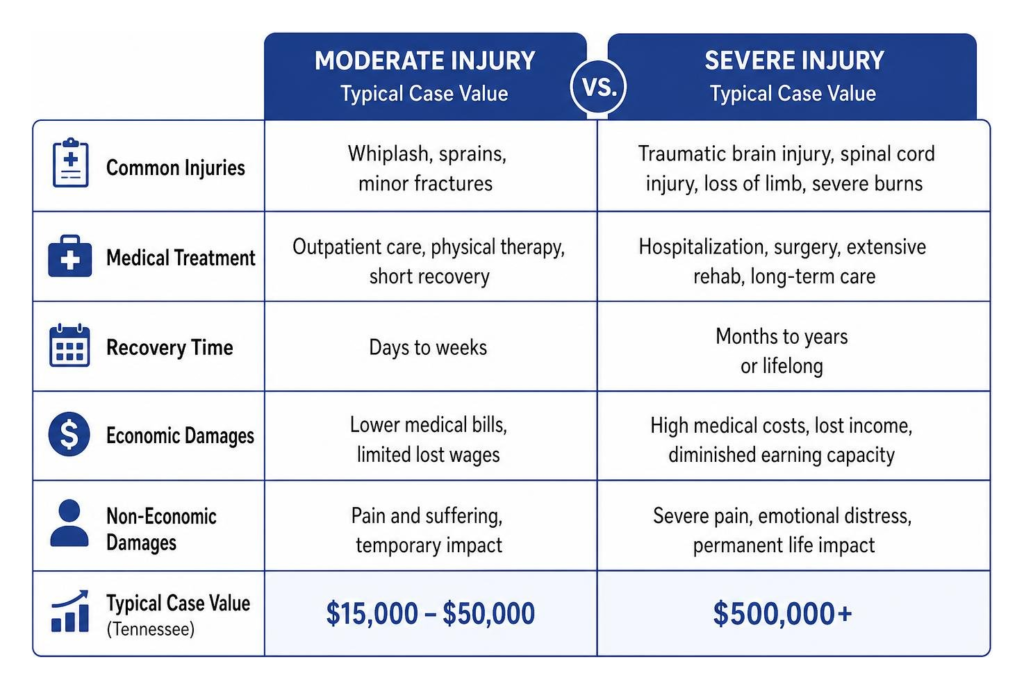
The severity of the injuries sustained in a car accident is arguably the most significant factor influencing the value of a case. Moderate injuries, such as whiplash, sprains, or minor fractures, typically result in lower settlement values, often ranging from $15,000 to $50,000 in Tennessee, as indicated by recent statistics. These cases usually involve shorter recovery periods and less extensive medical treatment. However, for severe or catastrophic harm, such as traumatic brain injuries, spinal cord injuries, permanent disfigurement, or loss of limb, the potential compensation can exceed $500,000. These cases involve lifelong medical care, extensive rehabilitation, significant loss of earning capacity, and profound impact on quality of life, leading to much higher damage metrics. The long-term prognosis, the need for future care, and the degree of permanent disability all play a critical role in determining the ultimate recovery limits and overall case value.
Frequently Asked Questions About Personal Injury Claims
How does contingency fee billing work for accident cases?
Contingency fee billing is the standard payment model for personal injury attorneys in Nashville and across the country. This arrangement is highly beneficial for accident victims because it means you pay zero upfront fees to retain legal representation. Instead, the attorney’s fees are contingent upon the successful resolution of your case. If the attorney secures a settlement or verdict in your favor, their payment is a pre-agreed percentage of that recovery, typically ranging from 33% to 40%. If the case is unsuccessful, you owe the attorney nothing for their time. This model ensures that individuals, regardless of their financial situation after an accident, can access high-quality legal representation. It also aligns the attorney’s interests directly with yours, as they are motivated to achieve the maximum possible compensation. Additionally, most reputable firms offer free consultations, allowing you to discuss your case without any initial financial commitment.
What factors most significantly impact the value of a settlement?
Several critical factors collectively determine the potential value of a car accident settlement or verdict in Nashville. Foremost among these is the severity of the injuries. Cases involving catastrophic injuries, permanent disability, or extensive medical treatment naturally command higher values than those with minor injuries. The clarity of fault is another major determinant; if liability is indisputable, the case typically has a higher value than one where fault is contested or shared. The amount of available insurance coverage (both the at-fault driver’s liability policy and your own underinsured/uninsured motorist coverage) also sets practical caps on recovery. Furthermore, the total medical costs, including past and projected future expenses, as well as documented lost wages and other economic damages, directly contribute to the settlement amount. Non-economic factors like the extent of pain and suffering, emotional distress, and the impact on daily life are also crucial, often requiring compelling evidence and expert testimony to quantify effectively.
Why is Tennessee’s statute of limitations so critical for victims?
Tennessee’s one-year statute of limitations for personal injury claims arising from car accidents is exceptionally critical for victims due to its strict and unforgiving nature. As one of the shortest legal timeframes in the United United States, it imposes an urgent deadline on accident victims to initiate legal action. Failing to file a lawsuit within this one-year period from the date of the accident almost universally means losing the right to pursue compensation, regardless of the severity of your injuries or the clear fault of another party. This tight deadline can lead to claim forfeiture for those unaware or those who delay seeking legal advice. Moreover, the passage of time often leads to evidence degradation; witness memories fade, physical evidence at the scene may be gone, and crucial documentation can become harder to obtain. The freshness of evidence is paramount for building a strong case. Therefore, understanding and adhering to this one-year limit is not merely a procedural step but a fundamental requirement for protecting your legal rights and ensuring the viability of your personal injury claim.
Conclusion
Navigating the aftermath of a car accident in Nashville can be a daunting journey, fraught with physical pain, emotional distress, and complex legal challenges. However, understanding your rights and knowing when to seek professional legal guidance can make all the difference in securing the justice and compensation you deserve. From taking immediate steps at the accident scene to understanding Tennessee’s unique fault laws and strict statute of limitations, every decision you make impacts your recovery.
A dedicated Nashville car accident attorney acts as your unwavering advocate, protecting your rights against powerful insurance companies, meticulously building your case, and fighting for fair compensation for all your economic and non-economic damages. Their expertise allows you to focus on healing while they manage the legal complexities, ensuring that you are not left to bear the financial burden of another’s negligence. Pursuing justice after an accident is not just about financial recovery; it’s about holding responsible parties accountable and regaining control of your life.