
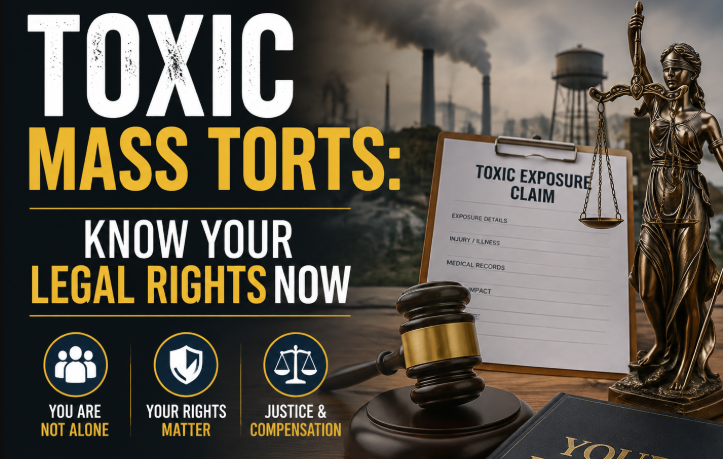

Understand toxic mass torts, your legal rights, and how victims of harmful chemical exposure may seek compensation through mass tort claims.
- What Is a Toxic Mass Tort?
- How Toxic Exposure Can Affect Public Health
- Why Mass Tort Cases Continue to Grow
- The Difference Between a Mass Tort and a Class Action
- Common Types of Toxic Mass Tort Cases
- Building a Strong Legal Claim
- Why Scientific Evidence Matters
- Consumer Awareness Is Improving Product Safety
- What Individuals Should Do After Suspected Toxic Exposure
- Final Thoughts
Thousands of people are exposed to dangerous chemicals, defective products, and hazardous substances every year. While many exposures seem harmless at first, some can lead to serious illnesses that appear months or even years later. As more scientific research uncovers connections between toxic exposure and disease, affected individuals are becoming more aware of their legal rights.
When an illness may be linked to exposure caused by a company’s actions, speaking with an experienced toxic and mass torts attorney can help you understand your legal options. An attorney can review your circumstances, explain whether your case may qualify for a mass tort claim, and help you determine the next steps.
What Is a Toxic Mass Tort?
A toxic mass tort is a legal claim involving injuries caused by exposure to harmful substances. Unlike a single personal injury lawsuit, mass tort litigation allows many individuals with similar injuries to pursue claims against the same manufacturer or company. Each person’s case remains separate because medical histories, exposure levels, and damages are unique.
Many toxic mass tort cases involve products or chemicals that were used for years before researchers identified potential health concerns.
How Toxic Exposure Can Affect Public Health
Long-term exposure to hazardous substances can contribute to serious medical conditions. People may come into contact with harmful chemicals at work, at home, or through consumer products they use regularly. In many situations, individuals are unaware they have been exposed until symptoms develop years later.
Common sources of exposure include industrial chemicals, contaminated environments, consumer products, and occupational hazards. Because many illnesses have long latency periods, identifying the source often requires careful investigation.
Why Mass Tort Cases Continue to Grow
Mass tort litigation has increased because consumers are becoming more informed about product safety. Scientific studies, government investigations, and product testing have helped identify risks that were not widely known in previous decades. As new evidence becomes available, individuals who develop similar illnesses may pursue legal claims against the companies involved.
Many lawsuits focus on whether manufacturers provided adequate product testing, safety warnings, and information about potential risks.
The Difference Between a Mass Tort and a Class Action
Mass torts and class actions both involve multiple plaintiffs, but they work differently. In a class action lawsuit, one legal action represents an entire group of people with similar claims. In a mass tort, every plaintiff maintains an individual lawsuit while sharing parts of the legal process with others who experienced similar injuries.
This approach allows each person to present evidence related to their own medical condition, treatment, and financial losses.
Common Types of Toxic Mass Tort Cases
Several categories of products and substances have resulted in mass tort litigation. Although every case is different, toxic mass tort claims frequently involve exposure that allegedly caused serious health problems after repeated or prolonged contact. These cases may involve asbestos, contaminated drinking water, defective medical products, or harmful chemicals found in consumer goods.
Each claim depends on scientific evidence, medical documentation, and the facts surrounding the exposure.
Building a Strong Legal Claim
A successful claim often depends on clear evidence connecting exposure to injury. Attorneys typically begin by reviewing medical records, employment history, product use, and other documents that may establish when and how exposure occurred.
Medical records, employment history, and documentation showing product use or exposure can all help strengthen a legal claim and allow attorneys to evaluate a case more effectively.
Why Scientific Evidence Matters
Medical research plays an important role in toxic mass tort litigation. Courts often rely on scientific studies, expert testimony, and medical evidence when evaluating whether a particular substance may be associated with certain illnesses. Ongoing research continues to improve the understanding of chemical exposure and public health risks.
Reliable scientific evidence helps both attorneys and consumers better understand how exposure may affect long-term health outcomes.
Consumer Awareness Is Improving Product Safety
Greater public awareness encourages companies to improve safety standards. As consumers become more informed, manufacturers face increasing pressure to conduct thorough product testing, provide accurate warning labels, and respond quickly when safety concerns arise.
Government agencies also continue monitoring products and environmental hazards to reduce future risks. The U.S. Environmental Protection Agency’s information about toxic substances explains how toxic chemical releases are tracked and how environmental safety information is made available to the public.
What Individuals Should Do After Suspected Toxic Exposure
Taking prompt action can help protect both your health and your legal rights. Anyone who believes they have been exposed to a harmful substance should seek appropriate medical care as soon as possible. Early diagnosis may improve treatment options while also creating important medical records that could support a future legal claim.
Keeping medical records and any documents related to product use or workplace exposure can also be helpful if legal questions arise later.
Final Thoughts
Toxic mass tort litigation provides a legal path for individuals who believe they have suffered serious illnesses after exposure to dangerous substances or defective products. While every case is unique, these lawsuits often play an important role in holding manufacturers accountable and encouraging stronger consumer safety standards.
As scientific research continues to expand, people are becoming better informed about potential health risks and the legal protections available to them. Understanding how toxic mass torts work allows consumers to make informed decisions if they believe exposure may have affected their health or the health of their families.