

Learn how personal injury claims work, what evidence strengthens your case, and the steps to pursue fair compensation after an accident.
Understanding the Legal Grounds for Personal Injury Claims
Life can change in a moment. An unexpected accident, caused by someone else’s actions, can leave you with injuries, emotional distress, and financial burdens. Understanding your legal rights in such situations is vital. This is where personal injury claims come into play.
A personal injury claim is a formal process. It allows you to seek compensation for various types of harm. This includes physical injuries, emotional distress, and even damage to your reputation. This guide is your resource for understanding tort law. We will explain what personal injury claims are and the wide range of harm they cover.
We will delve into the main legal grounds for these claims, such as negligence, strict liability, and intentional wrongs. We will also highlight common scenarios that often lead to personal injury cases. From minor incidents to tragic events where individuals seek justice for motorcycle wrongful death, the legal landscape can be complex. We will detail the types of compensation you can recover. This guide will also walk you through the steps involved in making a claim. We aim to provide clear, expert guidance on navigating this crucial legal journey.
When an individual is harmed due to another’s actions, a personal injury claim often arises from specific legal grounds. These grounds form the foundation of any successful case, demonstrating why the at-fault party should be held responsible. Primarily, personal injury law is built upon three core theories of liability: negligence, strict liability, and intentional wrongs.

Negligence
Negligence is the most common basis for personal injury claims. It occurs when a person or entity fails to exercise reasonable care, and that failure results in harm to another. To prove negligence, four key elements must be established:
- Duty of Care: The defendant owed a legal duty to the plaintiff to act in a certain way. For instance, drivers have a duty to operate their vehicles safely, and property owners have a duty to maintain safe premises for visitors.
- Breach of Duty: The defendant failed to uphold that duty. This means their actions (or inactions) fell below the accepted standard of care that a reasonably prudent person would have exercised in similar circumstances.
- Causation: The defendant’s breach of duty directly caused the plaintiff’s injuries. This involves both “actual cause” (the injury wouldn’t have occurred “but for” the defendant’s actions) and “proximate cause” (the injury was a foreseeable result of the defendant’s actions).
- Damages: The plaintiff suffered actual harm or losses as a result of the injury. These damages can be economic (like medical bills or lost wages) or non-economic (like pain and suffering).
Strict Liability
Unlike negligence, strict liability does not require proving fault or intent. Under this legal theory, a defendant can be held responsible for damages even if they took every reasonable precaution. Strict liability often applies in specific, high-risk situations, such as:
- Product Liability: Manufacturers, distributors, and retailers can be held strictly liable for injuries caused by defective products, regardless of whether they were negligent in their design, manufacturing, or marketing.
- Animal Attacks: Owners of dangerous animals (like certain dog breeds) may be strictly liable for injuries their animals cause.
- Abnormally Dangerous Activities: Engaging in activities like demolition work with explosives or transporting hazardous materials can incur strict liability if an accident occurs, even with safety measures in place.
Intentional Wrongs
While less common in typical accident scenarios, intentional wrongs are a basis for personal injury claims where the at-fault party deliberately caused harm. This means they acted with the specific intent to injure or knew that their actions would likely cause injury. Examples include:
- Assault: Threatening physical harm.
- Battery: Unwanted physical contact.
- False Imprisonment: Unlawfully restraining someone.
- Intentional Infliction of Emotional Distress: Extreme and outrageous conduct causing severe emotional suffering.
Understanding these foundational legal principles is crucial for anyone considering a personal injury claim. For those in neighboring states, the legal framework for pursuing compensation for injuries can vary, making it important to consult with local counsel specializing in such cases, for example, for NJ personal injury claims. For a broader overview of the types of cases that fall under personal injury law, including detailed explanations of each category, we recommend exploring our comprehensive resource on Types of Personal Injury Cases: Exploring the Scope from Slip and Falls to Product Liability.
Common Scenarios Leading to Personal Injury Claims
Personal injury claims arise from a wide array of incidents where one party’s negligence or wrongful action causes harm to another. While the specific circumstances vary, certain scenarios commonly lead to these types of legal actions:
- Car Accidents: These are among the most frequent causes of personal injury claims. They encompass a range of incidents, from rear-end collisions and distracted driving accidents to multi-vehicle pile-ups. Injuries can range from whiplash and broken bones to catastrophic brain or spinal cord damage.
- Premises Liability: Property owners have a legal obligation to ensure their premises are safe for visitors. When they fail to do so, and someone is injured as a result, a premises liability claim may arise. This includes slip and falls on wet floors or uneven surfaces, injuries from falling objects, inadequate security leading to assault, or swimming pool accidents.
- Product Liability: When a consumer is injured by a defective or dangerous product, they may have a product liability claim. This can involve manufacturing defects (e.g., a faulty brake system), design defects (e.g., an inherently unstable product), or marketing defects (e.g., insufficient warnings or instructions). The Lanier Law Firm, for example, secured a $4.69 billion verdict in a case linking baby powder, asbestos, and ovarian cancer, demonstrating the severe consequences of product defects.
- Medical Malpractice: This category involves injuries sustained due to the negligence of a healthcare professional or institution. It can include surgical errors, misdiagnosis, medication errors, birth injuries, or failure to treat. Cases like those handled by West Pittston Birth Injury Attorneys highlight the profound impact medical negligence can have on families.
- Workplace Accidents: While many workplace injuries are covered by workers’ compensation, some situations may allow for a personal injury claim against a third party (not the employer). For instance, an injury caused by defective machinery manufactured by another company, or an accident at a construction site involving multiple contractors, could lead to a personal injury lawsuit. The Lanier Law Firm obtained a $56.3 million verdict for a construction worker paralyzed by defective equipment, underscoring the potential for significant compensation in such cases.
- Dog Bites and Animal Attacks: In many jurisdictions, dog owners are held responsible for injuries inflicted by their pets, particularly if the animal has a history of aggression or if the owner failed to control it properly.
- Assault and Battery: As mentioned under intentional wrongs, if someone intentionally causes you physical harm, you can pursue a personal injury claim against them for your medical expenses, lost wages, and pain and suffering.
These examples illustrate the broad scope of personal injury law. Each type of case presents unique challenges and legal nuances, often requiring specialized legal knowledge. Many law firms, such as those practicing Personal Injury Law – Rosenn Jenkins & Greenwald, are equipped to handle a diverse range of these complex cases, providing crucial support to injured individuals.

Proving Liability in Personal Injury Claims
Establishing liability is the cornerstone of any successful personal injury claim. It means demonstrating that the defendant was legally responsible for your injuries. This process is meticulous and heavily relies on thorough evidence collection and strategic presentation.
Key types of evidence that are crucial for proving liability include:
- Witness Statements: Eyewitness accounts can provide invaluable perspectives on how an accident occurred, corroborating your version of events or identifying negligent actions. It’s important to gather contact information from witnesses at the scene.
- Medical Records: These documents are essential for establishing the extent of your injuries and linking them directly to the incident. Detailed medical reports, diagnoses, treatment plans, and billing records prove the physical and financial impact of the harm you suffered.
- Police Reports: For incidents like car accidents, a police report can offer an official, objective account of the scene, including initial assessments of fault, diagrams, and citations issued. While not always admissible as direct proof of fault in court, they provide a strong foundation for investigation.
- Photographs and Videos: Visual evidence from the accident scene, your injuries, property damage, or hazardous conditions can be incredibly powerful. Dashcam footage, surveillance camera recordings, or even photos taken on a smartphone immediately after an incident can capture critical details that might otherwise be lost.
- Expert Testimony: In complex cases, such as medical malpractice or product liability, expert witnesses (e.g., medical professionals, accident reconstructionists, engineers) may be necessary. Their specialized knowledge can help explain technical details, establish the standard of care, or demonstrate causation.
- Accident Reconstruction: For serious accidents, especially those involving vehicles, experts can analyze physical evidence, vehicle damage, and other data to recreate the sequence of events, helping to pinpoint liability.
- Financial Records: Pay stubs, tax returns, and employment records are vital for proving lost wages and diminished earning capacity. Receipts for out-of-pocket expenses related to the injury, such as transportation to medical appointments or assistive devices, also serve as critical evidence.
The process of gathering and preserving this evidence can be overwhelming, especially when recovering from an injury. This is why legal guidance is often indispensable. A skilled personal injury attorney will know exactly what evidence to seek, how to obtain it legally, and how to present it effectively to build a strong case. For an in-depth look at the various forms of evidence and their significance in personal injury cases, we encourage you to read our guide on The Role of Evidence in Personal Injury Claims: A Comprehensive Guide.
Damages and Compensation in Personal Injury Cases
A successful personal injury claim aims to recover compensation for all losses incurred due to another party’s negligence or wrongdoing. These losses, legally referred to as “damages,” are categorized to ensure that the injured party is made whole, as much as possible, after an incident. Understanding the types of damages available is crucial for grasping the potential value of a claim.
Economic Damages
Economic damages, also known as “special damages,” are quantifiable financial losses that can be objectively calculated. They are designed to reimburse the claimant for direct monetary expenses and income loss. Common examples include:
- Medical Expenses: This covers all costs related to treating your injury, including emergency room visits, hospital stays, doctor’s appointments, surgeries, medications, rehabilitation, physical therapy, and future medical care.
- Lost Wages: Compensation for income lost due to being unable to work, either temporarily or permanently, because of your injuries. This can include past lost wages and future loss of earning capacity.
- Property Damage: Costs associated with repairing or replacing damaged property, such as a vehicle in a car accident.
- Out-of-Pocket Expenses: Any other direct costs incurred due to the injury, such as transportation to medical appointments, home modifications for accessibility, or assistive devices.
Non-Economic Damages
Non-economic damages, often called “general damages,” are subjective losses that are more challenging to quantify but are equally significant. They compensate for the intangible impacts of an injury on a person’s life. These can include:
- Pain and Suffering: This is compensation for the physical pain and discomfort caused by the injury, both past and future.
- Mental and Emotional Distress: This covers psychological impacts such as anxiety, depression, fear, anger, post-traumatic stress disorder (PTSD), and loss of enjoyment of life.
- Loss of Consortium: In cases of severe injury or wrongful death, this compensates a spouse for the loss of companionship, affection, and intimate relations.
- Disfigurement and Impairment: Compensation for permanent scarring, loss of a limb, or other physical disfigurements or impairments that affect quality of life.
Punitive Damages
In rare instances, courts may award punitive damages. Unlike economic and non-economic damages, which aim to compensate the victim, punitive damages are intended to punish the defendant for particularly egregious, reckless, or malicious conduct and to deter similar behavior in the future. They are not typically awarded in every personal injury case and are subject to higher legal standards of proof. The Lanier Law Firm’s $9 billion verdict against Takeda & Eli Lilly for cancer linked to a diabetes drug exemplifies the potential for substantial punitive damages in cases of corporate misconduct.
The specific amount of compensation awarded depends on numerous factors, including the severity of the injuries, the clarity of liability, the total economic losses, and the impact on the claimant’s quality of life. For a deeper understanding of how these different types of damages are assessed and calculated in personal injury cases, our detailed guide on Understanding Compensation in Personal Injury Cases: A Deep Dive into Damages provides valuable insights.
Navigating the Claims Process and Legal Timelines
The journey through a personal injury claim can be intricate, involving several distinct stages, from the initial incident to a potential trial or settlement. Understanding this process, and particularly the critical legal timelines, is essential for protecting your rights and maximizing your chances of a successful outcome.
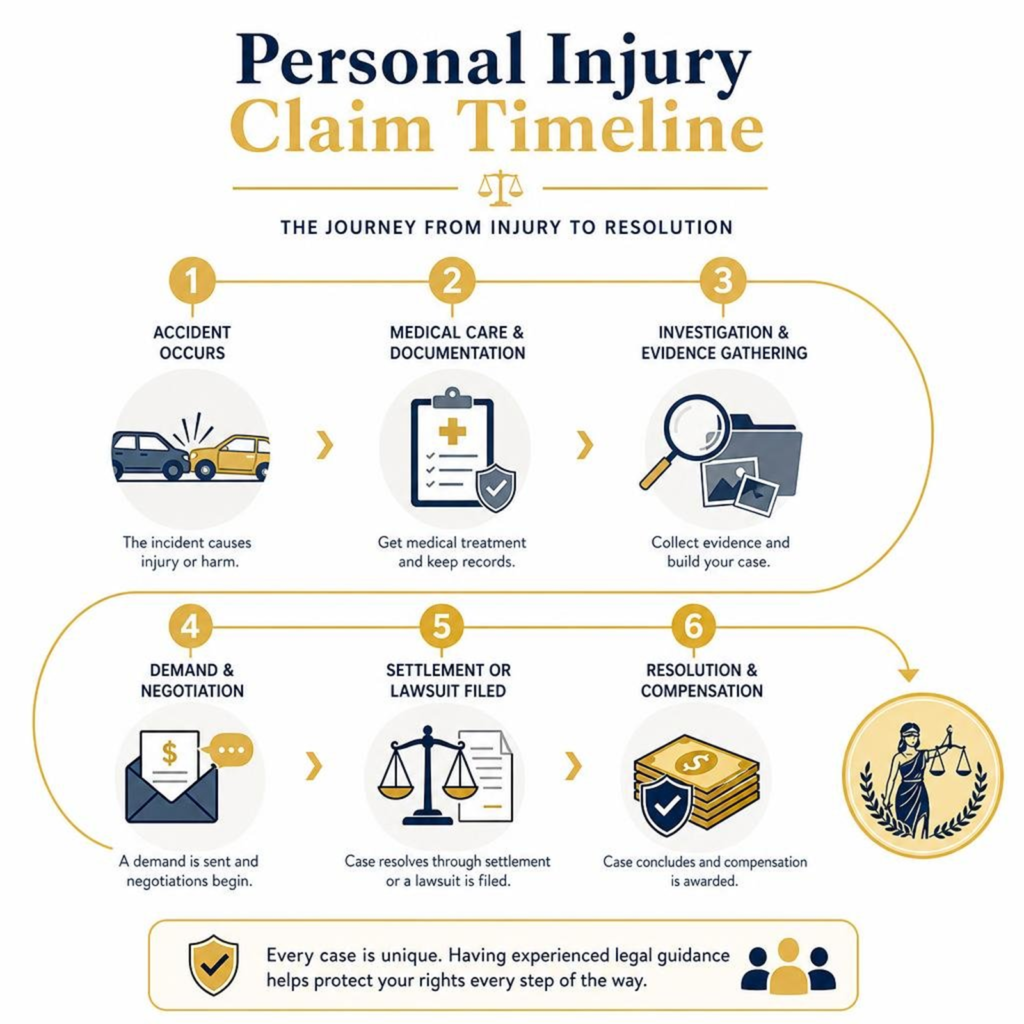
At the outset, after an injury, the first step is typically to seek medical attention and then report the incident to the appropriate parties (e.g., police, property owner, insurance company). Following this, an investigation into the incident begins, where evidence is gathered to support the claim.
Once sufficient evidence is compiled, a formal demand letter is often sent to the at-fault party’s insurance company. This letter outlines the facts of the case, the extent of the injuries and damages, and a request for a specific amount of compensation. This initiates the settlement negotiations phase. Most personal injury cases are resolved through settlement, avoiding the need for a full trial. This can occur at various points: before a lawsuit is filed, during the discovery phase, or even shortly before a trial is set to begin.
If negotiations fail to produce a fair settlement, the next step is often to file a personal injury lawsuit in court. This marks the transition from an informal claim to formal litigation. The lawsuit process involves:
- Filing a Complaint: The plaintiff files a formal document outlining their claims against the defendant.
- Service of Process: The defendant is formally notified of the lawsuit.
- Discovery: Both sides exchange information, including documents, interrogatories (written questions), requests for admissions, and depositions (out-of-court sworn testimonies).
- Mediation/Arbitration: Often, courts mandate or encourage alternative dispute resolution methods to try and reach a settlement before trial.
- Trial: If no settlement is reached, the case proceeds to trial, where a judge or jury hears the evidence and makes a decision on liability and damages.
- Appeals: Either party may appeal the trial court’s decision.
A critical aspect of navigating this process is adhering to the statute of limitations. This is a strict legal deadline for filing a lawsuit. If a lawsuit is not filed within this timeframe, the claimant typically loses their right to pursue compensation, regardless of the merits of their case. These deadlines vary significantly by jurisdiction and the type of injury. For example, in California, the standard statute of limitations for personal injury cases is generally two years from the date of injury, though exceptions exist for government claims or medical malpractice. For a comprehensive overview of how personal injury cases progress through the legal system, from initial investigation to potential trial, we offer a detailed guide on The Legal Process in Personal Injury Cases: A Step-by-Step Guide. Additional information on various aspects of personal injury claims can also be found at resources like Personal Injury Claims.
The Role of the Small Claims Process and Online Portals
For certain types of personal injury claims, particularly those involving lower values or specific circumstances, alternative processes exist that aim to streamline resolution and reduce the need for extensive legal representation. These include the small claims court process and, in some jurisdictions, online claims portals.
Small Claims Process: Small claims courts are designed to handle disputes involving relatively small monetary amounts. They offer a more informal and less expensive way for individuals to resolve legal issues without the need for an attorney, though legal representation is usually permitted. The maximum amount that can be claimed in small claims court varies significantly by state and even by county. While these courts can be suitable for minor property damage or very low-value personal injury claims, they are generally not appropriate for cases involving significant injuries, complex liability, or substantial damages, as the recovery limits are often too low to cover serious losses.
Online Claims Portals (e.g., Official Injury Claim in the UK): A notable example of a streamlined process is the Official Injury Claim (OIC) service in the UK, established for low-value road traffic accident (RTA) personal injury claims. This online portal is designed for unrepresented claimants to manage their own claims for injuries valued at £5,000 or less, with a total claim value (including other losses) not exceeding £10,000. It primarily deals with whiplash and soft tissue injuries, often applying a fixed tariff system for whiplash compensation.
The OIC process involves several steps:
- Information Gathering: Providing details of the accident, vehicles involved, and initial injury information.
- Investigation: The at-fault insurer reviews the claim and makes a liability decision.
- Medical Evidence: The claimant obtains a medical report from an approved expert to confirm injuries and prognosis.
- Negotiation: The claimant and insurer negotiate compensation based on the medical report, whiplash tariff (if applicable), and other claimed losses.
- Settlement: If an agreement is reached, the claim is settled; otherwise, it may proceed to court.
This system aims to simplify the process for minor injuries, but it has specific eligibility criteria and limitations. For instance, it generally excludes protected parties (minors, those lacking mental capacity), vulnerable road users (pedestrians, cyclists), and untraced drivers. Claimants using such portals must be diligent in providing accurate information and evidence. Resources like the Five steps to using the online Official Injury Claim Service and the comprehensive Guide to making a personal injury claim (Version 3.7 May 2025) provide detailed instructions for navigating this specific online system. While these portals offer a route for self-representation, the complexities of valuing injuries and negotiating with insurers can still be challenging for individuals without legal expertise.
Protocol vs. Non-Protocol Vehicle Costs
In the context of vehicle accident claims, particularly in systems like the UK’s RTA Small Claims Protocol, there’s an important distinction between “protocol vehicle costs” and “non-protocol vehicle costs.” This distinction primarily affects how certain expenses related to vehicle damage are handled and recovered.
Protocol Vehicle Costs: These are costs that are typically included and valued within the standard claims process, often within the defined limits of an online portal or a pre-action protocol. They generally refer to the direct costs of repairing or replacing the damaged vehicle. These are usually straightforward to quantify based on repair estimates or market value.
Non-Protocol Vehicle Costs: These are expenses related to vehicle damage that fall outside the standard valuation or recovery mechanisms of a streamlined protocol. They often arise when the claimant incurs additional, indirect costs as a result of their vehicle being damaged, which may not be automatically covered or easily valued within the protocol. Common examples include:
- Credit Hire Charges: If a claimant needs to rent a replacement vehicle while theirs is being repaired, and they arrange this through a credit hire company (meaning they don’t pay upfront, but the credit hire company seeks recovery from the at-fault insurer), these costs can be substantial. Credit hire is often contentious, as insurers may argue the rates are excessive or that the claimant could have afforded a cheaper rental.
- Vehicle Storage Costs: If a damaged vehicle needs to be stored before repairs or assessment, storage fees can accumulate, especially if there are delays in the claims process.
- Recovery Charges: The cost of recovering the damaged vehicle from the accident scene.
- Loss of Use: Compensation for the inconvenience and actual financial loss suffered due to not having access to one’s vehicle.
The key difference lies in how these costs are treated. While direct repair costs might be straightforwardly handled within a protocol, non-protocol costs like credit hire or extended storage often lead to disputes. If a claim involving such costs exits the protocol (e.g., because the insurer disputes the amount or necessity of the credit hire), these expenses would then need to be pursued through more traditional litigation, potentially adding complexity and legal fees. This highlights that even in seemingly “minor” accident claims, the financial implications can extend beyond simple repair bills, often requiring careful documentation and negotiation.
Workers’ Compensation and the No-Fault System
When an injury occurs in the workplace, a specific legal framework typically comes into play: workers’ compensation. This system operates on a “no-fault” basis, meaning that an injured worker can receive benefits regardless of who was at fault for the accident, as long as the injury occurred within the scope of employment. This is a fundamental difference from personal injury claims, which require proving fault.
The primary goal of workers’ compensation is to provide prompt medical treatment and wage replacement benefits to employees injured on the job, while also protecting employers from costly lawsuits. In exchange for these guaranteed benefits, employees generally give up their right to sue their employer for negligence.
Key aspects of the workers’ compensation system include:
- Reporting Requirements: Injured workers must typically report their injury to their employer within a specific timeframe (e.g., 30 days in many states). Failure to do so can jeopardize their claim.
- Medical Treatment: The system covers reasonable and necessary medical care related to the work injury. In some states, employers or their insurers may have the right to direct medical care, at least initially.
- Wage Replacement Benefits: If an injury prevents an employee from working, they can receive temporary disability benefits (typically a percentage of their average weekly wage) until they can return to work or reach maximum medical improvement. For permanent impairments, permanent disability benefits may be awarded.
- Evidence Gathering: Although it’s a no-fault system, evidence is still crucial. This includes medical records documenting the injury and its link to work, witness statements from colleagues, and any incident reports.
- Filing Procedures: Claims must be filed with the state workers’ compensation board or commission, following specific forms and deadlines.
- Legal Appeals: If a claim is denied or benefits are disputed, workers have the right to appeal the decision through administrative hearings.
While workers’ compensation is a no-fault system, it can still be complex to navigate. Disputes often arise regarding the compensability of an injury, the extent of disability, or the appropriateness of medical treatment. Additionally, there are situations where an injured worker might have both a workers’ compensation claim against their employer and a separate personal injury claim against a third party. For example, if a construction worker is injured by defective equipment manufactured by another company, they could pursue workers’ compensation benefits from their employer and a product liability claim against the equipment manufacturer.
Given the intricacies of reporting deadlines, medical evaluations, and benefit calculations, many injured workers find it beneficial to consult with an attorney specializing in workers’ compensation. Such legal professionals can help ensure that all necessary steps are taken, rights are protected, and fair compensation is secured. For more detailed information on navigating this specific area of law, our resources on workers’ compensation lawyer can provide valuable guidance.
Frequently Asked Questions about Personal Injury Claims
The world of personal injury law can be complex, and it’s natural to have many questions when facing an unexpected injury. Here, we address some of the most common inquiries we encounter.
What is the statute of limitations for filing a claim?
The statute of limitations is a critical legal deadline that dictates how long you have to file a personal injury lawsuit after an incident occurs. This deadline varies significantly depending on the jurisdiction (state or country) and sometimes even the specific type of injury or defendant involved. For instance, in California, the general statute of limitations for most personal injury cases is two years from the date of the injury. However, if the claim is against a government entity, the deadline can be much shorter, often just six months for initial notice.
There are also exceptions to these rules, such as the “discovery rule,” which may extend the deadline if the injury or its cause was not immediately apparent. For example, if you were exposed to a toxic substance and only developed symptoms years later, the clock might start ticking from the date you discovered the injury or its link to the exposure. Because these deadlines are strict and missing them can permanently bar your claim, it is always advisable to seek legal counsel as soon as possible after an injury. Resources like the Personal injury cases | California Courts | Self Help Guide provide state-specific details on these crucial filing deadlines.
How do pre-existing conditions affect a claim?
A common concern for many injured individuals is how a pre-existing medical condition might impact their personal injury claim. The good news is that a pre-existing condition does not automatically invalidate your claim. The legal principle known as the “eggshell plaintiff” rule (or “thin skull rule”) dictates that a defendant must take their victim as they find them. This means if a defendant’s negligence aggravates or exacerbates a pre-existing condition, making it worse than it was before the accident, they can still be held liable for the full extent of the harm caused by the aggravation.
However, proving this can be complex. Insurance companies and defense attorneys will often scrutinize your medical history to argue that your current pain or disability is solely due to your pre-existing condition, not the recent accident. To counter this, it’s crucial to:
- Be Honest: Always disclose any pre-existing conditions to your medical providers and attorney.
- Document Changes: Ensure your medical records clearly differentiate between your pre-existing condition’s status before the accident and its worsened state afterward.
- Establish Causation: Your attorney will work with medical experts to provide evidence demonstrating how the accident directly aggravated your condition.
The key is to show that the incident caused a new injury or made an existing injury significantly worse.
When should you consult a personal injury attorney?
Deciding when to consult a personal injury attorney is a crucial step that can significantly influence the outcome of your claim. While minor incidents with no or very slight injuries might not always require legal intervention, there are several situations where seeking professional legal advice is highly recommended:
- Complex Liability: If there’s any dispute over who was at fault, or if multiple parties might be responsible, an attorney can help investigate and establish liability.
- Severe Injuries: If your injuries are serious, require extensive medical treatment, result in long-term disability, or lead to significant pain and suffering, an attorney can ensure all your damages are properly valued and pursued.
- Significant Financial Losses: When medical bills are high, you’ve lost substantial wages, or your earning capacity is permanently affected, an attorney can fight for the full compensation you deserve.
- Insurance Company Tactics: Insurance companies are businesses focused on minimizing payouts. They may offer low settlements, deny valid claims, or pressure you into quick agreements. An attorney can protect your rights and negotiate effectively on your behalf.
- Uncertainty About Your Rights: If you’re unsure about the legal process, your rights, or the value of your claim, a consultation can provide clarity and guidance.
- Wrongful Death: In the tragic event of a wrongful death, an attorney can navigate the complex legal and emotional aspects of seeking justice and compensation for the surviving family.
Many personal injury attorneys offer free initial consultations, allowing you to discuss your case without financial commitment. This provides an opportunity to understand your legal options and determine if professional representation is right for you. For more insights into recognizing when legal assistance becomes essential, our guide on When to Consult a Personal Injury Attorney offers valuable advice.
Conclusion
Navigating the aftermath of a personal injury can be a daunting experience, filled with physical pain, emotional distress, and financial uncertainty. However, understanding the legal landscape of personal injury claims empowers you to protect your rights and seek the compensation you deserve. From establishing the grounds of negligence, strict liability, or intentional wrongs, to meticulously gathering evidence and adhering to critical legal timelines, each step is vital.
Whether your claim involves a common car accident, a complex product liability issue, or a workplace injury covered by workers’ compensation, the path to recovery often requires a strategic approach. While small claims processes and online portals offer simplified routes for minor incidents, severe injuries and disputed liability almost always benefit from expert legal guidance.