
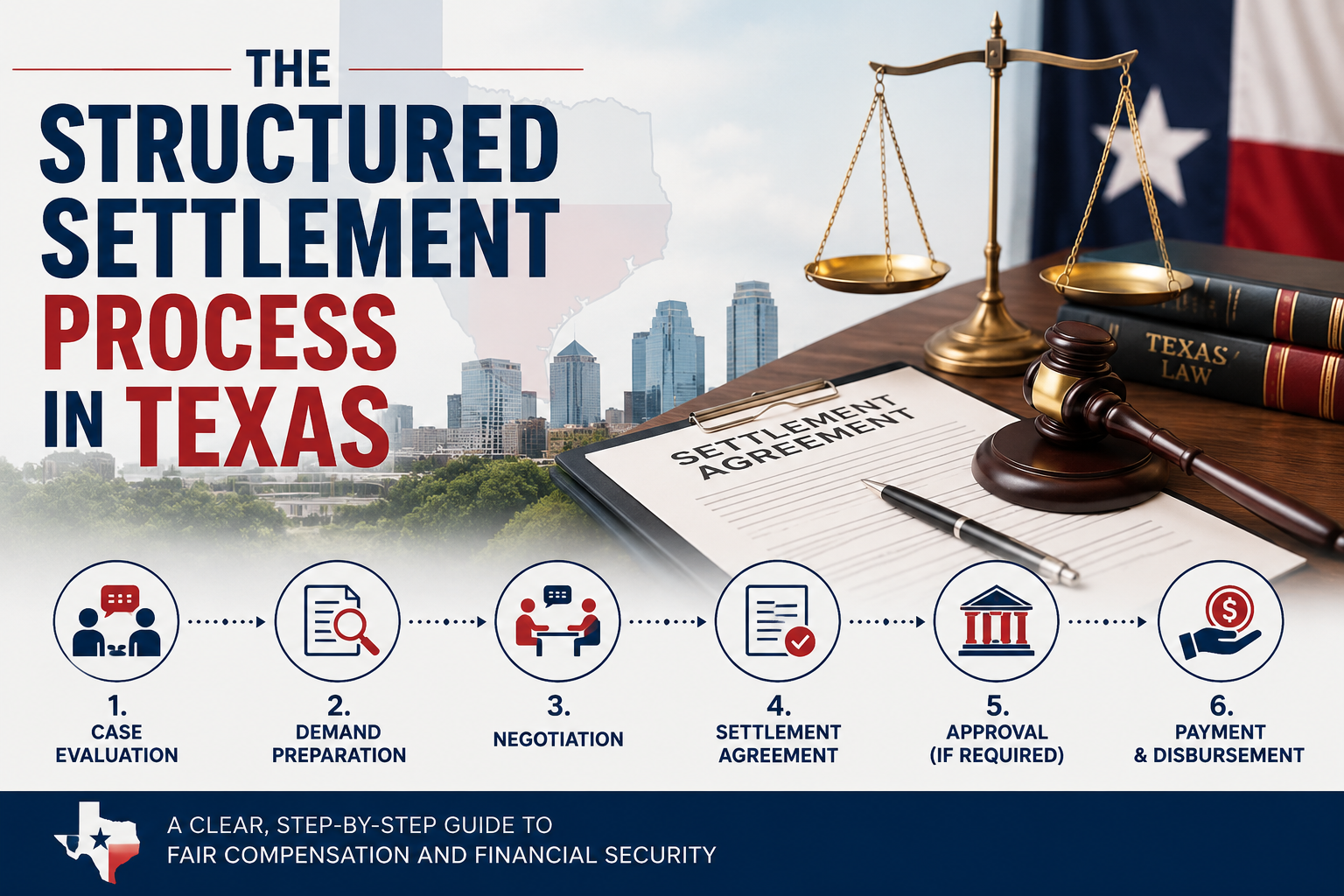

Understand the settlement process in Texas, including key steps, timelines, negotiations, and tips to maximize your compensation claim.
Accidents happen more often than we want them to in Texas, with individuals having their lives turned upside down. When an individual suffers a personal injury, naturally, they experience financial distress, emotional discomfort, and legal intricacies alongside their injury. If you are battling a personal injury in Texas, this blog explains what structured settlements are and how they apply to personal injury cases.
Structured Settlement Defined
In personal injury cases, a structured settlement is defined as the agreement between the two parties involved: the at-fault and injured parties. Both parties will set out the terms and conditions of these payments in detail and to each party’s understanding. Typically, structured settlements involve periodic payments, which will continue until a certain date or specified event.
Structured Settlements in Texas: How the Process Works
Once the parties involved in the personal injury case have agreed on liability, damages, and other matters. They can proceed to propose structure-based solutions, which can involve deferred annuity plans. Meanwhile, this resolution can be private between both parties and not involve court trials.
On the other hand, both parties may formally present the relevant documents to a judge in Texas for approval. However, they should only do that if they believe the terms and conditions are fair and equitable under the circumstances.
Furthermore, your decision to agree or disagree on a structured settlement depends critically on the annual amount to be paid. You can get a financial planner to help you calculate this amount as they are experienced in tax concepts. Furthermore, a financial planner can help insurance claimants and companies optimize payment structures based on the state’s taxation rules.
Additionally, you should use legal funding services as intermediaries if you are considering structured settlements. Considering the many technical issues involved, input from a professional may come in handy. Moreover, it ensures everyone involved makes informed decisions while ensuring zero financial strain – unless it cannot be avoided.
Lastly, using the structure the involved parties agree upon, an annuity contract will be created, funds deposited, and beneficiaries selected. Meanwhile, a constant and periodic review of the payment schedule is essential to ensure its accuracy. Furthermore, parties may modify the product, but only with court authorization.
The Benefits of Structured Settlement in Personal Injury Cases
Structured settlement is a choice; you are not under obligation to accept this method of payment for your compensation. However, there are certain reasons why structured settlement is the best option:
Financial Security
Every month or at some particular date, you know some money will enter your bank account. That ensures you can easily plan for long-term expenses while still being financially secure. If you have suffered debilitating disabilities or injuries, for example, a regular monthly payment offers certainty and stability.
Less Risks
There are no risks associated with investments made with the monthly payments you receive from structured settlements. As such, you do not have to worry about becoming penniless before the income flow stops.
They Are Tax-Free
There are no taxes attached to money sent through structured settlements, provided they meet specific criteria in the Internal Revenue Code. Contrarily, if you receive lump-sum payouts, you have to pay taxes on the interest earned on whatever you invest.
Conclusion
“The structured settlement process is a well-defined process that benefits plaintiffs as well as defendants. Where it offers financial stability and security for the injured party, it is cost-effective for the at-fault party,” says attorney Felix Gonzalez. However, for a structured settlement to hold, a judge must fully endorse it under the current Texas laws.