
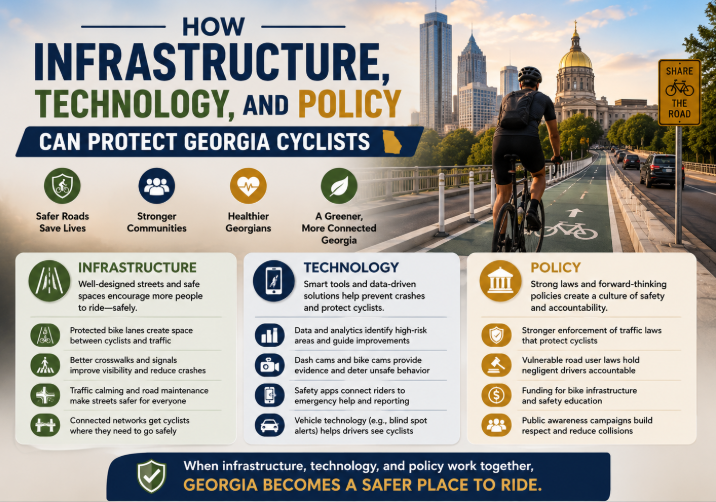

Communities across Georgia, including Atlanta and Decatur, are experiencing a rise in people choosing bicycles for their daily commutes and errands. Biking is great for reducing your environmental footprint and staying healthy, but it also exposes riders to unique hazards on busy urban streets. For those who experience accidents, having a knowledgeable Bicycle Crash Attorney Atlanta by your side helps ensure your rights are protected as you recover. Knowing the most effective strategies to reduce crashes and injuries benefits not only cyclists themselves but everyone who shares the road.
Cyclist safety is not just a personal responsibility. It depends greatly on the design of our roads, the policies implemented by local governments, and the tools available to riders. The right combination of infrastructure, innovative technology, and smart riding techniques can transform Georgia’s cities into safer and more inviting places for people on two wheels.
Georgia sees thousands of crashes involving cyclists and pedestrians each year, according to the Georgia Department of Transportation. While urban cycling is gaining popularity, incident numbers remain a serious concern. Understanding how to navigate these risks and where to seek help can make all the difference in your recovery and well-being if an accident occurs.
After any bike crash, your next steps matter. Before speaking to an insurance adjuster, read this guide on What to Ask and What Not to Say to an insurer in Atlanta. It equips you with key information to protect your best interests and avoid potential pitfalls when dealing with insurance companies.
Enhancing Infrastructure for Cyclist Safety
The presence of protected bike lanes and thoughtfully designed intersections is proven to make roads safer for everyone. Research from the Georgia Department of Public Health indicates that locations without marked bike lanes or with unclear road markings experience higher accident rates. Adding bike-specific traffic lights and physical barriers, such as raised curbs, reduces interactions between cyclists and vehicles, leading to fewer and less severe crashes.
Moreover, cities that invest in these improvements witness more people choosing to ride, creating a virtuous cycle of safer, more bike-friendly communities. Protected intersections, where cyclists are clearly visible and separated from turning traffic, consistently show the lowest rates of severe injury. Increased visibility at night, through improved street lighting, also lowers accident rates. Georgia communities, such as Decatur and parts of Atlanta, have begun implementing these solutions, but consistent advocacy and funding remain crucial to extend these benefits to more neighborhoods. You can read about recent national efforts to expand protected cycling networks in The New York Times.
Leveraging Technology to Identify High-Risk Areas
Modern technology is opening new doors to cyclist safety across Georgia. Innovations such as handlebar-mounted sensors highlight problem spots, measure passing distances, and alert urban planners to dangerous conditions in real time. When riders use apps that track near-miss locations, cities receive anonymous data highlighting where new safety features should be prioritized.
Georgia Tech and other regional partners are piloting data-sharing tools that map public input, crash statistics, and sensor data to create a holistic picture of road conditions. This empowers both cyclists and city officials to advocate for fixes where they are needed most, focusing scarce resources on projects that deliver meaningful safety improvements. For instance, the Commute Warrior app allows users to track their daily travel activity, providing valuable data for researchers to monitor congestion and study travel behavior.
Adopting Defensive Cycling Practices
Riders are not powerless in the face of urban traffic. Practicing defensive riding is a proven way to reduce your risk on the road. As a cyclist, consider the following tactics:
- Always wear a helmet and high-visibility gear, especially during low-light conditions.
- Utilize bike lights and reflectors to improve your visibility.
- Obey all traffic signals and lane markings. Signal turns and check blind spots frequently.
- Avoid distractions such as headphones or mobile devices while riding in traffic.
- When possible, make eye contact with drivers to ensure they see you.
These habits give you greater control and can help prevent accidents caused by a simple oversight, either yours or someone else’s. For more expert recommendations on safe cycling practices, visit the Centers for Disease Control and Prevention’s Bicycle Safety page.
Community Engagement and Policy Advocacy
Creating safer streets requires collaboration. Local advocacy groups, city planners, law enforcement, and everyday residents can all play a part in championing road safety improvements. Taking part in local town halls, supporting efforts such as Atlanta’s Vision Zero initiative, and staying informed about proposed policy changes amplifies your voice and helps drive progress.
Communities that prioritize safe cycling infrastructure not only reduce crash rates but also build neighborhoods where everyone, regardless of how they travel, feels welcome and protected. Ongoing education programs and open public dialogues are essential to keep safety at the forefront of city planning throughout Georgia.
Conclusion
Safer urban biking is achievable when infrastructure, technology, responsible riding, and strong community engagement all work together. By investing in protected bike lanes, embracing new technologies, adopting defensive cycling practices, and advocating for thoughtful policies, Georgia’s cities can become havens for cyclists and pedestrians alike. If you or a loved one is involved in a collision, it’s important to seek legal guidance from professionals who understand the complexities of local bicycle laws and injury recovery. Working together, everyone in the community can help make Georgia’s streets safer for all.