
Augusta carries a quieter Southern rhythm that often hides how busy its roads have become. Between the steady flow along I-20 heading toward Columbia and Atlanta, the daily commuter traffic moving across the Bobby Jones Expressway, the seasonal surge of visitors filling Washington Road during Masters week, and the constant pull of military families coming and going from Fort Eisenhower, the Garden City sees a far wider mix of vehicles than its small-town reputation suggests.
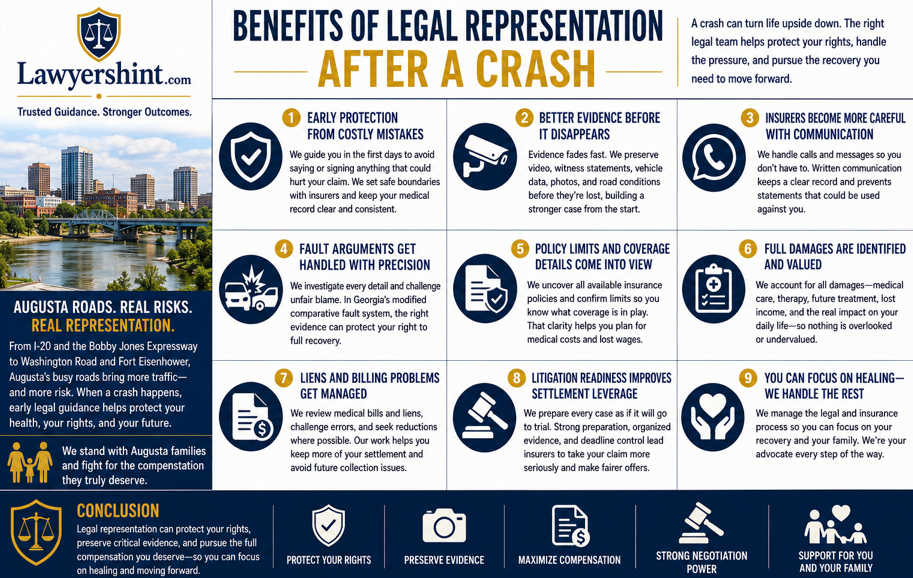
- Early Protection From Costly Mistakes
- Better Evidence Before It Disappears
- Insurers Become More Careful With Communication
- Fault Arguments Get Handled With Precision
- Policy Limits and Coverage Details Come Into View
- Full Damages Are Identified and Valued
- Liens and Billing Problems Get Managed
- Litigation Readiness Improves Settlement Leverage
- Conclusion
That blend of locals, tourists, and commercial traffic also raises the chance of a sudden wreck on stretches like Gordon Highway or Walton Way. Recovery in a community this connected can feel especially uneven when medical bills, insurer calls, and missed shifts all start arriving at once. That is where steady legal guidance earns its place. Choosing trusted car accident legal representation in Augusta early gives families a calmer path through a stressful, fast-moving aftermath.
Early Protection From Costly Mistakes
In the first days, adjusters may request recorded statements, broad medical releases, or quick settlement figures tied to early imaging. Guidance at that moment limits unintentional admissions and reduces gaps in treatment notes. Families seeking legal counsel can set safe boundaries for contact and help organize a clean timeline. That structure makes it harder for injuries to be dismissed as “late” complaints.
Better Evidence Before It Disappears
Skid marks fade, vehicles get repaired, and nearby cameras overwrite files fast. A legal team can preserve footage, locate witnesses, and request vehicle data before they lose it. Photographs, weather conditions, and road design details matter when accounts conflict. Medical documentation also carries more weight when patients consistently report symptoms close to onset. Early organization creates a clearer record for evaluating injury severity.
Insurers Become More Careful With Communication
Friendly questions can still produce damaging sound bites, especially when pain, concussion symptoms, or medication affects recall. Representation shifts calls and messages to a controlled channel, reducing pressure on an injured person. Written exchanges also leave a trackable record that can be reviewed for accuracy. With boundaries in place, discussions usually stay on verifiable facts rather than rushed impressions.
Fault Arguments Get Handled With Precision
Georgia uses a modified comparative fault rule, so percentage allocations can change whether recovery is reduced or blocked. Counsel can examine reports, scene measurements, and witness statements to challenge unfair blame. Lane changes, left turns, and low-visibility intersections often turn on small details like signal timing or sight lines. Careful presentation can shift an inaccurate fault split.
Policy Limits and Coverage Details Come Into View
Many people do not know what coverage exists until they make formal requests. Attorneys can seek declarations, confirm limits, and identify additional policies tied to a vehicle or household. That clarity supports practical planning for medical bills and time away from work. Uninsured or underinsured options also depend on policy language and notice steps. Once coverage is mapped, decisions become less guesswork.
Full Damages Are Identified and Valued
Injury costs extend beyond an emergency visit. Legal teams can document follow-up care, therapy frequency, medication needs, and future treatment projections tied to clinical notes. Work loss can be measured with pay records, scheduling logs, and physician restrictions. Pain effects are stronger when tracked with sleep disruption, activity limits, and functional changes, rather than vague descriptions. A complete accounting supports fair negotiation.
Liens and Billing Problems Get Managed
Health plans and medical providers may assert reimbursement rights against a settlement. Those liens can arrive late and cut into funds needed for rent, therapy, or prescriptions. Lawyers can review billing, confirm validity, and seek reductions where rules allow. Itemized statements, payment logs, and provider notes help trace charges, separate unrelated care, and prevent inflated balances from standing unchallenged. That work can increase the amount an injured person actually receives. Clean resolution also lowers the risk of later collection activity.
Litigation Readiness Improves Settlement Leverage
Most claims settle, yet credible trial preparation can change how an offer is calculated. Representation supports organized pleadings, exhibit lists, and witness preparation if a suit becomes necessary. Deadline control matters, because missed filing dates can end a claim outright. When the insurer sees a well-built case file, low offers tend to lose traction. Preparation adds negotiating strength without forcing a courtroom fight.
Conclusion
Legal representation after a crash can steady the recovery period by limiting stressful contact, protecting medical documentation, and preserving evidence before it disappears. It also helps address blame disputes, verify coverage, and value both current and future care needs. Support with liens and billing helps prevent settlement money from being diverted into surprise balances. When we track deadlines and handle communication carefully, our community can pursue healing with fewer setbacks.