

Fort Myers, Florida, has seen steady population growth and heavier traffic movement in recent years, especially along major roads like Colonial Boulevard and U.S. 41. With more vehicles, construction activity, and tourism flowing through the city, personal injury claims have also become more common. Florida continues to report hundreds of thousands of traffic crashes annually, many leading to serious injuries that leave victims facing long recovery periods and mounting financial pressure. In a fast-growing Gulf Coast city like Fort Myers, the timing of medical care, insurance filings, and legal action can heavily influence the outcome of a claim.
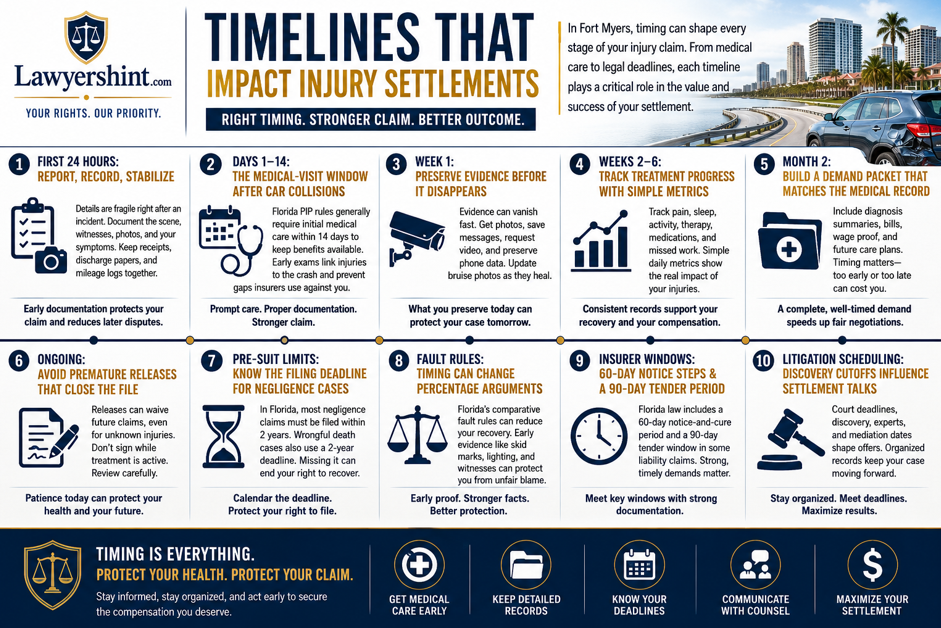
- First 24 Hours: Report, Record, Stabilize
- Days 1–14: The Medical-Visit Window After Car Collisions
- Week 1: Preserve Evidence Before It Disappears
- Weeks 2–6: Track Treatment Progress With Simple Metrics
- Month 2: Build A Demand Packet That Matches the Medical Record
- Ongoing: Avoid Premature Releases That Close the File
- Pre-Suit Limits: Know the Filing Deadline for Negligence Cases
- Fault Rules: Timing Can Change Percentage Arguments
- Insurer Windows: 60-Day Notice Steps And A 90-Day Tender Period
- Litigation Scheduling: Discovery Cutoffs Influence Settlement Talks
- Conclusion
When people begin seeking injury compensation in Fort Myers, they often focus only on the settlement amount. What many do not realize is that timing shapes nearly every stage of the process. Delays in treatment, gaps in documentation, missed filing deadlines, or prolonged negotiations with insurers can all impact the final resolution. Some claims settle within months, while others take far longer, depending on medical evaluations, liability disputes, and financial damages involved. Understanding the timelines behind injury settlements helps injured individuals make informed decisions early, avoid costly mistakes, and better prepare for the legal and financial challenges that often follow a serious accident in Fort Myers, Florida.
First 24 Hours: Report, Record, Stabilize
Right after an incident, details are fragile. Short notes, witness names, photos, and symptom timing help separate injury effects from later strain. Midway through that first-day record, families considering seeking injury compensation often benefit from keeping receipts, discharge papers, and mileage logs in one place. Early documentation also reduces disputes about the mechanism of harm, first complaints, and how pain shifted as adrenaline faded.
Days 1–14: The Medical-Visit Window After Car Collisions
Auto claims can hinge on an early clinical visit. Florida personal injury protection rules generally require initial services and care within 14 days to keep benefits available. A prompt exam also links neck stiffness, headache patterns, or radiating numbness to the crash before other causes get blamed. Skipped visits create gaps that adjusters treat as proof of minor harm. Steady follow-up lets clinicians track function, medication effects, and work limits.
Week 1: Preserve Evidence Before It Disappears
Proof can vanish quickly. Vehicles get repaired, floors are cleaned, and messages are deleted. Video systems may overwrite within days, and lighting or signage can change after a report. Phone data can matter too, including timestamps, location history, and call logs. A written request to hold footage can prevent loss when a business controls the recording. Bruising photos should be updated as the color and size shift.
Weeks 2–6: Track Treatment Progress With Simple Metrics
Healing is rarely straight, so simple measures keep the story credible. Daily pain ratings, sleep disruption, step totals, and missed work hours show impact without exaggeration. Therapy attendance and home exercise notes also explain slow gains in strength or balance. Medication side effects deserve mention because dizziness or slowed reaction time can affect driving and job tasks. Consistent records support damages tied to household load and altered routines.
Month 2: Build A Demand Packet That Matches the Medical Record
Negotiations move faster when the file mirrors the chart. A solid demand packet often includes diagnosis summaries, imaging reports, itemized bills, wage proof, and a clear description of functional limits. Timing improves once care is stable, or a future plan is documented with expected visits and costs. Sending a demand too early risks undercounting follow-up needs. Waiting too long can collide with court deadlines.
Ongoing: Avoid Premature Releases That Close the File
A release ends the claim, even if new symptoms appear later. Offers may arrive while treatment is active, which adds pressure during financial strain. Signed paperwork can include broad language covering unknown injury, future therapy, or later procedures. Careful review helps avoid waiving lien questions or follow-up care costs. Patience can protect long-term health, especially after concussion signs, spine pain, or nerve irritation.
Pre-Suit Limits: Know the Filing Deadline for Negligence Cases
Court time limits are strict. In Florida, many negligence actions must be filed within two years, and wrongful death cases also commonly use a two-year period. Missing that cutoff can end recovery options regardless of clear harm. The clock usually starts on the incident date or the date of death in fatal events. Early planning protects access to court if talks stall or records arrive late.
Fault Rules: Timing Can Change Percentage Arguments
Fault evidence shapes value because percentages can reduce an award. Florida’s comparative fault rules include a bar for a claimant found more than 50 percent responsible in many negligence actions. That makes early scene proof important, skid marks, lighting conditions, signage visibility, and witness vantage points. Defense teams may also point to nonparties, so prompt investigation helps counter shifting blame with consistent facts and preserved materials.
Insurer Windows: 60-Day Notice Steps And A 90-Day Tender Period
Timing can matter when policy limits and insurer conduct become key. Florida law includes a notice-and-cure period commonly described as 60 days after a civil remedy notice is filed. For certain liability claims, a separate 90-day window can protect an insurer if it tenders the lesser of limits or a supported demand in time. Well-timed demands need strong documentation to reduce arguments about whether proof was sufficient.
Litigation Scheduling: Discovery Cutoffs Influence Settlement Talks
Once a case enters court, calendars push decision-making. Discovery deadlines, medical examinations, expert disclosures, and mediation dates often trigger new offers. Late-added providers or a new MRI can force delays that postpone payment. Organized records help counsel respond quickly to requests, reduce motion practice, and keep attention on recovery. Regular updates also prevent surprises created by gaps in care notes or missing billing details.
Conclusion
Injury claims turn on timing because deadlines control proof, eligibility, and negotiating strength. Early exams capture swelling, mobility limits, and neurological signs before they fade or get explained away. Consistent tracking supports the daily impact of pain, sleep loss, and reduced capacity. Legal cutoffs matter too. A missed filing date can erase options even with strong evidence. With steady recordkeeping and calendar awareness, injured people can protect their health choices while keeping settlement discussions tied to facts.