

In a city as large and medically advanced as Chicago, families often rely on hospitals and neonatal specialists to provide safe, attentive care during one of the most important moments of their lives. Yet when complications arise during labor, delivery, or the first critical hours after birth, parents can suddenly find themselves overwhelmed by unanswered questions and unexpected medical concerns. A newborn injury may bring emotional distress, prolonged hospital stays, specialized treatment plans, and uncertainty about a child’s future development.
As families try to understand what happened, they are often forced to balance immediate medical decisions with growing concerns about whether preventable mistakes played a role in the outcome. Reviewing legal options can help parents gain clarity about accountability, financial support, and the long-term care their child may require. For families exploring Chicago legal representation for injured newborns, early legal guidance can provide a clearer understanding of whether medical errors, delayed treatment, or failures in communication contributed to a preventable birth-related injury.
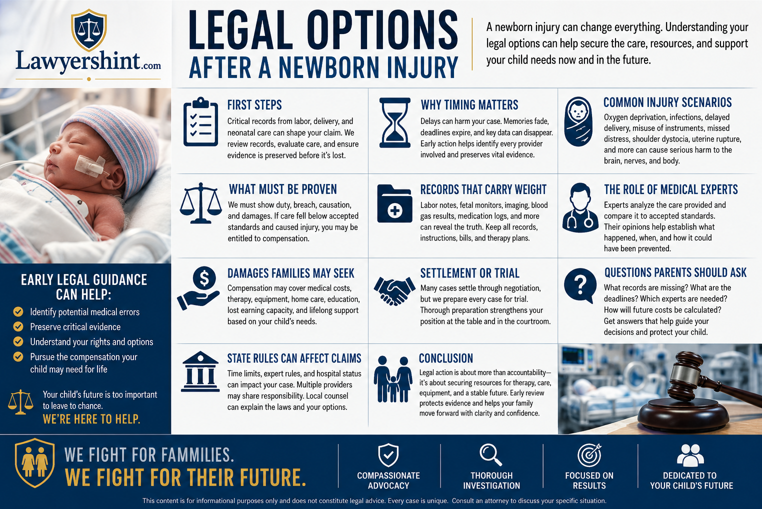
First Steps
During the initial days, attention usually stays on breathing, feeding, seizures, jaundice, or weak muscle tone. At the same time, fetal tracings, medication logs, cord gas values, and nursing notes may shape a future claim. Families seeking legal representation for injured newborns can have those materials reviewed, ask whether accepted safety practices were followed, and identify records that should be preserved before details become harder to verify.
Why Timing Matters
Waiting can damage a claim. Recollections fade, electronic entries may be harder to trace, and filing deadlines can close legal options. A prompt review also helps identify each clinician involved, from obstetric staff to neonatal teams. That sequence matters because a birth injury case often depends on minutes, including labor decisions, response to distress, and care during the first hours after delivery.
Common Injury Scenarios
Some claims involve oxygen deprivation, untreated maternal or newborn infection, delayed operative delivery, or improper use of forceps and vacuum devices. Other cases center on missed fetal distress, shoulder dystocia, or poor response to uterine rupture. Harm may affect the brain, brachial plexus, skull, lungs, or bowel. Each pattern requires close review of timing, physiology, and bedside decision-making.
What Must Be Proven
Most claims rest on four elements: duty, breach, causation, and damages. Hospitals and clinicians must provide care consistent with accepted medical practice. If treatment falls below that level and directly causes injury, a case may proceed. Damages then measure the practical effect on the child and family, including hospital costs, therapy needs, adaptive equipment, and long-term attendant care.
Records That Carry Weight
The strongest cases usually depend on detailed documentation. Labor notes, heart rate strips, medication records, neonatal imaging, blood gas reports, and transfer summaries can show what happened minute by minute. Billing files may confirm dates and services. Families should also keep discharge instructions, prescriptions, therapy plans, and receipts. A complete record allows outside physicians to assess the full clinical picture.
The Role of Medical Experts
Expert review is usually central in newborn injury litigation. Obstetricians, neonatologists, neurologists, radiologists, and nursing specialists may compare the care given with accepted standards. They also examine whether a different response would likely have reduced harm. That analysis matters because the timing of hypoxia, infection progression, or intracranial bleeding cannot usually be answered through charts alone.
Damages Families May Seek
Compensation may include past treatment, future rehabilitation, home nursing, vehicle changes, communication devices, and educational support. Some cases also address lost earning capacity and the financial value of lifelong assistance. Severe neurologic injury can create very high projected costs over decades. Life care planners, economists, and treating physicians often help estimate those figures with greater precision.
Settlement or Trial
Many cases resolve through negotiation after record review, expert screening, and exchange of evidence. Settlement can reduce delay, expense, and emotional strain for families already managing complex care. Still, some disputes proceed to trial when fault is denied, or future needs are minimized. Careful preparation for court often strengthens settlement discussions, even if the matter ends before a verdict.
Questions Parents Should Ask
Clear questions can help families judge next steps. Which records are missing? When do filing deadlines expire? What specialists may need to review the case? How will future care costs be calculated? Those points help parents assess whether the evidence supports a claim and whether possible recovery reflects the child’s medical needs, daily limitations, and expected lifelong support.
State Rules Can Affect Claims
State law can shape time limits, expert affidavit rules, and damage issues. Hospital status may matter too, since private systems, public institutions, and university programs can follow different procedures. Cases involving newborn injury often need quick review because several clinicians may share responsibility. Local counsel can explain which rules apply, who may be liable, and what should happen next.
Conclusion
Legal action after a newborn injury is often as much about practical support as it is about accountability. Families may need funds for therapy, mobility equipment, home care, and future treatment that extends far beyond infancy. Early case review can protect evidence and clarify whether a preventable medical error played a role. With careful clinical analysis and sound legal guidance, parents can make informed decisions that protect a child’s health and long-term stability.