
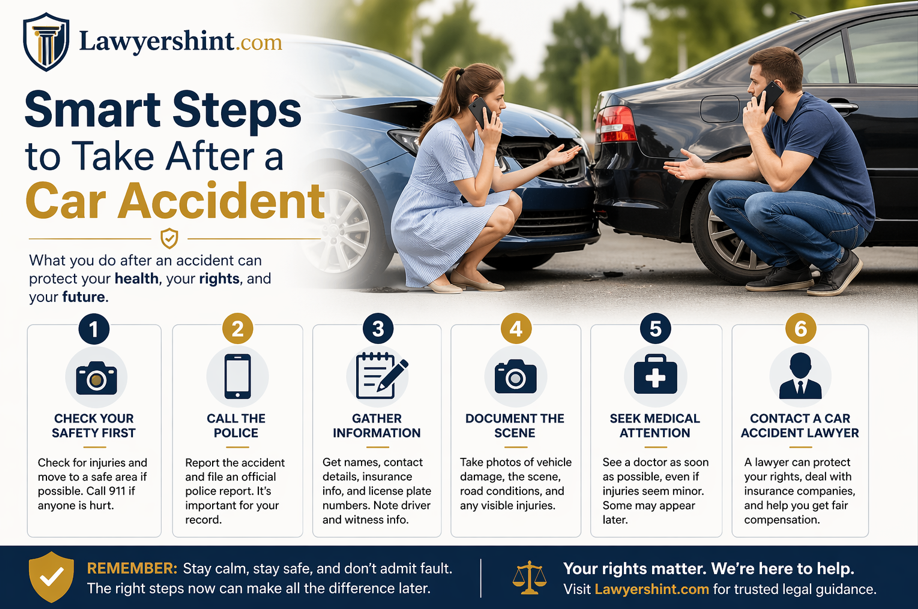

Smart steps to take after a car accident help protect your health, preserve evidence, report incident, and ensure your legal rights are protected.
Being involved in a car accident is never expected, and the moments immediately following an accident can be confusing and stressful. Despite the chaos, taking the right actions can help to safeguard your health, your legal rights, and your financial well-being. Whether the collision is minor or serious, knowing exactly what to do will ensure you are protected. If you are in the Boston area and need expert advice, consider consulting a Boston car accident lawyer for trusted legal guidance during this difficult time.
Acting quickly and calmly can also help with any subsequent claims or legal processes that might arise. Every step you take can affect your recovery process and how smoothly everything moves forward after a crash. Familiarize yourself with the smartest actions to take, so you are better prepared if an accident occurs.
1. Ensure Safety First
After an accident, the first priority is the safety of everyone involved. Check yourself and your passengers for injuries and, if you are able, move your vehicle to a safe location such as the shoulder of the road or a nearby parking lot. Keeping your hazard lights on will alert other drivers and help prevent further accidents. In high-traffic areas or dangerous conditions, it is especially important to stay safe and visible while waiting for assistance.
Remaining calm is crucial in these initial moments. Take deep breaths, communicate clearly with passengers, and avoid making any sudden movements that could exacerbate injuries. Taking these precautions not only helps prevent further harm but also reassures those around you. If your vehicle cannot be moved, do your best to signal distress to passing motorists, which will also help emergency crews spot you quickly.
2. Contact Emergency Services
Calling 911 is crucial, regardless of how minor the accident may appear. Emergency services will dispatch police officers and medical personnel who can provide immediate help and assess the situation. Having an official police report is vital for insurance claims and legal matters, as it provides an unbiased account of the incident. According to the National Highway Traffic Safety Administration, reporting accidents helps create a comprehensive record that can be referenced by all involved parties later on.
In some areas, you may be required by law to report an accident, especially if there are injuries or significant property damage. Even if everyone appears unhurt, adrenaline can mask symptoms. Waiting for first responders can also ensure that the area is made safe and that all parties receive appropriate care as soon as possible. Responders can also help manage tense situations if emotions are running high at the scene.
3. Document the Scene
Once everyone is safe, take ample photos of the accident scene, including all vehicles involved, visible damages, license plates, and surrounding areas. If there are witnesses, ask for their names and contact details, as their statements can support your claims. Recording the position of vehicles, any skid marks, debris, or road conditions can prove invaluable during insurance investigations or legal proceedings. If you cannot take photos for any reason, make detailed notes of the events and damages.
Try to document the weather conditions and time of day, as these details can be helpful later. Note any nearby traffic signs or signals, and record if any cameras may have captured the event. Thorough documentation can prevent misunderstandings or disputes with other parties or insurance adjusters, protecting your interests throughout the claims process.
4. Exchange Information
It is essential to exchange key details with the other driver or drivers involved in the collision. This includes full names, contact phone numbers, insurance company names, policy numbers, and vehicle identification information. Remain courteous and limit the conversation to basic facts without assigning blame or accepting liability at the scene. Gathering accurate information will enable you to smoothly start the claims and recovery process later.
If the other driver is uncooperative or you feel threatened, wait for law enforcement to arrive before continuing the exchange. You may also want to write down the make, model, and color of the involved vehicles in addition to the license plates, helping streamline the reporting process. Taking these steps ensures that you have all vital details, which your insurance company may later request to verify the incident.
5. Notify Your Insurance Company
Contact your insurance provider as soon as possible after the accident. Share all the gathered documentation and the police report number, so your insurer has a complete understanding of what happened. This will allow them to start the claims process swiftly and efficiently. Some insurers also offer guidance on repairs, medical treatment, and dealing with the other party’s insurance, so staying in touch throughout the process is beneficial.
When reporting the incident, be clear and concise, sticking to the facts and avoiding speculation. Save all correspondence and claim documents, as they may be required for reference if there are delays or disputes. Inquire whether your policy covers rental vehicles or towing fees if you need assistance with transportation during the repairs.
6. Seek Medical Attention
Even if you feel unharmed, it is important to visit a healthcare provider immediately following an accident. Certain injuries, like whiplash or concussions, may not present symptoms right away but can worsen over time. Immediate documentation of your health status is also important for any future injury claims. According to the Mayo Clinic, prompt medical evaluation reduces health risks and can support personal injury claims if necessary.
7. Consult a Legal Professional
After a serious accident, seeking legal counsel ensures that your rights and interests are protected, especially if there are disputes about liability or injury compensation. Lawyers experienced in car accidents can guide you through conversations with insurance companies, help preserve evidence, and offer advice tailored to your situation. Legal guidance is helpful if you are uncertain about any documentation or if you are contacted by the other party’s insurer or attorney.
A good lawyer can clarify any complex language in insurance documents, negotiate on your behalf, and represent your interests in court if necessary. Many law firms offer free consultations, so taking this step can provide clarity, even if you decide not to pursue further legal action. Acting early gives you a stronger foundation for resolving potential disputes and helps prevent missteps that could jeopardize your case.
8. Follow Up and Monitor Your Health
Continue to watch for any physical or emotional symptoms in the days and weeks following the accident. Attend all scheduled medical appointments, keep a record of treatments, and report any new developments to your doctor. Monitoring your recovery carefully not only ensures a healthier outcome but also provides a timeline of your injuries for insurance or legal purposes.
It’s also helpful to keep a journal documenting your pain levels, medications, and any activities you can no longer perform. Emotional or psychological symptoms, such as anxiety or sleep disturbances, are just as important to track as physical injuries. Regularly following up with your healthcare provider and maintaining detailed notes will support any ongoing claims and guard against potential complications.
By following these steps, you not only safeguard your immediate well-being but also strengthen your position in potential insurance or legal claims. Acting thoughtfully after a car accident contributes to your peace of mind and protects your rights in the aftermath of an unexpected event.