
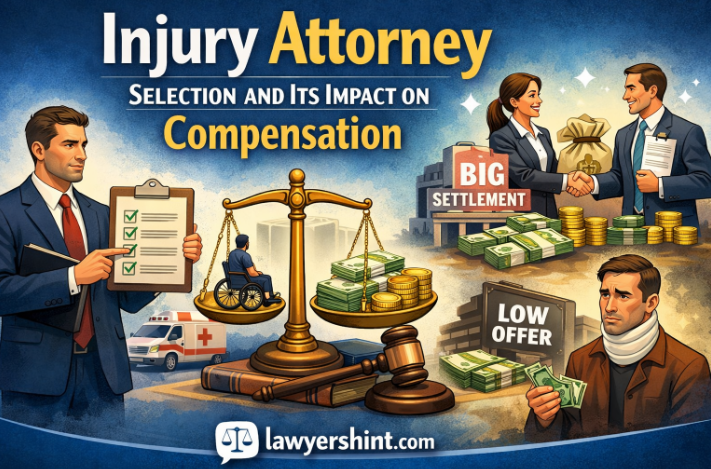

Injury attorney selection affects compensation, case results, and legal strategy. Choose the right lawyer to protect your rights and maximize your claim.
- Understanding the Importance of a Specialized Attorney
- Assessing Experience and Track Record
- Evaluating Communication and Compatibility
- Checklist for Selecting the Right Personal Injury Lawyer
- Considering Resources and Support Staff
- Understanding Fee Arrangements
- Geographic Location and Accessibility
- Reputation in the Legal Community
- Making the Decision: Prioritizing Your Needs
- Conclusion
When faced with the aftermath of an accident, whether a car crash, slip-and-fall, or workplace injury, many people find themselves overwhelmed by medical bills, insurance paperwork, and uncertainty about their rights.
Selecting the right personal injury attorney can make a substantial difference in the outcome of your case and the compensation you receive. But how do you choose the lawyer who is best equipped to handle your unique situation?
Understanding the Importance of a Specialized Attorney
Personal injury law is a broad field, encompassing a wide range of cases from motor vehicle accidents to product liability and medical malpractice. Not all attorneys have the same expertise or experience. Choosing a personal injury lawyer san fernando valley who understands the nuances of your specific type of claim can maximize your chances of a favorable resolution. A specialized attorney will be familiar with relevant laws, typical settlement ranges, and the tactics insurance companies use.
Assessing Experience and Track Record
Experience is one of the most critical factors in evaluating potential legal representation. Attorneys who have handled cases like yours are more likely to anticipate challenges and develop effective strategies. Consider asking questions such as:
- How many cases similar to mine have you managed?
- What were the outcomes of those cases?
- Do you have experience with jury trials if my claim cannot be settled?
Requesting references or reading testimonials can offer further insight into a lawyer’s capabilities and client satisfaction.
Evaluating Communication and Compatibility
Effective communication can significantly ease the stress of legal proceedings. You want a lawyer who listens to your concerns, explains complex legal concepts in understandable terms, and keeps you updated as your case progresses. Compatibility matters, too; you should feel comfortable sharing personal information and confident that your lawyer is genuinely invested in your well-being.
During your initial consultation, take note of how the attorney addresses your questions and whether they seem attentive and empathetic. A good personal injury lawyer will set realistic expectations and provide clear timelines for the process.
Checklist for Selecting the Right Personal Injury Lawyer
To help streamline your search, consider the following checklist:
- Relevant case experience in incidents similar to yours
- Willingness to provide references or case results
- Transparent fee structure (e.g., contingency fees)
- Good standing with state bar associations
- Positive client reviews or testimonials
- Clear, prompt communication style
- Comfort and trust during consultations
Reviewing this list as you research potential attorneys can help ensure you do not overlook important criteria.
Considering Resources and Support Staff
A successful personal injury claim often requires substantial resources, including access to medical experts, accident reconstructionists, and support staff to handle paperwork and litigation logistics. Assess whether the law firm has sufficient personnel and financial resources to handle your case thoroughly. Smaller firms may offer more personalized attention, while larger firms might have more extensive investigative capabilities.
Understanding Fee Arrangements
Most personal injury lawyers operate on a contingency fee basis, meaning they only get paid if you win your case. However, the percentage they charge can vary, and some may require clients to cover certain costs upfront. Clarifying the fee agreement before signing any documents is essential to avoid surprises later. Ask for details about additional expenses and how these will be handled.
Geographic Location and Accessibility
The location of your attorney can influence both convenience and their familiarity with local laws, courts, and experts. Hiring a lawyer who practices in your area ensures easier in-person meetings and a better understanding of regional legal nuances. For instance, clients seeking representation in California may specifically look for a personal injury lawyer with knowledge of state and county regulations relevant to the San Fernando Valley.
Reputation in the Legal Community
A lawyer’s reputation among peers and within the local community can be a valuable indicator of their professionalism and effectiveness. Awards, professional memberships, and leadership roles in legal organizations reflect a commitment to excellence. Additionally, positive feedback from other attorneys, judges, and former clients can reinforce your confidence in their abilities.
Making the Decision: Prioritizing Your Needs
Every personal injury case is unique, and so are the needs of each client. Some may prioritize aggressive litigation experience, while others value compassionate guidance and support. Take time to reflect on your priorities and interview several attorneys before making a final decision. Carefully weigh the experience, approach, resources, and communication style of each candidate.
Conclusion
Finding the right personal injury lawyer for your specific situation is a process that requires careful consideration of experience, specialization, resources, communication, and reputation. By conducting thorough research and using tools such as checklists, you can identify an attorney who aligns with your unique needs and circumstances. Whether you choose a local expert or another specialist, the right legal representation can greatly influence the outcome of your case and the compensation you ultimately receive. Making an informed, thoughtful choice is the first step toward protecting your rights and achieving a fair resolution.