
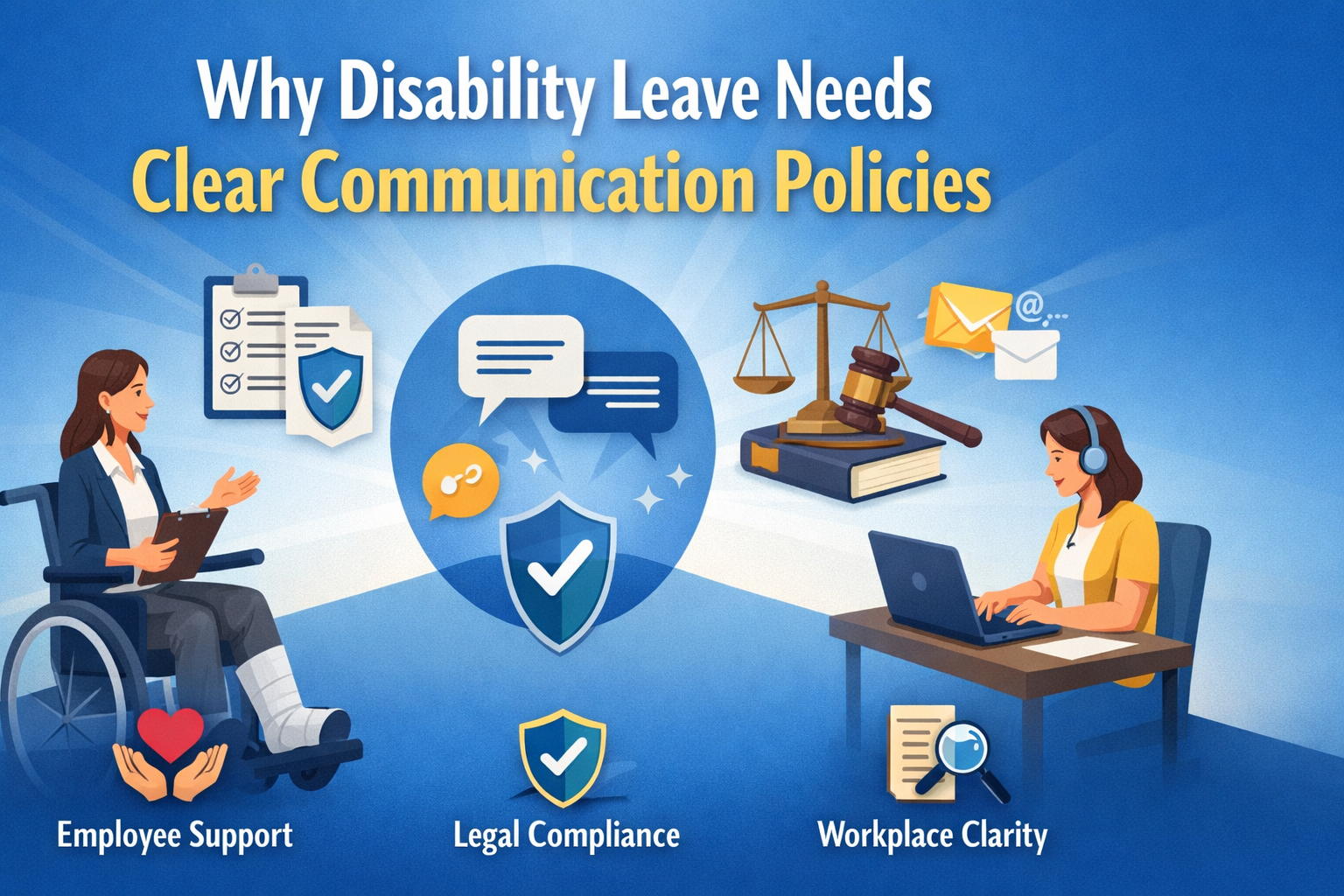

Clear communication policies guide employers in handling disability leave, ensuring transparency, legal compliance, and better support for employees.
Communication is a key point to the management of long term disability leave in any organization. Employers have the problem of sustaining employees when they are away on long leave and ensuring their operations remain afloat. In the absence of formal communication policies, businesses stand a risk of being confused, misunderstood, and having legal issues. Formulation of clear guidelines will help the management and employees know what is expected and required of them at this time.
Organized communication policy offers a stable structure of how information is communicated to the employee on leave and the company itself. Such policies identify proper channels, frequency of updates, and functions of supervisors and human resources employees. Organized and predictable communication makes the employees feel supported and enables the employers to continue in their business operations.
Importance of Clarity for Employees
Long term disability leave usually creates doubts among employees concerning their employment status, their return to work, and organizational news. Explicit communication policies also assist in reducing anxiety through an upfront roadside when it comes to interaction. This allows employees to concentrate on recovery and not to focus on unstate needs of receiving updates because they know when and how to expect them.
Transparency also makes the employees understand what is required of them as to whether they have to give medical updates, or attend check-ins or company communications. Formulated policies eliminate confusion and reflect the importance of fairness and respect to an organization. This will help boost the morale of the employees and also help in a more easy transition of the employees in case of termination of the leave.
Reducing Legal and Compliance Risks
When their employers do not have organized communication policies, employers might unwillingly break the laws on privacy, or employment criteria. Policies help to give directions on adherence to confidentiality and keep the relevant managers posted. They also make sure that communication is in line with the labor laws and human rights requirements and that the company is cushioned against future conflicts.
The organized policy is important in showing the organization was responsible in its actions and this is achieved through consistent documentation of communications. It gives an account that the employer had reasonable accommodations and offered fair practices. Employers who are not sure about what to do in complex situations can turn to the services of an LTD Lawyer Toronto or a disability lawyer London who may provide the employer with advice concerning the communication practices and help change the established policies in accordance with the existing laws.
Supporting Manager and HR Coordination
Formal communication policies set up definite roles of supervisors and human resources professionals. Managers know how to get in touch with employees, when to escalate problems, and how to make documentation of the contacts. The human resources personnel can issue advice and enforce legal requirements and company standards.
Integration of management and HR is what guarantees that all the communications are coherent and adequate. Policies may include specifying the team members who will undertake duties of monitoring leave, scheduling updates and record keeping. This understanding saves confusion and a mixed message is passed to the employees by the organization.
Maintaining Organizational Continuity
The discontinuity of work and projects through long term disability leaves may affect timelines when there is poor management of communication. The structured policies assist the employers to stabilize their operation by setting standards of reporting, redistribution of workload, and temporary cover. When regular communication has been established, employees who have been away on leave are better positioned to revert into their positions as soon as they come back.
The companies are also able to regulate internal messages to the rest of the team by establishing the communication guidelines. Informing colleagues in a professional and reverent way will reduce uncertainty and also make sure the dynamics in the team are maintained. Workers who are on vacation will feel connected but will not be stressed, and the working place will still be functioning effectively.
Promoting a Positive Workplace Culture
Formal communication policies prove the organizations appreciate fairness, transparency and respect. When policies are uniformly implemented, the employees are likely to feel supported and understood. This may enhance the relationship between employees and the management and the morale at the workplace.
Positive workplace culture also promotes the employees to share their needs and challenges during leave of long term disability. Employees are also more cooperative in the return to work planning as well as giving the relevant updates when they are properly communicated with and in a respectful manner. This partnership style is advantageous to the individual and the organization.
Conclusion
The management of disability leave should be guided by well organized communication policies to ensure the employees remain healthy and the organization is efficient. The existence of clear guidelines gives consistency, minimizes legal risks, and enables proper coordination between the managers and the human resources. They assist in continuity, good working culture, and make sure that the workers feel assisted in the recovery process. By adopting the policies, organizations would be in a position to go through the process of long term disability leaves with confidence, equitably and professionally, which will eventually benefit both the business and employees.