
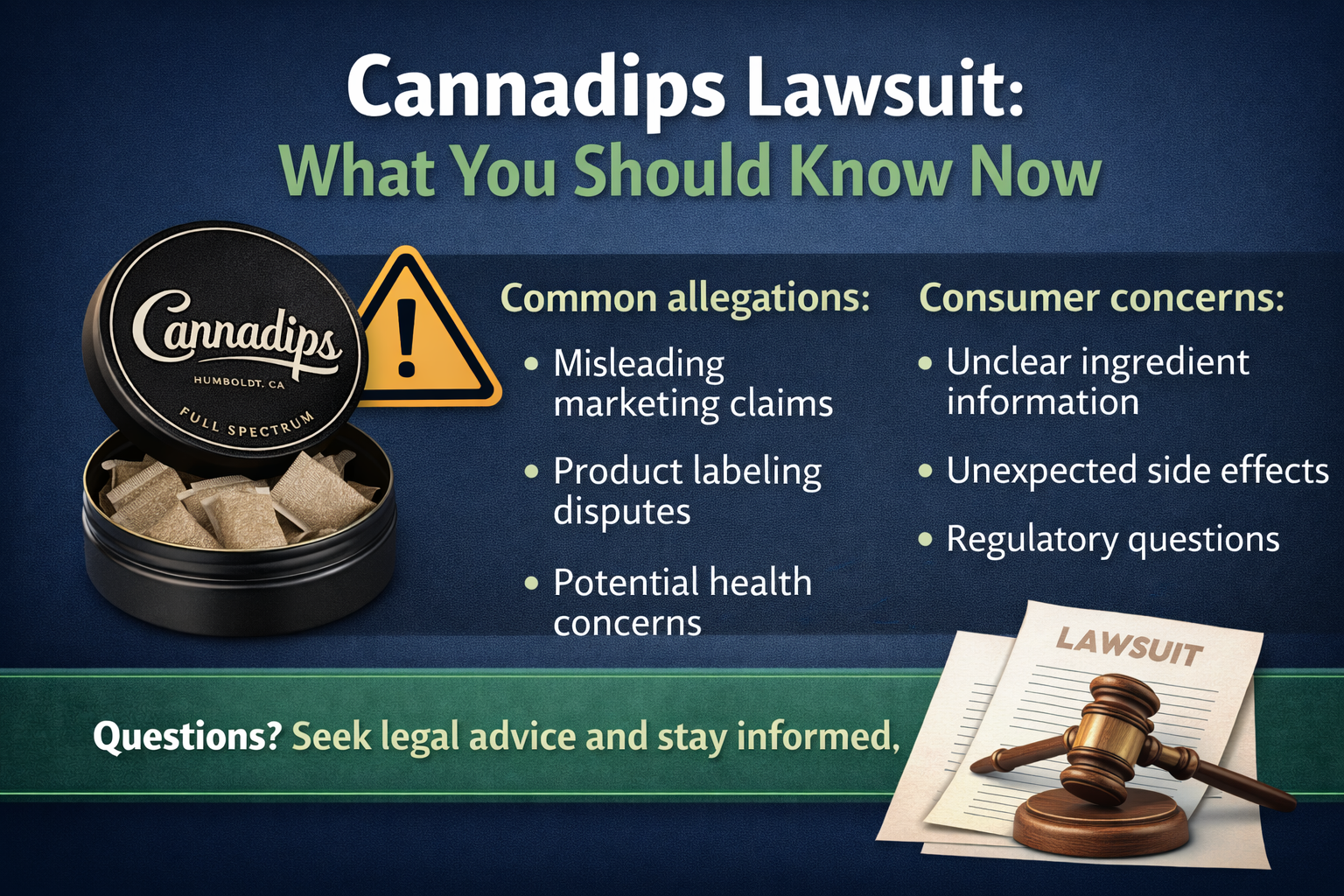

Learn what the Cannadips lawsuit is about, potential legal claims, health concerns, consumer rights, and what affected users should know.
- Understanding Cannadips and Its Market Position
- What Is the Cannadips Lawsuit About?
- Key Legal Issues Often Raised in Similar Cases
- Potential Health and Safety Concerns
- Who Might Be Affected by the Cannadips Lawsuit?
- Common Legal Questions Surrounding Cannadips Products
- What Evidence Is Usually Required in Consumer Product Lawsuits?
- What Is the Current Status of the Litigation?
- What Consumers Should Do If They Have Concerns
- Understanding the Broader Impact on the Industry
- Frequently Asked Questions (FAQ)
- Conclusion
The rise of nicotine-free alternatives has reshaped the smokeless product market, with plant-based oral pouches gaining rapid popularity. Among the most visible brands in this space is Cannadips, a company known for offering tobacco-free, nicotine-free pouches infused with cannabinoids. While the brand has positioned itself as a cleaner alternative to traditional dip or nicotine pouches, legal scrutiny has begun to surface.
The Cannadips lawsuit has drawn attention from consumers, regulators, and legal professionals alike. At the center of the discussion are questions about product safety, marketing practices, labeling accuracy, and consumer expectations. This article breaks down what is currently known, what legal theories may apply, and what consumers should realistically understand before drawing conclusions.
Understanding Cannadips and Its Market Position
Cannadips markets its products as:
- Tobacco-free
- Nicotine-free
- Smoke-free and spit-free
- Made with plant fibers and cannabinoid extracts
These products are typically sold as oral pouches placed between the lip and gum, similar to traditional smokeless tobacco. Because they do not contain nicotine, they are often perceived as a safer alternative, particularly among former smokers or individuals seeking to avoid addictive substances.
However, the absence of nicotine does not automatically remove regulatory or legal concerns. Any ingestible or oral product may face scrutiny if claims, ingredients, or health effects raise red flags.
What Is the Cannadips Lawsuit About?
The legal claims associated with Cannadips are not based on a single unified allegation but rather on potential consumer protection and product liability concerns that are common in emerging wellness markets.
In general, lawsuits in this category tend to focus on one or more of the following areas:
- Misleading or unsubstantiated marketing claims
- Failure to adequately warn consumers of potential risks
- Labeling disputes regarding ingredients or effects
- Regulatory compliance issues
- Consumer deception or unfair business practices
It is important to note that litigation involving consumer products often evolves over time. Allegations may be amended, dismissed, or expanded as new evidence emerges.
Key Legal Issues Often Raised in Similar Cases
While each case is unique, lawsuits involving smokeless or ingestible alternatives often rely on similar legal theories.
1. Marketing and Advertising Claims
One of the most common legal concerns centers on how products are advertised. If a company implies that a product is “safe,” “healthy,” or “risk-free,” plaintiffs may argue that such claims are misleading unless supported by rigorous scientific evidence.
In wellness-focused markets, even indirect suggestions of health benefits can trigger legal challenges.
2. Product Labeling and Transparency
Consumers expect labels to clearly disclose:
- Ingredients
- Intended use
- Potential side effects
- Appropriate warnings
If labeling is unclear or incomplete, lawsuits may argue that consumers were deprived of the ability to make informed decisions.
3. Consumer Protection Laws
Many lawsuits rely on state-level consumer protection statutes, which prohibit unfair or deceptive trade practices. These laws do not always require proof of physical injury; economic harm or deception may be sufficient.
4. Regulatory Compliance Questions
Products containing cannabinoids often fall into gray regulatory areas, especially at the federal level. Disputes may arise if products are sold in ways that allegedly violate existing regulations or guidance.
Potential Health and Safety Concerns
Although Cannadips products are marketed as nicotine-free, legal attention often arises when consumers report adverse experiences or unexpected effects.
Possible areas of concern raised in similar product categories include:
- Oral irritation or gum sensitivity
- Gastrointestinal discomfort
- Interaction with medications
- Inconsistent dosage of active ingredients
It is essential to understand that allegations do not equal proven harm. Courts rely on evidence, expert testimony, and regulatory standards when evaluating these claims.
Who Might Be Affected by the Cannadips Lawsuit?
Individuals who may be impacted typically include:
- Consumers who purchased the product based on specific marketing claims
- Users who experienced adverse reactions
- Individuals who believe they were misled about product safety or effects
Eligibility to participate in legal action depends on multiple factors, including jurisdiction, purchase history, and the specific allegations involved.
Common Legal Questions Surrounding Cannadips Products
| Issue Category | What It Involves | Why It Matters |
| Marketing Claims | Safety or wellness representations | Determines whether advertising was misleading |
| Product Labeling | Ingredient disclosure and warnings | Impacts informed consumer choice |
| Consumer Harm | Physical or financial impact | Influences damages and eligibility |
| Regulatory Oversight | Compliance with state and federal rules | Affects product legality |
| Evidence | Medical records, receipts, expert analysis | Strengthens or weakens claims |
What Evidence Is Usually Required in Consumer Product Lawsuits?
Plaintiffs typically need documentation to support their claims. This may include:
- Proof of purchase
- Product packaging or marketing materials
- Medical records (if physical harm is alleged)
- Expert testimony
- Personal statements describing reliance on advertising
For companies, defenses often involve compliance documentation, testing data, and regulatory correspondence.
What Is the Current Status of the Litigation?
Legal actions involving consumer products often proceed in stages:
- Initial Complaints Filed
- Motions to Dismiss or Consolidate
- Discovery Phase
- Settlement Discussions or Trial
Some cases are resolved quietly through settlements, while others may be dismissed if courts find insufficient legal grounds. At the time of writing, outcomes may vary depending on jurisdiction and the specific claims brought forward.
What Consumers Should Do If They Have Concerns
If you are a consumer who has questions or concerns related to Cannadips products, consider the following steps:
- Save receipts and packaging
- Document any adverse effects or unexpected experiences
- Consult a healthcare provider if symptoms occur
- Seek legal guidance if you believe consumer rights were violated
Avoid relying solely on online speculation; verified information and professional advice are always preferable.
Understanding the Broader Impact on the Industry
Litigation involving plant-based oral products has implications beyond a single brand. These cases can influence:
- Future labeling standards
- Advertising practices
- Regulatory clarity
- Product testing requirements
As alternative wellness products grow in popularity, legal oversight is likely to increase rather than diminish.
Frequently Asked Questions (FAQ)
What is the Cannadips lawsuit about?
It generally involves allegations related to marketing practices, product labeling, and consumer protection concerns rather than traditional tobacco-related claims.
Does this mean Cannadips products are unsafe?
A lawsuit does not automatically mean a product is unsafe. Legal claims must be proven in court through evidence and expert testimony.
Who can file a claim?
Eligibility depends on the specific allegations, location, and whether the consumer can show harm or deception.
Are these products regulated like tobacco?
Not exactly. Products without nicotine often fall under different regulatory frameworks, which can create legal gray areas.
What compensation is typically sought in cases like this?
Claims may seek refunds, damages, or changes in marketing practices. Outcomes vary widely.
Should consumers stop using the product?
Health decisions should be made with a medical professional. Legal developments alone should not replace medical advice.
Conclusion
The Cannadips Lawsuit highlights the growing legal attention on alternative oral products marketed as safer or cleaner options. While the outcome of any litigation remains uncertain, the situation underscores the importance of transparency, accurate marketing, and informed consumer choice.
As wellness and cannabinoid-infused products continue to evolve, both companies and consumers must navigate a complex landscape shaped by regulation, science, and law. Staying informed, rather than reactive, is the best approach for understanding what comes next.