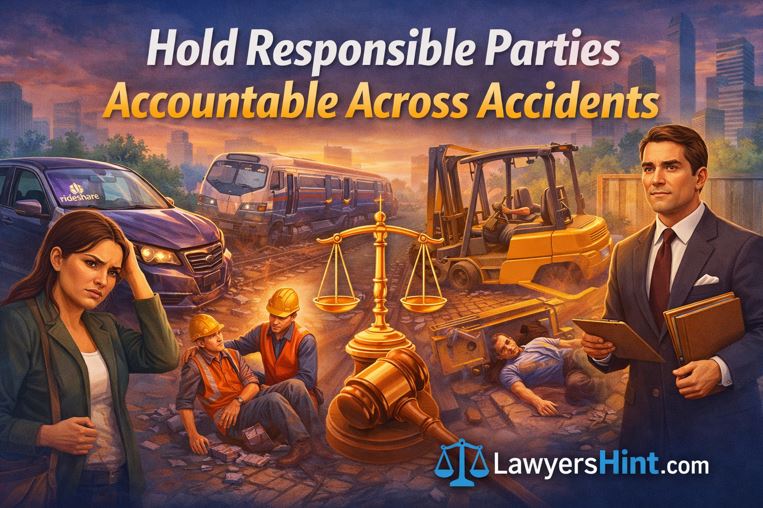

Hold responsible parties accountable across accidents to protect your rights and secure fair compensation for injuries and losses.
- Navigating Railroad Injuries Under Federal Law
- Pursuing Compensation After Rideshare Accidents
- Forklift Incidents: Rights and Remedies on the Job
- Key Differences Between Federal and State Law
- Gathering Evidence and Building a Strong Case
- The Role of Comparative Fault
- Overcoming Challenges Unique to Each Incident
- Conclusion
When accidents occur in environments dominated by machinery, whether on the railroad, on the road in a rideshare vehicle, or at a worksite with forklifts, the consequences can be life-altering. Victims and their families often face not just physical and emotional trauma, but also complex legal questions.
Understanding how to seek compensation under both federal and state law is essential for anyone affected by these diverse incidents.
Navigating Railroad Injuries Under Federal Law
Railroad workers face unique dangers on the job, and the laws governing their rights differ from typical workplace injury statutes. Unlike most employees, railroad workers are covered by the Federal Employers’ Liability Act (FELA), which provides specific avenues for pursuing damages. If you or a loved one has suffered harm on the rails, consulting a railroad injuries- fela attorney new york can help clarify your options under this specialized federal statute.
FELA requires injured workers to prove negligence on the part of the railroad company or co-workers. This contrasts with the no-fault system of workers’ compensation. As a result, critical evidence—such as safety protocols, equipment maintenance records, and eyewitness accounts—can become central to your claim. Understanding the nuances of FELA and how it interacts with state-level protections is vital for maximizing recovery.
Pursuing Compensation After Rideshare Accidents
Rideshare vehicles like Uber and Lyft have transformed transportation, but accidents involving these services bring their own set of legal complexities. Determining liability may involve multiple parties: the driver, the rideshare company, other motorists, or even municipal agencies. In New York, rideshare drivers are required to carry specific insurance coverage, but the process of filing a claim can be daunting.
Victims of rideshare accidents should document the scene, gather witness statements, and seek prompt medical attention. Insurance claims may be directed first at the rideshare company’s policy, which often covers damages when the driver is actively engaged in a ride. However, disputes over coverage and responsibility are common, making it imperative to seek guidance from a new york city uber accident advocate who understands both state and municipal regulations governing rideshare operations.
Forklift Incidents: Rights and Remedies on the Job
Forklifts are indispensable in warehouses and industrial settings, but they also pose significant risks. Accidents can occur due to operator error, mechanical defects, inadequate training, or poor site management. State laws typically govern workplace injury claims, with workers’ compensation serving as the primary recourse for employees. However, certain circumstances—such as defective equipment or third-party negligence—may allow victims to pursue additional claims.
The following checklist outlines essential steps after a forklift incident:
- Seek immediate medical attention and report the incident to a supervisor
- Document the accident scene with photographs and notes
- Identify witnesses and gather their contact information
- Preserve any physical evidence, such as damaged equipment or safety gear
- Consult with a legal professional to evaluate potential claims beyond workers’ compensation
Given the complexities of liability and potential for severe injury, speaking with a forklift accident lawyer nyc ensures you understand every avenue for compensation, including product liability or premises liability claims.
Key Differences Between Federal and State Law
Understanding whether federal or state law controls your case is crucial. For railroad workers, FELA preempts state workers’ compensation, offering broader recovery but requiring proof of negligence. For rideshare and forklift incidents, state law usually takes precedence, with claims often starting under standard auto or workers’ compensation insurance frameworks.
However, exceptions abound. For instance, if a forklift was defectively manufactured, a product liability claim could be filed against the manufacturer under state law, even if the incident occurred at work. Similarly, rideshare accidents may involve municipal liability if unsafe road conditions contributed to the crash. Navigating these intersections of federal and state law often requires experienced legal analysis.
Gathering Evidence and Building a Strong Case
Regardless of the machinery involved, building a successful compensation claim depends on thorough documentation and timely action. Medical records, witness statements, accident reports, and photographic evidence all help establish liability and quantify damages. For railroad injuries, maintenance logs and safety inspection records can be especially persuasive. In rideshare and forklift cases, data from vehicle telematics or employer safety protocols may play a critical role.
Victims should also be aware of statutes of limitations, which can vary significantly between federal and state claims. Missing these deadlines can forfeit your right to compensation, underscoring the importance of acting swiftly after an incident.
The Role of Comparative Fault
Many states, including New York, apply comparative fault principles in personal injury cases. This means that compensation may be reduced in proportion to the victim’s own negligence, if any. For example, if a forklift operator was partially responsible for an accident due to ignoring safety procedures, any damages awarded could be diminished accordingly.
Understanding how comparative fault is calculated and presented in court or settlement negotiations is essential for setting realistic expectations. Legal counsel can help challenge unfounded allegations of victim negligence and maximize potential recovery.
Overcoming Challenges Unique to Each Incident
While the legal concepts of negligence and liability apply broadly, each type of machinery-related injury presents unique obstacles. Railroad injury cases may involve federal safety regulations and union rules. Rideshare accidents can become entangled in disputes over employment status and insurance coverage tiers. Forklift incidents may require technical analysis of equipment and site safety standards.
Overcoming these challenges often involves coordinating with medical and engineering experts, reconstructing accident scenes, and navigating administrative hurdles. The right approach depends on the specific facts and legal context of each case.
Conclusion
Seeking compensation for injuries involving railroads, rideshare vehicles, or forklifts demands an understanding of both federal and state legal frameworks. Each scenario presents distinct challenges—from proving negligence under FELA for railroad workers to navigating complex insurance issues in rideshare and forklift accidents. Thorough documentation, timely action, and knowledgeable legal guidance are crucial at every stage. Whether dealing with longstanding statutes or evolving transportation technologies, the consistent goal remains holding responsible parties accountable and securing just compensation for those harmed.